Category Archives: Radio history

Jamboree On The Air 2015

This weekend is Jamboree On The Air (JOTA) and on Saturday, I’ll be with K0BSA at the North Star Museum of Boy Scouting and Girl Scouting in North Saint Paul, Minnesota.  K0BSA is sponsored by the Minnesota Youth Amateur Radio Council (MNYARC), and photos of previous JOTA operations are available on their website.

JOTA is an international scouting event which allows Scouts around the world to communicate via amateur radio with other scouts and other amateur radio operators.  Our event at the North Star Museum is open to all Scouts, and to the public.  It’s free of charge (although we encourage you to also visit the rest of the museum while you’re there, which does have an admission charge.)

This is the 58th annual JOTA, the first one being run in 1958.  The illustration above is from the announcement for the 1959 version, which at the time was called Radio-Jambo.  The call signs in the illustration were Scout headquarters stations around the world that were on the air that year.

The K0BSA call sign has been connected with the Northern Star Council of the BSA for many years, and I never realized that it had an earlier use.  The 1960 National Scout Jamboree was held in Colorado Springs, Colorado, the only time the event has been held in “Zero Land.”  There has been Radio Scouting at most, if not all, Scout Jamborees, and in 1960, the official station of the Jamboree was assigned the K0BSA call sign.  While the quality of this scan is poor, he Scout shown at the controls of K0BSA in this photo is Steve Wood, K4FJO, of High Point, N.C., who was one of many guest operators of the station.  On his QRZ.com profile, K5KG reports that he was on staff at the Jamboree trading post, and spent all of his off hours at the station.

The June 1960 issue of Boys’ Life reported that K0BSA would be operating on all bands from reveille to taps on both phone and CW, with Pedro clomping at the key or braying into the mike.

If you’re in the Twin Cities and have an interest in radio and/or scouting, please stop by and visit.  The event is open to Cub Scouts, Boy Scouts, Girl Scouts, and Non-Scouts, which should cover just about everyone.  If you’re elsewhere, you can check with your local Scout council.  And, of course, if you’re a Ham, please listen for stations calling CQ JOTA and help introduce a Scout to Amateur Radio.

I will also be counseling the Radio Merit Badge.  Last year, about 20 Scouts earned the merit badge.  “Back in the day” when I was a Scout, the merit badge required a knowledge of Morse Code, meaning that the Scouts who earned it usually did so after getting their amateur license.  However, that has changed in recent years, and the merit badge is now more of an introduction to radio.  My goal is to get Scouts interested in Amateur Radio, and a few of them have followed up by getting their license.  I hope I once again have the opportunity to help Scouts who want to follow up and get their “ticket.”


Stratovision: Airborne TV Broadcasting

stratovision1945

Seventy years ago this month, Radio Craft magazine, October 1945, introduced the concept of Stratovision, and the illustration above showed how it could work.

The war was over, and the American public was hungry for television.  A handful of markets already had stations using the same format that would remain in use for seventy years.  For example, the predecessor of WNBT-TV came on the air in New York in 1939.  And the predecessor of WABD signed on in 1944.  And starting in 1942, Los Angeles had the station that would become KTLA.  But most of the nation was dark as far as television signals.  To get signals to a significant proportion of the populations would require hundreds of stations.  And getting network programs to those stations would require either hundreds of microwave relay stations, are a coaxial network estimated to cost a hundred million dollars.

Stratovision provided an alternative.  The plan was proposed in 1945 by Westinghouse, and was the brainchild of engineer C.E. Nobles.  Under the plan, fourteen aircraft would fly at the predetermined locations shown on the diagram at an altitude of 30,000 feet where they would continually orbit their designated location.  They would transmit VHF and UHF television signals, as well as FM broadcasts.  Because of the antenna height, each plane would provide a good broadcast signal to an area 422 miles in diameter.  And because there would be no terrain that would need to be overcome, the transmitters could operate with much less power than ground-based stations.

The system also solved the problem of delivering network programming.  Only eight planes would be required to link New York with Los Angeles.  The planes would establish a reliable network whenever they were in flight, and the fourteen planes would provide broadcast television to 78% of the country’s population.  The plan called for each plane to broadcast four television and five FM signals.

The plan may appear far fetched to some, but it is sound, and would result in a workable national network.  The system was tested by Westinghouse in 1948 and 1949, as seen in this photo.   In one 1949 test, the aircraft shown here, a B-29, relayed the signal of WMAR-TV in Baltimore on channel 6, using a 5 kW video and 1 kw aural transmitter. In June 1948, the same aircraft was used to rebroadcast the Republican National Convention in Philadelphia for one hour. As part of the test, a receiver was set up in Zanesville, Ohio, where it was used to demonstrate to the gathered newspaper reporters that the system was capable of reaching small town and farm homes.

Reception reports were solicited, and many were received.  From the reports, Westinghouse confirmed that eight planes would provide the transcontinental relay.

There’s nothing technically unfeasible about Stratovision.  The reason why it never took off (pardon the pun) was probably the mere fact that broadcast stations did spring up nationwide.  They were initially provided with programs by kinescope recordings, but microwave and coaxial transmission quickly came into place.  For example, by 1950, the Minneapolis/St. Paul market was getting the national networks live, by means of a coaxial cable from Des Moines, which was in turn linked to Chicago by microwave relay.  Once the network signal was in place, there was no need for Stratovision’s relay services.  And by this time, most major cities had multiple stations, and smaller markets had at least one.  And for those far in the hinterlands, there were herculean efforts to get the distant terrestrial signals, such as those use in the tiny communities of Ellensburg, Washington and Marathon, Ontario.

But despite the fact that Stratovision was never adopted for its intended purpose, it did live on, and continues to do so, in some specialized niches.  For example, between 1961 and 1968, educational programs were broadcast from two DC-6AB aircraft based at Purdue University by the Midwest Program on Airborne Television Instruction (MPATI).  The MPATI aircraft would fly in a figure-8 pattern for six to eight hours at a time at 23,000 feet above a point just north of Muncie, Indiana.  Prerecorded educational programs were broadcast on UHF channels 72 and 76, with call letters KS2XGA and KS2XGD.  The transmission diameter was 200 miles, and covered both the Chicago and Detroit metropolitan areas.

Between 1966 and 1972, the U.S. Navy used Stratovision to broadcast two channels in the area surrounding Saigon, South Vietnam.  One channel was intended for the Vietnamese audience, with the other providing information and entertainment programs to U.S. servicemen.  Armed forces programs were carried on channel 11, with call letters NWB-TV, with the Vietnamese program on channel 9 with call letters THVN-TV.  The aircraft also broadcast on 1000 kHz AM and 99.9 MHz FM.  The Vietnamese program typically ran 1-1/2 hours per day, with the armed forces channel running three hours per day.  American programs included Bonanza, Perry Mason, Ed Sullivan, and the Tonight Show.

Click photo for screen-resolution image

Pennsylvania Air National Guard Commando Solo aircraft preparing to depart for emergency broadcasts to Haiti in 2010. Department of Defense photo.

The U.S. military continues to use EC-130 Commando Solo aircraft to provide PSYOPS broadcasts during war.  Most recently, only radio programming has been used.  But the aircraft is capable of television transmissions.  For example, in 1999 in the former Yugoslavia, some television programming, using Yugoslavian broadcast format, was transmitted from aircraft.  Typically, Commando Solo transmits an FM program, along with broadcasts on the standard AM band and short wave.  For AM and short wave, the airborne transmitter has no particular advantage, other than providing a secure location to house the station.  But on FM, the signal, like the original Stratovision concept, takes advantage of the aircraft’s altitude, and can provide a strong broadcast signal over a large area with a relatively low powered transmitter.  The photo here shows a Pennsylvania Air National Guard Commando Solo aircraft preparing to depart for Haiti to make emergency broadcasts in the wake of the 2010 earthquake.

During the 2011 attack on Libya, Commando Solo aircraft broadcast information.  Transcripts of the broadcasts are available at PsyWar.org.  Since the Libyan broadcasts were carried on short wave as well as FM, they were heard by short wave listeners worldwide, including myself.  A recording of the transmissions can be found at this video:


Click Here For Today’s Ripley’s Believe It Or Not Cartoon


WNBT-TV New York, 1945


1945WNBTSeventy years ago today, NBC took out a two-page ad in Life Magazine, October 15, 1945, promoting itself as America’s No. 1 Network.

In addition to promoting its radio programs, it offers a reminder that “‘The Tomorrow’ people talked of only a short time ago, is here today.” It points out that thousands in New York were already enjoying visual entertainment, news, sports, fashion shows, dramas and other programming from WNBT. The ad points out that five large advertisers were already on board, and as more sets became available, larger TV audiences would be able to find visual pleasure in the words, “This is the National Broadcasting Company.”

The production shown here is apparently one of those fashion shows going out over the station which had first signed on in 1939.  The station already had competition from two other stations, including Dumont station WABD.

Click Here For Today’s Ripley’s Believe It Or Not Cartoon



1927 Personalized Radio Retailing

1927RadioRetailing

Here’s an interesting marketing idea from 1927. G.I. Morgan, the proprietor of Independent Radio Sales, Inc., 214 South Main Avenue, Sioux Falls, South Dakota, was looking for a way to increase radio sales. So he set about clipping photographs from the local newspaper or programs. He then pasted the photo to a sales letter and mailed it to the person depicted.

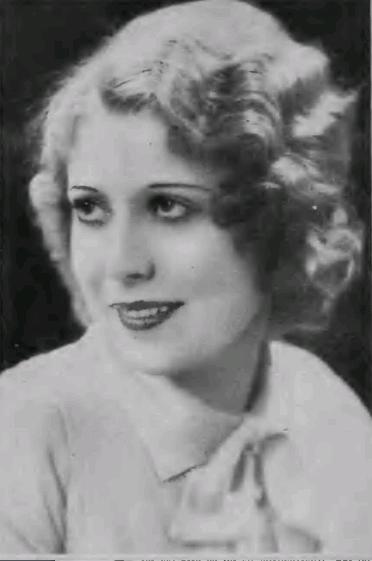
The newlywed bride at the right, for example, is Mrs. Guy Fairweather of 49 Lincoln Street in Sioux Falls. To her, he writes:

This charming bride should have a radio set. Now-a-days the little nest is not considered properly “feathered” unless this “music box of magic” occupies its rightful place therein.

Now is the time to buy, Mrs. Fairweather. Right at the start of life’s greatest adventure. Give yourself every minute you can get to enjoy this modern blessing. Our phone number is James-258.

The labor-intensive nature of this kind of advertising only allowed Morgan to send out six or seven such letters per week, “but, believe me, it’s time well spent.” Morgan reported that over half of the prospects so contacted called him back, and the proportion of resulting sales was large. These letters and the accompanying article appear in the February 1927 issue of Radio Retailing, which notes that other dealers might find the idea helpful.

Click Here For Today’s Ripley’s Believe It Or Not Cartoon


1955 Motorola Clock Radio

1955MotorolaClockRadio

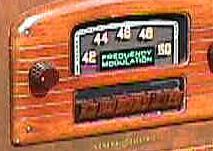
Sixty years ago, this week’s issue of Life Magazine carried this ad for Motorola’s latest clock radio.  For $39.95, this handsome set told the time and date, and would sing you asleep at night and sing you awake in the morning.  As an added bonus, it would have your coffee waiting.

The last item was accomplished by having a switched AC outlet on the back of the radio, which came on when the radio did.  All you would need to do would be to plug your electric percolator into the radio.  Since the radio was presumably in the bedroom, you would need to make the coffee there as well, unless you had a heavy-duty extension cord.

Click Here For Today’s Ripley’s Believe It Or Not Cartoon


1945 Los Angeles Radio and TV

101045RadioHightlights

Here is what was on the radio 70 years ago today, October 10, 1945, in Los Angeles.  This listing is taken from that week’s issue of Radio Life, which contains, in addition to these highlights, the complete program listings.

You’ll see that there are three television programs, on station W6XYZ, the predecessor of KTLA.  The station was owned by Paramount, received its construction permit in 1939, and came on the air for the first time in 1942, on channel 4.   The station received its commercial license and the KTLA call letters in 1947, the first commercial television station west of the Mississippi.

On this day, starting at 8:00 PM, the station signed on with a test pattern that ran for a half hour, followed by “Scanning the Globe” at 8:30, “Fashion Guide” at 8:45, and “Variety” at 9:00.

Click Here For Today’s Ripley’s Believe It Or Not Cartoon


Science Fair Ideas: Homemade Batteries from 1965

HomemadeBattery3

When the aspiring young mad scientist is looking for ideas for the science fair, someone invariably suggests making a homemade battery. Making a battery is a fairly simple proposition. All you need are two dissimilar metals and an electrolyte. A common choice for electrolyte is a mild acid such as lemon juice, and copper and zinc make good dissimilar metals. No matter how badly you construct the thing, a little bit of electrical current is bound to flow, and you can probably coax a little bit of light out of a light-emitting diode (LED) or even power a small electronic device such as a digital clock.

A good choice for the kids who aren’t as smart as you are.

In fact, for students with limited scientific abilities, you can just go out and buy yourself a Potato Clock kit. You simply open the box and jab the electrodes into a potato, and the potato juice serves as the electrolyte. It’s completely safe, since I can hardly think of any chemical more benign than potato juice. If you drop the potato on the floor, you don’t need to bother calling the haz mat team. And unless you screw up horribly, the clock will instantly come to life. There’s nothing wrong with the humble potato clock, but if you’re reading this looking for ideas, you probably want to come up with something a bit more spectacular. And while you’re at it, you probably want to use chemicals slightly more dangerous than potato juice.

So you might want to go back in history a bit when adults weren’t quite so concerned with hazardous chemicals, and use something slightly more powerful in making your battery. You can go back in time fifty years, when adults let their responsible children play around with slightly more dangerous chemicals such as household bleach, often referred to by its most popular brand name, Clorox. Not only will you have more fun, but you’ll wind up with a much more powerful battery, suitable for powering much bigger electronic devices.

For details on how to put the battery together, you can go to page 98 the Fall 1965 issue of Elementary Electronics.  That article describes two batteries that you can make at home, both of which are hundreds of times more powerful than the one running that other kid’s potato clock.

Warning:  Bleach really is a dangerous chemical.  You need to be careful with it, and keep it out of the reach of children who are not as smart as you are.  If you get any on your clothes, your mom will be mad.  If you get any in your eyes, you’re facing a major medical emergency.  Your mom is probably right when she tells you, “you can put an eye out with that.”  Ask your parents and/or teacher for permission.  If they balk at the idea, ask them to read the article about how to make the battery.  To show how responsible you are, show them that you read the Material Safety Data Sheet (MSDS).

Homemade battery using drops of bleach.

Battery using drops of bleach.

The article shows how to make two batteries.  The first one, while much more powerful than the potato, is “more of a novelty than a practical device.”  It is shown here, and consists of fifteen sets of aluminum strips and copper wires. The metallic pieces are arranged in a circle around a piece of Plexiglas. The copper and aluminum are close together, but not touching.  When ready for use, a drop of bleach is placed on each one.  When the last drop of bleach is added, the connected radio or other device springs to life.  If measured with a voltmeter, the complete battery will put out about 15 volts.  However, this drops when there’s an actual load, and 15 cells is about right to power a radio that normally calls for 9 volts.

Unlike the potato battery, this one will run a radio for several minutes.  But the article concedes that it’s more of a novelty.  Therefore, the article goes on to describe another more powerful battery.  The bigger one is even suitable for use around the house in case of a power outage.  If the power is out and you’ve used up the last battery, there’s probably still a bottle of bleach down in the laundry room, good for hundreds of homemade batteries.

HomemadeBattery2

Homemade battery using ice cube tray.

The larger battery is constructed in a plastic ice cube tray.  You use six of the individual compartments, so you can cut the ice cube tray in half and make two batteries.  Each compartment of the tray contains one piece of aluminum and one piece of copper.  You simply fill each compartment with bleach, and you have enough power to run a radio for several hours.  When the battery finally goes dead, you pour out the old bleach and replace it.  You can re-use the battery hundreds of times before the aluminum finally gets worn away completely.

Voltaic pile similar to the 1799 version. Wikipedia photo.

With either battery, you have essentially recreated the work of Allesandro Volta, who invented the Voltaic pile in 1799.  He was eventually able to build a battery large enough to administer an uncomfortable electric shock.  Until the electric generator came along in the 1870’s, anything that required electricity (such as the telegraph or telephone) was powered by batteries similar to those created by Volta.

Armed with this fifty year old article, a bottle of bleach, and a few pieces of scrap metal, you can now make your own Voltaic pile.  You’ll get to use dangerous chemicals.  You can generate significant amounts of electrical power.  Perhaps you can even administer uncomfortable electric shocks to your friends, teachers, and parents.

You’ll have the most interesting project at the science fair.  And the kid who goes home with a participation ribbon for his potato clock is going to be pissed.

Check out my other science fair ideas, some of which are slightly dangerous.

Click Here For Today’s Ripley’s Believe It Or Not Cartoon


1940 3-tube Loudspeaker Set

1940PS3tube2

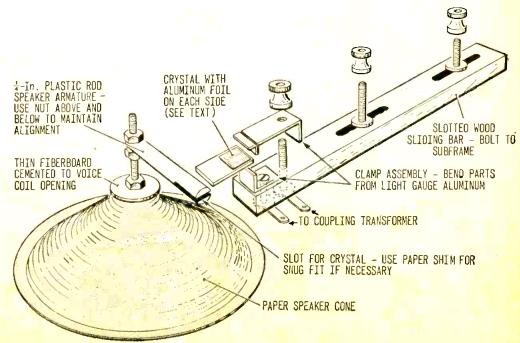
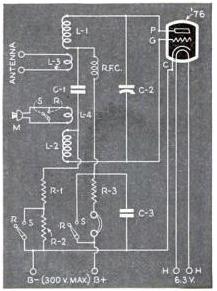
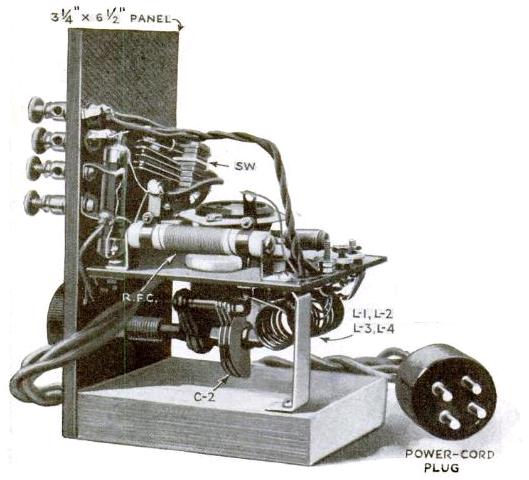
This little three-tube broadcast set could be put together for $4.04, according to the project description in the October 1940 issue of Popular Science.  The article described the AC-DC broadcast set as “simplicity itself,” with three tubes, a 43, a 6C6, and a 25Z5. With a short antenna, it had enought “pep” to drive the 93 cent speaker, and the chasis consisted of an aluminum cake pan. The cabinet was made of pieces of scrap wood.

1940PS3tubeOne interesting feature was the use of honeycomb style coils for the regenerative detector. They were wound on two cardboard disks, the tickler coil 3-1/4″ diameter, with the antenna coil 2-3/4″ diameter. The two coils were mounted above the chassis on brass screws and spacers, 3/4″ apart.

While the set was designed to cover the broadcast band, the author noted that the range could be adjusted up or down a bit by adding or removing turns from the antenna coil.

Click Here For Today’s Ripley’s Believe It Or Not Cartoon


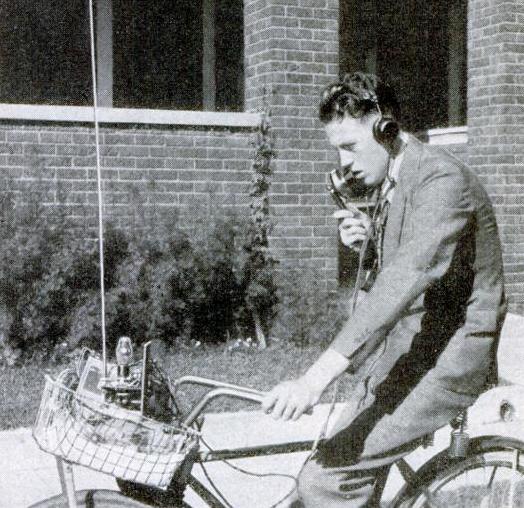
Radio Scouting in 1940

Radio and scouting have a long association, as shown by these two photos from 75 years ago this month, in the October 1940 issue of Boys’ Life1940OctBLThe first shows scout Edwin Parkerson of Troop 50, Houston, Texas, listening to music in this set he built to bring to camp.  A scout is kind, and Parkerson undoubtedly let his friends take a turn listening shortly after this picture was taken.

Assuming he did share the headphones, it was probably good for a bit of karma.  Sixteen years later, one Edwin Parkerson of Houston renewed his hospitalization insurance policy, but due, no doubt, to some little mix-up, the premium check bounced.  The insurance company apparently put the check through a second time without incident.  But during the intervening time, Mr. Parkerson’s wife was taken to the hospital, and the insurance company claimed that the policy wasn’t in effect and denied coverage.  The Texas Court of Civil Appeals ruled that the policy was in effect.  Parkerson v. American Hospital Life Ins. Co., 322 S.W.2d 26 (Tex. Civ. App. 1959).

While scout Parkerson was listening to the radio through headphones, the scouts in Nashville were probably getting ready to build a loudspeaker set, since they’re shown here getting some pointers from the staff of WSM.  The caption reports that nearly a hundred Nashville scouts had formed a radio patrol, and were getting technical lessons from the station’s technical staff.

1940OctBL2

Click Here For Today’s Ripley’s Believe It Or Not Cartoon


SD’s Betsy Ross and KGFX, Pierre

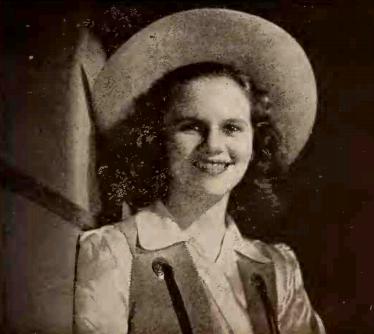
KGFX194074 years ago, Life Magazine, October 6, 1941, carried this image of Ida McNeil, the owner and operator of KGFX, Pierre, South Dakota.

If the studio looks a bit cramped, that’s because it is located in her home at 510 Summit Avenue, Pierre, SD.  Both the transmitter and studio remained at that location until 1958, when the transmitter was moved to Ft. Pierre.  The studio remained at the McNeil home until 1964.

The station’s roots date back to 1912 when Ida’s husband, Dana McNeil, was first licensed as 9ZP.  In 1916, he was licensed as 9CLS.  According to the FCC’s card file for the station, the broadcast license for KGFX was first issued on August 15, 1927, with the licensee listed as Dana McNeil,  The station was originally at 1180 kHz, moving to 580 kHz in 1928. In 1932, it moved to 630 kHz, where it remained until 1967.

The 1932 move from 580 appears to be prompted by WNAX, 180 miles away in Yankton, which applied on March 9, 1932, to increase its power on 570 kHz. The WNAX application is referenced in KGFX’s FCC record. WNAX has one of the largest coverage areas of any AM station in the country, and moving KGFX away from the adjacent channel was probably necessary to make that possible.

In 1967, the station made its final move on the dial to its present day 1060 kHz, with 10 kilowatts daytime and a pre-sunrise authority of 500 watts. In 1974, the station was granted authority to run 1000 watts at night.

Mr. McNeil died in 1936, and the FCC record shows the license transferred to Ida McNeil, as the administratrix of his estate, effective March 26, 1937. The license remained in her name until 1962, when it was transferred to Black Hills Radio, Inc.  In 1940, when this photo was taken, the FCC record shows that the station was licensed with 200 watts on 630 kHz between 9:30 AM and local sunset.

Even though the station was licensed commercially, the McNeils operated it as a public service, believing that radio stations should serve the community. The station began accepting commercial advertising in 1932, but the majority of the air time was still devoted to public service. One of the station’s most popular programs was “Hospital News,” in which she broadcast announcements regarding the condition of patients at Pierre’s St. Mary’s Hospital. The physicians at the hospital were initially dismayed by the idea of public announcements about their patients, which they viewed as unethical. But because of difficulties with transportation and communication in rural South Dakota, they soon realized that the program provided a valuable public service, and gave their cooperation.

South Dakota flag, 1909-1963.

South Dakota flag, 1909-1963.

Being a broadcaster was not Mrs. McNeil’s only claim to fame.  Life magazine identified her as the Betsy Ross of South Dakota, since she had designed the state’s flag in 1909, her design remaining in use until 1963.

Mrs. McNeil was born Ida Anding in 1888 in Winona, Minnesota. Her father was a steamboat engineer, and the family moved to Pierre in 1896 when he came to supervise the overhaul of a ferry. She graduated from high school in 1906 and went to work for the South Dakota Department of History, where she was employed when she designed the state flag.

She married Dana McNeil, a railroad conductor, in 1921. While he was on runs between Rapid City and Pierre, she began broadcasting to him over his amateur station. After she realized that he was not the only listener, she began developing a regular programming format, and they obtained the commercial license for KGFX in 1927. In addition to running the radio station, she served as the weather bureau’s official observer between 1935 and 1942.  She died in 1974 at the age of 86, having retired from the radio business with the sale of the radio station twelve years earlier.

Click Here For Today’s Ripley’s Believe It Or Not Cartoon