Author Archives: clem.law@usa.net

Baofeng UV-5R: First Impressions

My BaoFeng UV-5R arrived today, and I’m quite impressed with what I’ve seen so far.  The radio is pictured here.  For some reason, the Amazon picture shows a European-style plug adapter next to it, but understandably, this was not included.  For just over $35, I received the radio and the separately purchased programming cables.  The radio itself included the antenna, the battery and charger, a headphone which apparently doubles as a through-the-ear microphone, and a belt hook and carrying strap.  The cable included a little disc with the drivers, but apparently no programming software.

Since I’m a ham, immediately upon opening the box, I moved the little manual aside, installed the battery and antenna, and turned it on.  I grabbed another handheld, my Yaesu VX-3R in order to test the new radio.  There was an orange button marked VFO/MR, which I correctly assumed switched between memory and VFO mode.  I put the radio in VFO mode and proceeded to enter a frequency, 146.520.  Sure enough, it tuned in the frequency, but I noticed that the radio put itself on 146.500 instead of 146.520.  Undaunted, I tuned the other radio to that unusual frequency and determined that the new radio could, indeed, both transmit and receive.  It didn’t sound half bad.

After a bit of trial and error with the keypad, I determined that the radio must be set for 25 kHz channel spacing.  To changed the channel spacing, I correctly surmised that the “MENU” button would probably be required.  I pushed it, and it showed me that I was on menu #0, used for setting the squelch.  Using the up and down buttons, I found a menu entitled “STEP”.  and hit the menu button again.  Sure enough, the radio’s built in voice announced “frequency step”, and I used the up and down buttons until the display read 5.0K.  I hit “MENU” again, and the voice told me “confirmed”.  I hit “EXIT” and tried entering the frequency again.  Lo and behold, this time, 146.520 took when I entered it.

Emboldened by my ability to enter the frequency, I decided to try a local repeater.  I successfully entered the output frequency, 146.850.  I then started scrolling through the menus looking for a method to enter the offset frequency.  I found a menu reading “OFFSET 00.000”, and I correctly surmised that I needed to change this to 00.600, which I was able to do quite easily.  Unfortunately, I had to resort to the manual to determine how to turn the shift on and off.  It turns out that menu item is named “SFT-D”, which I’m told stands for “direction of frequency shift”.  I set this to minus.  Upon hitting the push-to-talk button, the display read 146.250.  And upon releasing it, the squelch tail of the repeater came back to me.

I put out a call, but nobody was around.  Therefore, I gave my wife the other radio and tried to work her.  Interestingly, I was making the repeater quite well, but the VX-3R, with less power and a smaller antenna, was extremely noisy.  She could hear me, but I couldn’t hear her.

Another ham came back to me and gave me a favorable signal report.  It turns out he was also using the same radio, and he congratulated me on getting the thing to work without resorting to the programming software.

Since this radio isn’t really designed for amateur use, it’s not really optimized for things such as repeater splits.  Therefore, I realized that to get the full potential, I would need to program it, which is why I ordered the programming cable.  Before resorting to the software, though, I decided to try out the receiver.  As expected, it received the NOAA weather broadcast on 162.55 MHz quite well.  But much to my surprise, it also received signals from Clearwater, Minnesota, and Red Wing, Minnesota with just the rubber duck antenna.  In short, the receiver seems to work quite well.

Programming the radio with the computer wasn’t particularly difficult, but I did have a couple of false starts.  The guy I worked on the repeater warned me something about when I should turn the power on.  I forget whether he said that I should turn the radio on before or after I hooked it to the computer.  He also said something about using the COM3 port with the Chirp software.

I downloaded the Chirp software from http://chirp.danplanet.com/projects/chirp/wiki/Home.  In my exuberance, I didn’t really pay attention to what I was doing.   I dutifully clicked on a big green button marked “download”.  After downloading some worthless software that slowed down the computer until I uninstalled it, I realized that this was just an advertisement, and I had to actually click on the correct text link.  So after uninstalling the worthless software, I got Chirp installed uneventfully.

I plugged in the radio, but the program apparently had nothing to communicate with.  It turns out I had to install the driver software from the little disk that was included.  I did so, and was getting closer to programming the radio.

I had a few more false starts.  When the software still didn’t seem to be communicating, I remembered the other guy’s comment about the COM3 setting.  I changed this, and it seemed to help.  However, I still wasn’t able to communicate with the radio, even though the lights did seem to be flashing in some random fashion.

I tried jiggling various wires.  And remembering the other guy’s comment about the power, I tried various strategies, such as turning the power on, then plugging into the USB port, or vice versa.  None of these seemed to work.  Eventually, however, I realized that there was also an option for “COM4” in the software.  Sure enough, this one worked.  I was able to upload the radio’s current configuration to the computer.  And after I did so, I then had the option to download any changes I made.

The Chirp software is very intuitive, and I think I figured it out without recourse to any documentation.

I programmed in one repeater, one simplex channel, and NOAA weather.  When I programmed in NOAA, I set the corresponding transmit frequency to inside the ham band, and with low power.  It would be very easy to transmit out of band with this thing, and that step should prevent it from happening, at least when I’m using one of the memory channels.

I also programmed in some satellite frequencies, for the SO-50 LEO satellite.  I’ve never really operated any satellites, but I want to give it a try, and I may as well try it with this radio.  There’s an excellent primer on the subject at www.work-sat.com.  At this point, I don’t have any way of connecting an external antenna.  The radio, it turns out, has a “reverse” SMA connector.  In other words, the radio has a male connection, and the antenna has a female connection.  Since I don’t have the correct connector on hand, I’ll have to use the rubber duck antenna for the time being.  But I know that people have worked the FM satellites using just a rubber duck antenna, and I intend to give it a try.

FInally, I did a bit of reading on the web about my new toy.  The best site I’ve found so far is http://www.miklor.com/uv5r/.  In particular, that site contains an expanded version of the manual.  After getting familiar with the radio, I did sit down and read through the manual.

Overall, my first impression of this rig is that it’s an extraordinary value for the money.  It seems well built and extremely versatile.  I was very impressed with the quality of the receiver, and it seems to get out just fine.

Unfortunately, most people who buy this sort of radio seem to use it for little more than chatting on repeaters.  While that can be fun, the novelty wears off quite fast.  It seems to me that there are many more fun things that can be done with this radio, and over the next few weeks, I’ll let you know what some of them are.


How To Eat Without Money: Part 1

During the SNAP Challenge, I ate very well for a full week with a budget of $31.50. In fact, I finished the week about $5 under budget and with food left over. I decided to take the challenge to another level: Is it possible to eat without spending any money? I’ve decided to give this a try. I won’t do this challenge for an entire week, but I plan to do it for a full day, and expect to have food left over.

There are probably other ways of accomplishing this goal, but since I have internet access, the best way I can think of to do it is to earn the money online, and then purchase the food online using with my earnings.  Obviously, I won’t be able to do complete the entire project in one day, since it will take some time for the food to arrive.

Amazon seems like the most logical place to buy my food for this experiment, for two reasons.  First of all, even though the prices are higher than other places, many items are available with free shipping, as long as the total order is over $35.

Secondly, I can make Amazon purchases with funds earned from Amazon Mechanical Turk.  I explained Amazon Mechanical Turk in an earlier post.  It’s a site that allows internet users to perform relatively menial tasks and get paid.  Some very savvy users occasionally earn as much as $100 per day.  I probably won’t be this successful, but I should be able to earn $35 in about a day.  (My website also contains other methods of earning money online.)  This money is generally available for Amazon purchases within a day or two.  Therefore, I should be able to place my food order shortly after the experiment begins.

I should note that to use either Amazon or Mechanical Turk, I believe that you need to have a credit card or bank account (although I believe there are some workarounds, such as buying a prepaid debit card).  You might need to have a bank account, but you do not need to have money in that account, since you can make a purchase solely with Mechanical Turk earnings.  Therefore, it is quite possible to eat without money, which is what I intend to do.  I will document my experiences in earning the money, in placing my order, and finally in eating the food.

Planning my diet will be somewhat challenging, because Amazon is not a particularly thrifty place to buy groceries.  Some items are very much more expensive than they would be at the supermarket.  Almost all items are at least somewhat more expensive than they would be at the supermarket.  And obviously, fresh foods are not available.  There’s really no way that I can get a quart of milk or a dozen eggs.  Quarts of shelf-stable milk or even powdered milk and eggs are available, but the prices are too high.  The self-rising flour that helped me so much during the SNAP Challenge is available at a reasonable price, but the sugar is prohibitively expensive.

Therefore, I won’t have a lot of variety, but I have settled on a shopping list something like the following.  All of these items cost more than they would at the supermarket, but they are not significantly more expensive.  Prices change from day to day, and I’ll have to adjust my menu when I finally get around to ordering.  But for my daily supply of food, I’ll buy something along the following lines:

As of today, the total price for these six items is just over $40.  Prices change on a regular basis, so by the time I finally place my order, it might be quite different. All of these items offer free shipping, as long as I’m over the $35 threshold.

These items will provide a somewhat adequate diet for one day.  I’ll actually have much more of most of these items than I need.  Obviously, the lack of variety would grow very tiring after a day, but it would be enough to sustain life for multiple days.  After my one day, I’ll determine how much food I have left over, and how long it would last me.

Since milk and eggs won’t be available, I decided to use the Pancake Mix, since I can use it by adding only water.  Any kind of butter or margarine seemed to be out of my budget.  I was able to find ghee, which is essentially canned butter. While intriguing, it did seem to be out of my price range, and I’ll probably go with the Crisco instead.  I’d prefer to smother the pancakes with butter, but I have some ideas of how I can put the Crisco to use. Finding a sweetener proved very difficult.  Sugar, honey, syrup, and even jams and jellies were all prohibitively expensive.  But since the Tang is mostly sugar, I think I’ll be able to get by with that.

For supper, I’ll get by with something like one of the Hormel Compleats dinners. They’re fairly reasonably priced for packages of six. I don’t normally eat such things, but one or two of them will make a good lunch or supper, and these do come in handy for quick lunches, traveling, etc., so the leftovers won’t go to waste.   And since they contain token amounts of vegetables, I’ll be able to say somewhat truthfully that I will be eating a balanced diet for my one day experiment.

If you followed my posts during the SNAP Challenge, you’ll know that I’m not willing to give up my coffee.  Fortunately, the Instant coffee I found is about the best bargain on Amazon, and is priced about the same as what I would find at a local supermarket.

To buy all of this, I’ll need to earn about $40.  Based on my experience with Mechanical Turk, almost all of the money will be available within about a day after earning it, with a small amount trickling in a bit later.  While I think it would be possible to earn all of the money in one setting, I’ll probably break it up over a few days.  First of all, most of the jobs are rather menial, and my attention span isn’t suited to doing that sort of thing for long periods (and I have other things to do).  Secondly, even though there are thousands of jobs available, I do notice that after I’ve done it for a while, I’ve picked through many of the best ones, and it’s often best to wait until the next day for better ones to show up again.

I had a spare half hour this morning, and got a head start on the project by doing four surveys, which netted me a total of $1.55 in exactly a half hour.  That seems to be about the same amount per hour I earned in my earlier Mturk expriment.  Therefore, it seems like I have about 12.4 hours left to go to earn the money to buy my food.

Obviously, it would not be a sustainable proposition for a person to work 12.9 hours, simply to earn enough money for the food for one day, which is what I am doing.  However, I have no intention of eating all of my pancake mix, Crisco, and Tang all in one day.  I’ll have plenty of leftovers, and if necessary, I would be able to eat the exact same diet the second day.  While that would sustain life, it’s not a particularly appetizing idea.  But what I think I will discover is that by using this system on a regular basis, it would be possible to supplement a diet with “free” food from Amazon.  Since one can order different items each time, after a while, this “free” food would include a large variety.  But as with any experiment, I won’t know until I give it a try, which is why I’m doing this.


Trying Out a Chinese Radio

If you came to this page looking for information about the SNAP Challenge, you’ll find those posts at this link.


I consistently get a lot of traffic on my Cheap Chinese Handhelds page.  There, I have a fairly comprehensive listing of all of the cheap VHF and UHF handheld radios that have become available in recent years.  When I started that page a couple of years ago, these radios had just started to appear at what seemed like insanely low prices.  At that time, you had to order directly from retailers in China.  None of these radios was certified for sale in the United States.  Therefore, it was not legal to sell them in the U.S., nor was it legal to use them for public safety or commercial uses.  It was, however, always legal to buy them, and it was also legal for licensed hams to use them on the ham bands, as long as the individual ham realized that he or she was solely responsible for any spurious emissions.

In the last couple of years, two things have happened.  First of all, many (but not all) of these radios have been certified for use under Part 90 of the FCC rules.  This allows them to be sold legally in the U.S., and it also allows them to be used legally by commercial or public-safety users.  Also, the Part 90 certification gives some assurance (but certainly not a guarantee) that the radios comply with the spurious emission limits for hams under Part 97 of the FCC rules.  They will easily transmit out of band, so I routinely warn buyers of such radios that if they use them to listen outside of the ham bands, they should program a corresponding transmit frequency inside the ham bands, to avoid transmitting out of band if the push-to-talk button is inadvertently bumped.

The other fairly recent development is that these radios have shown up on Amazon, being sold by third-party sellers. And most recently, some of these are now being sold directly by Amazon.

The reports I’ve read about these radios have generally been favorable. They are still insanely cheap, and they appear to be well made. Most of them seem to consist of a single chip, and are essentially software defined radios. (So they’re not one tube radios, but at least they are one IC radios.) The near universal complaints about most of these radios are the poor quality of the instruction manual, and the difficulties with programming. I’ve only seen one of these radios in person, one owned by another K2BSA staffer at the National Jamboree. From what little I saw of his BaoFeng UV-5R, I was quite impressed at the value for the money. And there’s a wealth of information about this radio on the internet, and programming software is readily available. Therefore, the poor owner’s manual and programming difficulty are both non-issues as far as I’m concerned.


Despite the popularity of my web page showing the available radios in this category, I don’t actually own one of the darn things. I decided to change that so that I can give a proper review to one of them. Therefore, I decided to order the same model, a BaoFeng UV-5R, which is pictured here.  It’s listed as being both sold by and shipped by Amazon, and shipping is free. It appears to include a drop-in AC charger (with plugs for both American and European outlets). According to the FCC database, it is certified under Part 90. (Copies of all of the certification documents regarding this radio, including the full users manual, can be found at this link on the FCC website.)

Amazon recently raised the limit for free shipping (unless you are an Amazon Prime member) from $25 to $35, and the cost of the radio was just under the $35 limit. Therefore, I added to my order one of the programming cables. I’ve never programmed a radio using a computer before. To the extent that it’s necessary, I’ve managed by using the radio’s keypad. In fact, since I use FM so rarely, I normally just use the VFO dial or enter the frequency directly.

I needed something to put me over the $35 limit, and I was mindful of the horror stories I’ve heard about programming the radio from the keypad. Also, it appears that the correct repeater splits for North America aren’t pre-programmed into the radio, as is the case with radios from Yaecomwood. Therefore, the cable might come in handy, and I ordered one of those as well.

From my earlier experiment involving Amazon Mechanical Turk, I had the money in my Amazon Payments account. Therefore, I’ll get the radio without even incurring any out-of-pocket expense. The total price, all of which I earned from taking surveys, transcribing business cards, and writing marketing fluff, was under $40. Amazon promises that it will be here between November 18 and 21. When it gets here, I’ll put it through the test and see how well it performs.


Books by Richard Clem:

Please visit my author page at amazon.com


SNAP Challenge: Lessons for Disaster Planning

Biscuits

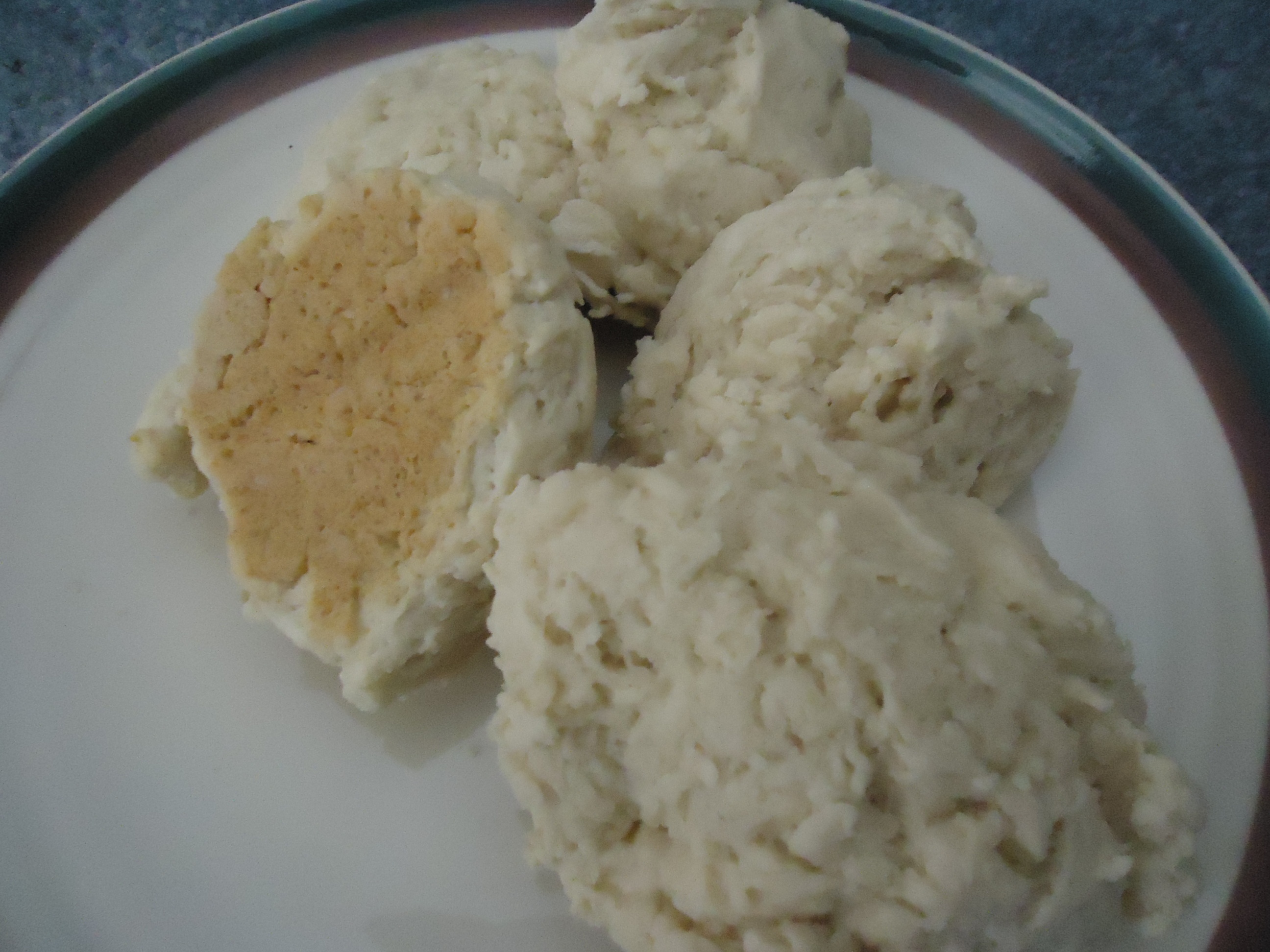
One cup of flour, turned into edible form.

As I’ve mentioned in other posts, I don’t own a single piece of camouflage clothing, so I must not be a “survivalist.”  On the other hand, I do recognize that it’s a good idea to have some rudimentary preparations for getting through life’s emergencies. Those emergencies can range from the very serious, such as the Zombie Apocalypse, down to the very minor, such as not wanting to go buy a carton of milk because it’s raining. In either case, it’s a good idea to have some food around the house.

For some people, that might mean investing in special “storage” food in adequate quantities to last the entire duration of the zombie outbreak. For other people, it’s a more modest supply of canned goods to last the length of a winter storm. I tend to be in the middle of that range. Therefore, when I think of emergency food storage, I think in terms of keeping adequate quantities of “normal” food on hand, rather than buying special “survival” food. As outlined on my food storage basics page, that can generally be accomplished at no cost, since it entails buying things that we will normally eat.

On the other hand, there is a limit to how much “normal” food one can store. If preparing for a longer term emergency, it might be advisable to purchase some items that can be packed away and forgotten about. On another page on my website, I have some ideas on how to store larger quantities of foods such as milk and eggs and a fairly reasonable price.

During the SNAP Challenge, I ate very well. This was in stark contrast to the experiences of others who were forced to eek by for a week on starvation rations. I was successful where others failed for one reason, and one reason alone. I was able to eat well because I invested a small amount of my very limited food budget on two items: A bag of flour, and a bag of sugar. Between these two bags, I spent less than five dollars, but these bags took care of all of my caloric needs for a whole week. With my remaining money, I was able to easily take those basic calories and make the meals appetizing and nutritious. But the flour and sugar kept me fed very well, and I had leftovers at the end of the week.

This is an important lesson for storing food for emergencies: In order to do long-term storage at a reasonable price, it is necessary to have some of that food be in the form of basic ingredients, such as flour and sugar. Of course, much of your emergency food storage should be in the form of foods that can be eaten with no preparation or minimal preparation. But as the SNAP Challenge has proven, this can make the cost prohibitive. To give you some idea, this special One Year Emergency Food Supply of “survival” food will set you back almost $10,000. The equivalent number of calories, if purchased in the form of flour at supermarket prices, would be about $400. In other words, special “survival” food can cost about 25 times as much as “normal” food in the form of basic ingredients.

Therefore, it is clear that to have long-term food storage, you do need to plan around basic ingredients, just as I did during the SNAP Challenge. The difficulty with this approach is, of course, that it will entail cooking. During the SNAP Challenge, I made use of many modern conveniences, such as an oven, a toaster, and an electric coffee maker. During many disasters, some or all of these modern conveniences would be unavailable. And, of course, during many disasters, the electric power and/or natural gas will not be available.

One way of dealing with this issue is to spend thousands or millions of dollars on a survivalist bunker with all of the conveniences of home. All you need to do is stock it with thousands of gallons of diesel fuel, and you can live out the zombie apocalypse in style. For many, however, this is not an option. And for someone like me, who doesn’t even own a single piece of camouflage clothing, this isn’t a particularly good option.

A better way of approaching the problem is to be creative and figure out how the minimal preparation of food can be accomplished without all of those modern conveniences. In most cases, this will add some difficulty, but those difficulties are rarely insurmountable. Therefore, this morning, I decided to see how I could turn a cup of flour into edible food without using the oven. I normally use the oven to cook food, because it is very convenient. I merely set the temperature, put in the food, wait the specified number of minutes, and then remove the item. This process is made extremely convenient by luxuries such as a large volume in which to cook, an automatic thermostat, and even a timer. But these are mere luxuries. At its most basic level, the oven does one thing: It generates heat. This is all that is necessary for cooking. Everything else is nice to have, but not necessary. As long as you have a method to generate heat, it will be possible to cook. Therefore, as long as you have a method to generate heat, you can cut your food costs from $10,000 per year down to $400 per year. And at these lower prices, it is possible to store food for longer term emergencies.

To demonstrate this principle, I decided to turn a cup of flour into food that I can eat, without use of the oven. There are many ways in which this can be accomplished, although all of those methods require heat. For the heat, I could have used a charcoal grill or a backyard gas grill. I could have used a Solar Oven. I could have used a campfire. The exact method of generating heat is unimportant. Depending on the method, the exact cooking procedures might need to be modified. But as long as heat is available, then the flour can be turned into food.

I decided to use an electric turkey roaster to generate the heat. In many disaster situations, this would not be an option, since it requires electricity. But again, the exact method of generating the heat is unimportant. I merely want to demonstrate that it is possible to turn flour into food with any available source of heat. To one cup of Self Rising Flour, I added a quarter cup vegetable oil and a quarter cup milk. I used fresh milk, but powdered milk would have worked just as well. And since normal flour stores better, in an emergency situation, I probably would have used regular flour along with baking powder. But I’m merely establishing the concept here. The details can be worked out depending on what is available.

If you want more ideas about the concept of generating heat during an emergency, please visit my How To Make Coffee Without Electricity page.

The resulting biscuits are shown above. I baked the biscuits in the turkey roaster at the highest temperature setting (marked 400 degrees, although I suspect the actual temperature is lower) for about 40 minutes. Without a real oven, the biscuits never really get brown. But they tasted just fine. And more importantly, they represent food, even though they started out as basic ingredients that were not edible in their original form.

The important lesson of the SNAP Challenge is that with a bit of planning and a bit of creativity, it is possible to prepare for emergencies at a very low cost. If you think in these terms, then you don’t have to worry so much about FEMA coming to rescue you after a disaster. And more importantly, if you are concerned about others, then FEMA doesn’t have to worry so much about coming to rescue you after the disaster, and they can concentrate their efforts on others whose situation is more dire.


Our New Prairie Home

For over ten years, our parent website (w0is.com) and its predecessor websites have earned a small amount of income from the Amazon affiliate program. This income was very modest, but it was income, and we paid Minnesota income tax on that income.

In June, the Minnesota Legislature decided to kick us out of the state. As a result, we no longer earn this income in Minnesota, and we no longer pay Minnesota income tax. This website now earns income in another state, and Minnesota no longer sees a dime of that income. We got kicked out of the state because the Legislature bowed to pressure from large Minnesota retailers such as Best Buy and Target. These retailers were fretting about the unfairness of an unlevel playing field. From the sidelines, they watched the success of Amazon‘s business model and wondered why their customers were going to Amazon. They undoubtedly watched billionaire sports team owners successfully go to the legislature for help, and they decided to do the same thing. So they sent their lobbyists to St. Paul and asked the legislature to “level the playing field” for them.

They argued that Amazon is successful for one reason and one reason alone. It’s not because Amazon has better prices. It’s not because Amazon has a huge selection. It’s not because Amazon has great customer service. No, the only reason why Amazon is successful is, so the argument goes, is because Amazon does not need to collect Minnesota sales tax. Because Amazon does not have a physical presence in the state, it is not required to collect sales tax. Instead, customers are supposed to keep track of their own purchases and remit the “use tax” to the state themselves. According to the argument, Minnesota customers enjoy having to do this extra step, and this makes the playing field unlevel.

The Minnesota Legislature looked at the fact that Minnesota residents were making money by being Amazon affiliates, and decided that this was enough of a physical presence to warrant a demand that Amazon collect Minnesota sales tax, effective July 1. Predictably, as it had done in other states that had tried the same trick, Amazon decided that it wasn’t going to do business with affiliates in the state, effective that same date.  Unless they moved, those affiliates were out of a job.

In short, Amazon was told that they needed to fire their Minnesota affiliates or else collect the tax.  They complied with this demand, and thus leveled the playing field, by firing the Minnesota affiliates.

A website such as w0is.com doesn’t have too many ties to the physical world. We exist in “the cloud”. Our main physical presence is in the form of a bunch of ones and zeros in a Utah data center. But we have some physical assets, and until June, our physical connection was with the State of Minnesota. In late June, we hastily moved those physical assets to Texas.

We thank the Lone Star State for providing us with temporary refuge. But Texas summers can be hot, and we’ve spent the past few months looking for a permanent home. We have now found it, and we are proud to say that our operations are now based in Madison, South Dakota.


Madison is a thriving town of 6,474, and is the county seat of Lake County. For a refugee from the land of 10,000 Lakes, it’s a beautiful area with many opportunities for outdoor recreation. It is near the 1350-acre Lake Herman and 2800-acre Lake Madison. Several South Dakota State Parks are in the area. And like its larger namesake in the Badger State, Madison is a college town, as the home of Dakota State University. Its a short drive from Sioux Falls, a bustling city which has used its location to take advantage of the economic chaos just to its east.

If you want to send us a postcard, you can send it to our new World Headquarters:

  • W0IS.com, Inc.
  • 110 E. Center St. #388
  • Madison, SD 57042

Nothing much has changed. Our ones and zeros are still located in Utah. But the physical assets of this cyber business are now located in South Dakota. And you can thank the Minnesota Legislature for encouraging us to find our new home here.

Super 8 Motel - Madison

For your stay in Madison, South Dakota, we recommend the 
Super 8 Motel – Madison
. They offer reasonable rates, clean comfortable rooms, free breakfast, and plenty of free parking. They’re less than a mile from our world headquarters.


Click Here For Today’s Ripley’s Believe It Or Not Cartoon


One Tube Radios

If you came here to read about the SNAP Challenge, you can find those posts at this link.

Much of my interest in radio was sparked by the discovery in my elementary school library of the Boys’ First Book of Radio and Electronics by Alfred Powell Morgan. I believe that the crystal set that I built was closely modeled on Morgan’s design. But what really made me drool was chapter 9, entitled “How to Build a One-Tube Regenerative Receiver”, which contained the instructions for constructing a receiver that promised to “bring in the signals of amateur, police, aviation, ship and broadcast stations hundreds of miles away.” It used a single tube and a handful of other components.

I never did build that radio, since many of the parts from the already old book were unobtanium. In particular, one of the required parts was two “4-prong plug-in coils for broadcast band when used with a 365-MMFD variable tuning capacitor.” According to the text, “you will need two readymade 4-prong plug-in coils” to cover the AM band. It also promised that “coils covering the higher frequencies or shorter wavelengths are also obtainable.” Those “obtainable” coils would be necessary to use the radio to listen to the elusive police calls. Of course, the police had migrated to VHF many years earlier, and I wouldn’t have been able to hear them on this radio, coils or no coils. But I didn’t know that, and I still wanted to build this radio to pull in those signals from hundreds of miles away.


Books by Richard Clem:

Please visit my author page at amazon.com


I more or less gave up on building the thing when my dad came home with the closest coil he could find. I had dutifully copied down the exact description, namely, two 4-prong plug-in coils for broadcast band when used with a 365-MMFD variable tuning capacitor. He took this to the local TV repair shop, and they gave him, at no cost, the closest thing they had, which was the ferrite loopstick antenna from a transistor radio. This, of course, didn’t look anything like a 4-prong plug-in coil. As a result, I never did build the radio.

I doubt if very many kids ever built an exact replica of Morgan’s one-tube radio. But a handful of adults, many years after the fact, have done so. There are YouTube videos of these modern replicas, and I have a number of them linked on my Alfred P. Morgan page. One particularly good example can be found at the website of Big Nick, a Cajun accordionist. (For some reason, it doesn’t surprise me that another kid who wanted to build the Morgan radio went on to become a Cajun accordionist.) Big Nick’s page includes a scan of Morgan’s book and some audio clips which prove that the radio does, indeed, work.

I didn’t build Morgan’s one-tube radio, but I’ve always been intrigued by the simplicity of the regenerative receiver. At one point, I think when was in high school, I found at a hamfest an unbuilt kit for a Globe Patrol solid-state regenerative receiver, which I built. It was identical to the one shown on this page. It performed quite well, although at the higher frequency range (about about 15 MHz, if I recall), it cut out and wouldn’t go into regeneration. In recent years, my son and I built the Scout Regen Receiver from Hendricks QRP Kits. It’s a very good performer from about 3-8 MHz.

A couple of years ago, I actually did build a one-tube radio. I never actually made a contact with it, but this was actually a one-tube transceiver for 80 meters. I never saw the ad when I was a kid. If I had, I’m sure I would have lusted over it. But Western Radio of Kearney, Nebraska, produced the Weskit BN-1, which used a single tube for both transmitting and receiving. The tube in question was a 3A5 dual triode. One half of the tube was used for transmitting, and the other half was used for receiving. To switch from transmit to receive, the filament voltage for one half of the tube was turned off, and the other half was turned on. According to the diagram, it could be used with a 3 foot base-loaded whip antenna mounted right on the top of the radio. While a 3-foot antenna isn’t going to be very efficient on 80 meters, the diagram promised that it would be sufficient for “up to 2-6 miles”. Surely, had I known that such a thing existed, I would have wanted one of these 2-6 mile portable radios.  The schematic linked above can be found at http://home.comcast.net/~sheldon_wh/bn1.html.

Frankenradio based on the Weskit BN-1

Frankenradio based on the Weskit BN-1

A couple of years ago, armed with this schematic, I decided to build a replica of the BN-1. I never made an on-the air contact with it, but both the transmitter and receiver functioned. With the receiver, I copied some signals on 80 meters, a couple of strong SW broadcast stations, CHU (the Canadian time signal station) and even an SSB aviation weather broadcast. I measured the input power on transmit, and it was about 50 mW. The signal sounded surprisingly clean on the air in my own receiver. My replica of the BN-1 is shown here. As you can see, the construction technique is hasty and crude. But the thing actually worked.  The design is about as simple as possible to allow both transmission and reception with the bare minimum of components.  As far as I can tell, there’s not even any direct connection between the receiver section and the antenna.  The connection is apparently accomplished from coupling within the tube, since the antenna is coupled through the coils to the plate of the transmitter.  One of these days, I’m going to rebuild it as a more aesthetically pleasing version and actually put it on the air.

I’m not aware of any one-tube radio kits, but this one looks intriguing. It’s a Two Tube Receiver Kit from Antique Electronic Supply, and is available for puchase from Amazon. The frequency range isn’t stated, but it claims to cover both AM and shortwave. There’s no word on whether or not it will get those elusive police calls, but the coils are presumably included.

If you’re looking for cheap shortwave receivers in general, please visit my Cheap Shortwave Receiver page, where you will find cheap shortwave radios starting for under $10. And if you’re looking for more of his books, please visit my Alfred Powell Morgan page.


What Can We Do About It?

During this challenge, I was not hungry. I actually ate very well.  I had to make some challenging choices, and I did have to do a little bit of work. I didn’t have a lot of money to work with, but I managed. Therefore, it would be easy for me to proclaim that I was able to do it, therefore anyone should be able to do it. And indeed, millions of Americans, whether or not they receive government assistance, prove every day that they are able to do it.

I did, indeed, eat cake last night.  But I don’t think I should simply say “let them eat cake.”  Not everyone is able to do what I did.  Not everyone is able to make the decisions that I was able to make, and not everyone has even the rudimentary kitchen skills that I have. As the SNAP Challenge has shown, even seemingly educated people make stupid choices, such as buying $1.08 hard boiled eggs, or wasting their money on Honeycomb cereal, popsicles, and root beer. Other people make unwise decisions, either because they are forced to, or because they don’t know any better. There are, indeed, people who need help, and there are ways that we can help them.

Jesus tells us that he was hungry and you gave him something to eat, that he was thirsty and you gave him something to drink, that he was a stranger and you invited him in, that he needed clothes and you clothed him, that he was sick and you looked after him, and that he was in prison and you came to visit him.

We can do all of these things on our own. We don’t need anyone’s permission to do any of them. We don’t need organizations to do them for us, and we don’t even need our government to do them for us. (Notably, Jesus never said that he was hungry, and you convinced Cesar to take someone else’s money and use the money to feed him.)  But in many cases, we can do these things more efficiently if we work together with others. The following is a list of some of the many organizations set up to do exactly those things. This is certainly not an exhaustive list. It’s simply a list of organizations with which I am familiar. They all do their job well, and are worthy of your support. Some are faith based, but all are willing to help anyone, regardless of faith.

And we should also remember that hunger is not a phenomenon that affects only the United States. Indeed, most of America’s poor are wealthy beyond the wildest dreams of most of the world’s population. During my challenge, I made use of luxury items such as an oven, a microwave oven, a freezer, and even an electric coffee maker. It’s humbling that I can use all of these things without giving it a second thought.  And for most of the world’s population, these are unimaginable luxuries. But in America, most of even the very poor have these luxury items available. Billions of people around the world need to feed themselves with far less than $26.01 per week. Here are some organizations that help them:


SNAP Challenge Day 7: The Final Day

I’ll write some more reflections later, but for now, I’ll just recap my final day of the SNAP Challenge. This is the last day of the challenge to eat only food that I purchased for $31.50. My total spending for the week was $26.01, which included 10 cents Minnesota state sales tax, meaning that I came in $5.49 under budget.

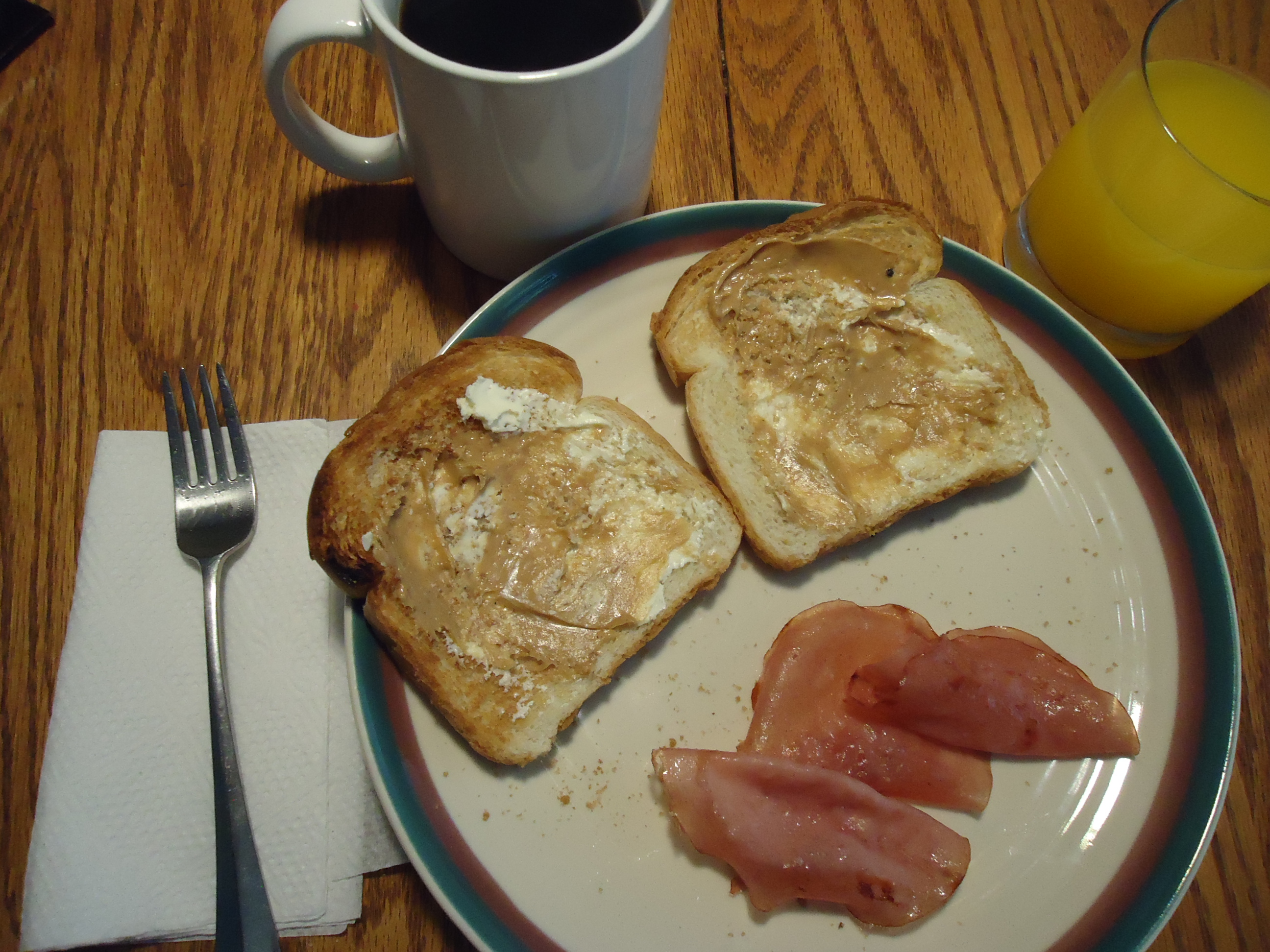
For my final day, I still had leftovers, so I didn’t bother preparing Breakfastanything new. I ate well, but the variety suffered somewhat. Breakfast consisted of two slices of toast with the remaining peanut butter, along with the three remaining slices of ham. This was served with a glass of Sunny D and, of course, coffee.

Lunch


I still had two hamburger buns, a third of a pound of ground beef, and three slices of cheese. Therefore, I made two cheeseburgers, which I ate with the last of the canned vegetables, a glass of Kool-Aid, and some cookies. The kids were having hotdogs for an early supper after school, so I used the last slice of cheese for a late afternoon wiener wink.

Dinner consisted of the last calzone, the very last slice of bread with aSupper generous serving of margarine, and the last of the cookies. I also finished off the Sunny D with supper. I have about enough Kool-Aid mix for about another glass, in addition to the one remaining unopened packet.

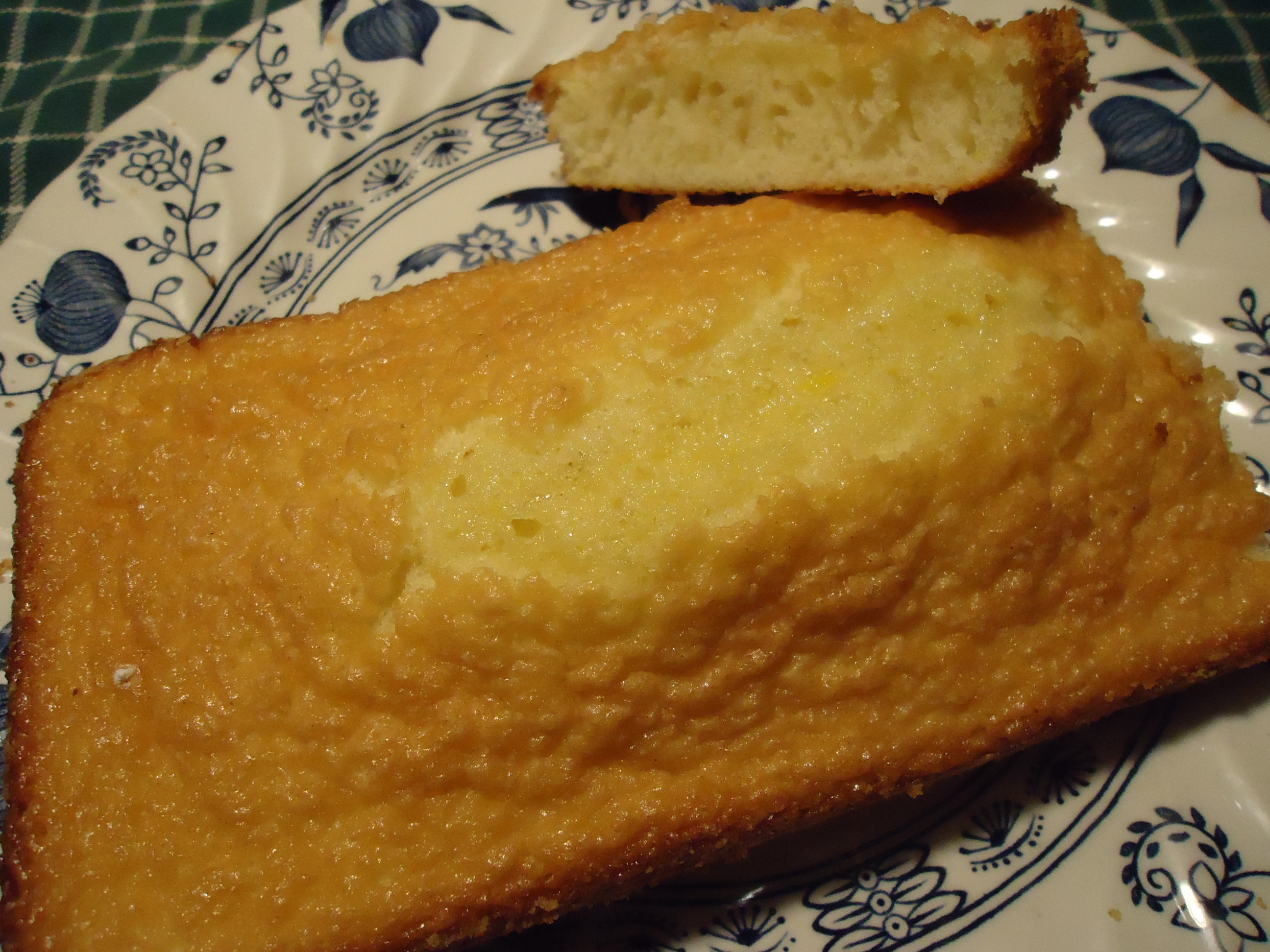
Sponge CakeA few days ago, when searching for “self-rising flour recipies”, I came upon this cake recipe.  I had plenty of flour and sugar, so I was careful over the last couple of days to keep enough eggs and margarine in reserve. To finish out the week, I made the small recipe shown on that page. It turned out rather well and is shown below. The recipe appears to originate in India, and shows most of the ingredients by weight rather than volume. Fortunately, we have a scale and I was able to deal with the unfamiliar notation without having to do any complicated conversions.

Over the course of the week, I jealously guarded “my food”, only allowing the kids to taste a couple of my cookies. With the end in sight, however, I decided to share my little cake with the rest of the family.

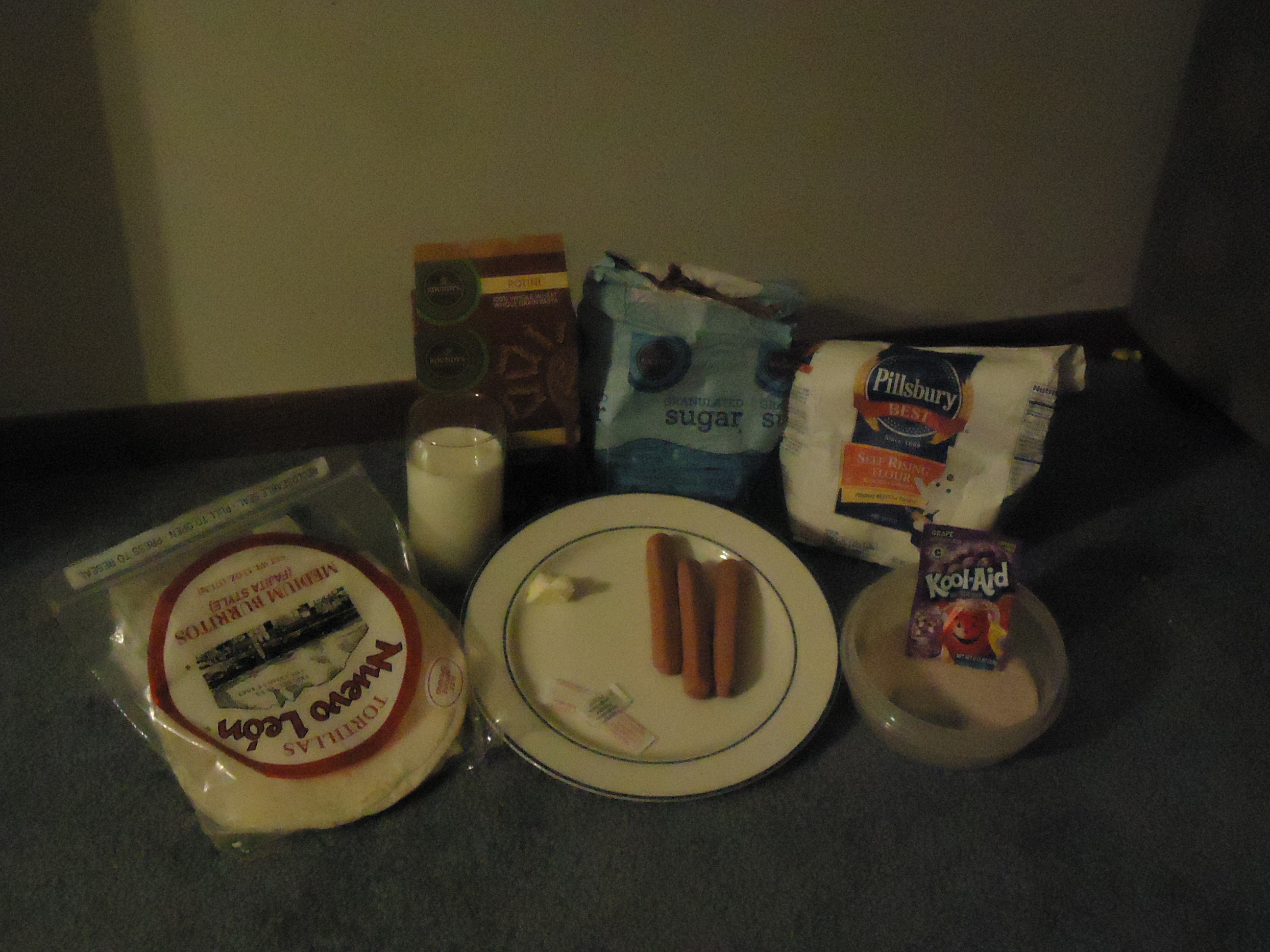
My remaining supplies of food consist of the following:

My remaining food

My remaining food

About a pound each of the sugar and flour; five tortillas; three hot dogs; about a tablespoon of margarine, about 8 ounces of milk, one packet of Kool-Aid along with a little bit from another packet; two little packets of salt; one packet of pepper; and a half box of pasta. I also have (not pictured) about 4 ounces of coffee, split between the Family Dollar and Dollar Tree brands. And, as noted above, I have $5.49 remaining in my budgeted money.


SNAP Challenge: Day 6

I had another busy day with no opportunity to take pictures of food.  But here’s what I had to eat:

Breakfast:  Two slices of toast with peanut butter, glass of Sunny D, and coffee.

Lunch:  One of the calzones, Kool-Aid, and a couple of the peanut butter cookies.

Supper:  The rest of the pasta, one ham and cheese sandwich, and a slice of bread, washed down with Kool-Aid.

I did experience a bit of hunger this evening.  We had a Cub Scout meeting, and as pack treasurer, I was very busy collecting the receipts from our annual wreath sale.  Incidentally, if you’re in the Twin Cities and want to order a Christmas wreath, you can still do so for a couple more days.  I have full details at w0is.com.  Pizza was available, buy I couldn’t avail myself of any.  I didn’t get home until about 8:00, and I was hungry by the time I did.  Fortunately, I still had the last of the pasta in the refrigerator, and I was able to warm it up.

For tomorrow, I still have enough coffee for one more pot.  I still have a little bit of ham, two eggs, some cheese, a third of a pound of frozen hamburger, and bread, among other things.  The flour and sugar are lower than I had anticipated, but I’m sure I have at least a pound of each.    I think I’ll be in good shape.  I should be able to eat well tomorrow, and still have a few groceries left over.  In addition, I still have about $5 in my budget, and I don’t think I’ll need to spend any of it.


SNAP Challenge Day 5

I don’t have any food pictures to share today, Day 5 of my SNAP Challenge.  For seven days, I’m subsisting on food which I have purchased with a budget of $31.50.  So far, I’m about 5 dollars under budget.  My previous 4 days are documented at this link.

I was out of the house for most of the day today, an experience undoubtedly shared by most SNAP recipients.  Yesterday, I made six sandwiches and a batch of cookies.  Today, I ate all of the sandwiches and about half the cookies.  I was walking around outside most of the day at a Cub Scout event.  It included lunch (hot dogs) which I needed to forego.  Instead, I ate four of my sandwiches, and made myself a glass of Kool-Aid.  I didn’t want to carry liquid around with me all day, and I didn’t splurge on pre-sweetened Kool-Aid.  Instead, last night, I mixed a cup of sugar with one of the 20 cent packages, and made my own pre-sweetened drink mix.  The peanut butter cookies made a good snack, as I ate a few in lieu of the normal things I would have eaten, such as trail mix or granola bars.

Lunch did give me an opportunity to talk to some of the Cub Scouts about what I was doing.  One of them asked me if I had enough money to buy food.  I told him that I did, but I wanted to know what it was like for the millions who can’t truthfully answer yes to that question.

For a quick supper at home, I finished the two remaining sandwiches (one ham and cheese and one peanut butter).  I also had two quesadillas, consisting of a flour tortilla and a “cheese” slice (whose package, like that of the shredded “cheese”, nowhere contains the word “cheese”).

Tonight, we went to a party, where I nursed a glass of water, which prompted some conversation.  When one person asked why I was doing this, I didn’t have a particularly good answer, other than to say that it gives me the right to criticize others who have done it.

I should be in good shape for the remaining two days of the challenge.  I still have two calzones in the freezer, and enough to make myself two cheeseburgers (a third of a pound of ground beef, a few more slices of “cheese”, and two hamburger buns).  Of course, I don’t have any ketchup or mustard.  I also have half a loaf of bread, almost a full stick of margarine, a cup or so of milk, a couple of eggs, a few hot dogs, a few slices of cheese, and a pound or two each of flour and sugar.  I don’t think I’ll need to make any more purchases, and I think I might even be able to bake myself a cake Monday.