Author Archives: clem.law@usa.net

Heathkit Mohican Shortwave Receiver

1960EI6Seventy-five years ago this month, the July 1960 issue of Electronics Illustrated reviewed the then-new Mohican shortwave receiver from Heathkit. The reviewer reported that the assembled the $100 receiver in about 40 hours, and the result was an astonishingly “hot” 10-transistor superheterodyne that covered 560 kHz to 30 MHz (with apologies, apparently, to the stations at the very bottom of the broadcast dial).

The general coverage receiver would serve the SWL well, and the set was also a good backup receiver for the ham, especially on the lower bands. The bandspread dial was calibrated for the amateur bands, making it particularly useful. The receiver ran on flashlight batteries, but an AC power supply was available for an additional $9.95.

The set weighed in at 17 pounds, making it “transportable” rather than “portable” according to the reviewer.


Radio Control Fishing Boat

1960JulyEE5I’m not sure this is legal everywhere, so check your local fish and game laws before you give it a try. But apparently, it was legal in California in 1960, as shown by the experience of George Boling, W6NOD.  He rigged up this radio controlled boat to pull in the big fish.  The motor and rudder are initially locked, and the remote control, running two watts, allowed him to control the rudder.  The boat trolls, and when a fish bites, the tension slowly winds in the reel, and the motor speed increases slightly.  When the fish is hooked, he steered the boat to shore.

The picture and description appeared in the July 1960 issue of Electronics Illustrated.


Potsdam Declaration

Today marks the 75 anniversary of the Potsdam declaration of July 26, 1945.  The proclamation by the Americans, British, and Chinese, laid out the terms for Japanese surrender, the alternative being prompt and utter destruction.

The declaration was never sent via diplomatic channels, but within hours, it was sent in English by shortwave, and shortly thereafter, the Japanese translation was broadcast.  In addition, over three million leaflets containing the text of the declaration were dropped over Japan by American bombers.

The stations broadcasting the message included KSAI on Saipan, whose 50,000 watt signal on 1010 kHz blanketed the home islands as strong as any Japanese station.  Within days, leaflets specifically mentioning Hiroshima and Nagasaki were dropped, warning civilians to evacuate those locations.


Science Fair Idea: Remote Fire Extinguisher

1940JulyPS3If Junior decides to do this science fair project from the the July 1940 issue of Popular Science, he should probably change the name. The magazine calls this gadget a carbon dioxide “gun,” and he’ll probably get in a lot of trouble if he calls it a gun. If he calls it a “remote fire extinguisher,” he’ll probably get a blue ribbon instead of a visit to the police station.

Like all young men like to do, the two shown here are playing with fire, but making a scientific point in the process. In this William Tell stunt, one young man has a candle on top of his head. The other one puts it out with the Carbon Dioxide Gun–er, I mean remote fire extinguisher. Whatever it’s called, the device is simply a can with a balloon stretched over one end. Inside, a piece of dry ice is placed. When the balloon drum is tapped, an invisible cloud of CO2 is expelled, which causes the flame to be deprived of oxygen.


Making Use of Outdoor Spaces for Learning

During the current public health emergency, it is important that to the extent humanly possible, everyone should maintain social distancing from everyone other than their own household.  Therefore, most traditional live educational activities cannot be done safely at this time.

I’m not a doctor, but to me the evidence seems obvious that in most cases, the main problem is indoor gatherings.  This New York Times article, for example, discusses the issue, and this WebMD article, discusses the possible role that building air conditioning systems might play in the spread of COVID-19.  Being outdoors does not completely eliminate the possibility of the spread of coronavirus.  But it seems like common sense that it’s a lot safer being outside than being inside a building with other people.  The CDC’s recommendation is that “in many areas, people can visit parks, trails, and open spaces as a way to relieve stress, get some fresh air, and stay active.”

I believe that the use of outdoor spaces is an excellent way to re-start many activities that have been put on hold. For example, I believe that schools should seriously consider the use of outdoor spaces for classrooms. You can read more about that idea at the website of
Green Schoolyards AmericaThis New York Times article shows how outdoor learning spaces were used by schools during earlier public health emergencies.

Unfortunately, even though some students thrive with distance learning, not all of them do. Whether it’s because of their family situation, a poor internet connection, or just because it’s not their learning style, many students are falling behind both socially and educationally due to the lack of in-person schooling. The use of outdoor spaces can provide these students with a safe place for their education to continue and help stop a new achievement gap.

Similarly, the CDC recommends that communities of faith should consider holding their services outdoors.

I believe the outdoors is a suitable venue for many in-person activities that have otherwise been put on hold.  After months of being isolated, it can be refreshing to see colleagues in person, even if they’re behind a mask and six feet away.

Since I’m in the business of presenting educational programs (namely, continuing legal education programs for attorneys), I decided to take the initiative and see whether my programs could be done outside, so I went ahead and scheduled one in a nearby city park.   I wanted to start with a small group, so I advertised by e-mail to only about 20 attorneys who live in the general area.  The response rate was actually higher than usual, and three attorneys sent an RSVP that they would be attending.  Since I wanted the initial group to be small, I didn’t advertise any further.

I asked all of the attendees to either bring their own chair, or plan to sit on the ground.  The program was paperless.  Ordinarily, I would print the course materials, and there would be a sign-in sheet.  Instead, the course materials were downloaded from the web, and I took attendance at the beginning of the program.  In the course description, I outlined the physical distancing guidelines.

There were a few bugs (including a few literal ones), but overall, I don’t see why larger events can’t be done outside.   The weather was perfect.  It was a sunny day, but as you can see from the photo above, we were able to sit in the shade.  Obviously, this won’t work as well in January in Minnesota, but for much of the year, the weather is suitable.  I announced that this program was going to take place rain or shine, and I don’t think rain would have been much of an issue, if attendees simply brought an umbrella or raincoat.

I did learn a few lessons:

  • Face masks make it harder for people to hear.  I started the program wearing a mask, and I asked whether it made it difficult for them to hear me, and they said that it did.  Since I was standing more than 20 feet away, we decided that it would be best for me to speak without a mask.
  • If we had a larger crowd, it would have been advisable to have a sound system.  In an indoor setting, I can easily speak to 20 or 30 people without a PA system.  But outdoors, my voice doesn’t carry as well, particularly when airplanes fly over or trucks drive by.   Also, if any of the speakers are wearing a mask, the sound system is even more important.
  • Some planning does need to be done for seating.  One attendee didn’t bring a chair and instead sat on the ground.  Apparently, there were enough ants in the park that he had to stand up after 45 minutes.

The outdoor air is not a magic bullet that kills germs.  However, it seems to me that an outdoor location is much safer than corresponding indoor spaces.  At this time, it ‘s probably not safe to go back to business as usual with respect to things such as education and business.  But it seems to me that creative use of outdoor spaces will bring us much closer to normal than we would be able to do with virtual gatherings alone.

In education, for example, some kids simply require in-person instruction.  Some of them thrive learning online, and that’s great.  But I think even occasional in-person sessions might make a huge difference for some kids.  If it’s too risky for them to have their math or English class in a traditional classroom, then it seems to me that educators should at least consider the idea of having those classes outside.

For distance learning, technology is required.  But for outdoor learning, very little technology is necessary.  As my experience shows, a small public address system would be useful.  But other than that, little more than chairs, desks, and a blackboard are required.  If there’s a video to be watched, then the students can watch it at home.  But it seems to me that many kids need some attention where things can be explained in person, so that the teacher has in-person feedback of whether they’re being understood.  That doesn’t require a building–it merely requires a space, and in most cases, an outdoor space will serve the purpose.

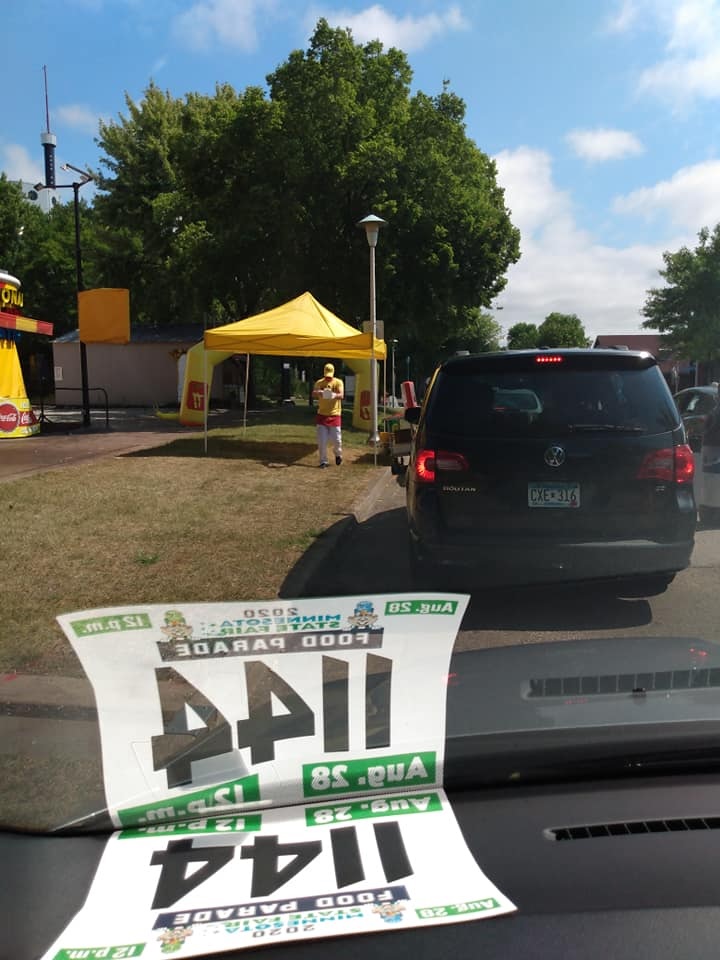
I’ll be doing future programs outdoors, and it seems to me that many activities that are normally done indoors, such as meeting with clients, can be safely conducted outdoors.  As the weather gets cooler, being outdoors will be less suitable.  Therefore, some of my future programs will be in a drive-in format where participants can listen on their car radios.


CB Channel 9

1970JulyPEToday marks the 50th anniversary of the designation of CB channel 9 for emergency use only, July 24, 1970. This announcement appeared in the July 1970 issue of Popular Electronics.


Electric Hot Dog Cooker

1960JulyEE4I suspect many of our readers have independently invented the idea shown here for an easy way to cook a hot dog. You simply run 120 volts through the hot dog, and the hot dog serves as a resistor and cooks itself. This incarnation of the idea was designed by prolific electronics writer Len Buckwalter and appeared in the July 1960 issue of Electronics Illustrated.

This design is a bit safer than what I remember doing. While cooking, the hot dogs are safely concealed inside a bakelite box. They don’t start cooking until the lid is inserted, since the cord is part of the lid, and there’s a TV-style safety interlock.

The young scientist wishing to come up with an interesting science fair project won’t go wrong with this idea. It give a great demonstration of Ohm’s law and the power law. And sharing the hot dogs with the judges certainly won’t hurt in earning that coveted blue ribbon.

Of course, you don’t want to be disqualified by electrocuting one of the judges, so it’s best to come up with some form of interlock.

The venerable Presto Hot Dogger used the same principle to cook hot dogs. It unfortunately seems to be out of production, but they show up on eBay.  But making your own is easy, and a lot more fun.


1940 Three Tube Superhet

1940JulyPS4This young woman and her faithful canine companion are pulling in a program from a distant station thanks to the very sensitive and selective three-tube superheterodyne receiver described in the July 1940 issue of Popular Science,

For added sensitivity, the detector is regenerative. Only one IF coil is used, meaning that the set can easily be aligned for peak performance. If a strong station is present in the area, then the article showed how to add a volume control in addition to the regeneration control shown in the circuit.

1940JulyPS5


1920 Magnavox Telemegafone

1920JulTalkingMachineWorld1These days, we tend to take for granted the availability of amplified sound systems. If you’re going to make a speech before a large auditorium, the first matter of business is to turn on the sound system and locate the microphone.

BigStickSpeechBut there was a time, not so long ago, that electronic sound amplification didn’t exist. A hundred years ago, if you were going to be a preacher, a politician, or some other kind of public speaker, then you had to learn how to project your voice. If the people in the back row couldn’t make out your voice, then they weren’t going to hear the Gospel, they weren’t going to vote for you, or they weren’t even going to hear what you had to say.  When Theodore Roosevelt gave his “big stick” speech in 1901 at the Minnesota State Fair, hundreds of people heard him because he used a big voice to deliver it.

It was only in the 20th century that public speaking came to be associated with electronic amplification.  As we’ve previously reported, for example, Notre Dame cathedral was first wired for sound in 1925.  And when the Iowa legislature was getting a sound system in 1939, it was probably about the same time as other legislative chambers.

One of the first examples of an electrical sound system comes from Talking Machine World a century ago this month.  This particular system wouldn’t have been of much use to preachers or politicians trying to be heard in a large auditorium, but it’s an early example of what would be perfected within a few years.  The Magnavox Telemegafone system shown here could be used with a phonograph, or with what we would today call a microphone, although that term hadn’t been coined.

I describe this as an “electrical” system rather than “electronic,” because there doesn’t appear to be any electronic amplification.  The microphone is probably a carbon mike, and the phonograph transducer probably is as well.  They drive the speaker directly.  The speaker does not have a permanent magnet.  Instead, it has a field coil powered by a 6 volt battery.

One of the described purposes is as a “novelty,” and a speaker who could project his voice well would probably be better off not bothering.  But within just a few years, the idea of electronic sound would become popular, and the profession of “sound man” would be born.  And a century later, we would take for granted that to speak before a large audience, we need to find the microphone and turn on the P.A.


1960 Two Tube AM-FM Stereo

1960JulyEEThis listener was undoubtedly the first on her block to tune in a stereophonic broadcast, thanks to the two-tube AM-FM stereo receiver shown in the July 1960 issue of Electronics Illustrated.

That’s right,  With only two tubes, this radio pulls in AM-FM stereo broadcasts.  If you wondering how that’s even possible, read carefully.  It doesn’t receive FM stereo broadcasts.  In fact, the FCC didn’t even adopt a standard for FM stereo until 1961.  Just like I said, it receives AM-FM stereo broadcasts:  An AM station is transmitting the left channel, the right channel of the program is being transmitted on FM.  The set is actually two separate two-tube receivers.  It uses a dual triode 12AT7, one half as a regenerative AM detector, and the other half as a superregenerative FM detector.  The set contains two audio amplifiers, each using half of a 12AX7.  A DPDT switch on the stereo headphones allows the listener to select AM, FM, or AM-FM stereo.

The author concedes that the set is basically experimental, and not high fidelity.  But he added that the set gave remarkable qualities of depth and direction to the sound.  By tweaking the coils a bit, the FM side could also be used to listen to TV audio when stereo broadcasts weren’t on the air.  The magazine noted that stereo broadcasts would be listed in the newspaper, and were available in many cities.

1960JulyEE3In addition to being the first on her block to have a stereo receiver, this woman could very well have been one of the few on her block to have an FM receiver of any kind.  They were starting to show up by 1960, especially in higher-end console radios for the home.  AM-FM portables were available, but as this issue of the magazine also shows, they were very expensive.  This Zenith AM-FM portable, the Royal 2000, gives every indication of being a top performer.  But it also sold for the princely sum of $189.95.

A minimum wage worker earning a dollar an hour would have to work for more than a month to afford this radio, and still wouldn’t have enough money to buy the eight D cells.  Putting together your own AM-FM stereo doesn’t sound like that bad a deal.

1960JulyEE2