 Occasionally, we need to write about very simple concepts, because we have discovered that those simple concepts are at risk of being lost to the ages. For example, you can find on our website instructions on how to make coffee without electricity.
Another simple concept that many people apparently don’t know about is the concept of General Delivery. Did you know that you can receive a letter or package by snail mail, even if you don’t have your own address? You can, and you can do it at almost any Post Office in the United States, or indeed, in the world?
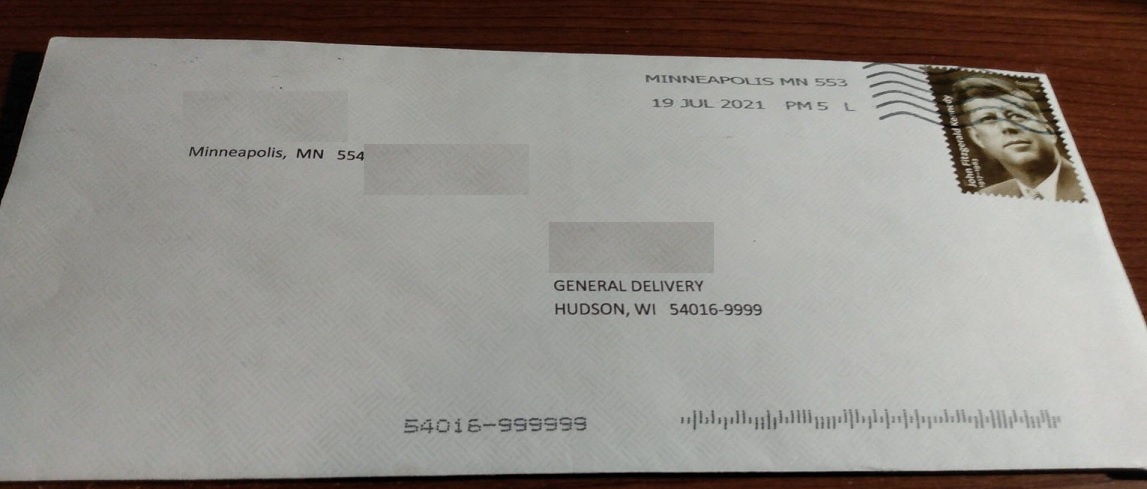
I mailed the letter shown above to myself, but it didn’t come to my home or business. I picked it up at the Post Office in another state where I don’t live, and have no connection. I did this by mailing it to myself at “General Delivery.” I waited a few days, and then picked it up at the Post Office in the town to which I sent it.
Why You Might Need General Delivery
 There are many reasons why someone may need to take advantage of the General Delivery service. When I asked the postal clerk, she said that the most common reason was people who were temporarily between addresses and had to receive mail. For example, someone might move out of one apartment but can’t move into their new home for a few days. In the meantime, they might stay in a hotel or stay with friends. If they don’t know exactly where they are going to be staying, but need to receive mail during this time, they can receive mail by General Delivery.
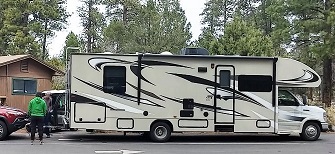 General Delivery is also useful for people who are traveling. For example, many full-time RV’ers take advantage of General Delivery. If you live in an RV, you probably have a permanent address set up somewhere. But if you decide to order something on Amazon, you will want it sent to you on the road. If you know exactly where you will be staying, sometimes you can have it sent to the campground or motel. But if you don’t know exactly where you will be staying, you can take advantage of General Delivery.
 General Delivery can also be part of an outdoor experience. For example, hikers hiking a long distance, such as thru-hikers on the Appalachian Trail can arrange to have supplies such as food and clothing mailed to them at towns along the trail.
One way to send money to a stranded traveler is to send them a Postal Money Order via General Delivery. They can usually cash the money order right at the Post Office. (For more information on money orders, see my Money Order Basics page.)
If you are ever relocated due to a natural disaster or emergency, General Delivery could be an important way to stay in touch. If you are displaced, you can ask friends to send you needed items or even money by General Delivery to the closest Post Office. After a disaster, the Post Office is often one of the first services to re-emerge. And in outlying areas away from the disaster, it will probably continue to operate without interruption. If you are forced to relocate, then General Delivery can provide you with a needed mailing address.
There might be situations where someone needs to receive mail without the knowledge of their roommates or nosy neighbors. If so, they can arrange to have the item sent by General Delivery. Or, there might be situations where a service is provided only to persons with an address in a certain ZIP code. A General Delivery address might provide that ZIP code. Finally, General Delivery provides a method for homeless persons to receive mail.
In short, any time you need to receive mail but don’t have an address, you can use a General Delivery address.
How and When To Send General Delivery
Practically anything that can be sent by mail can be sent to General Delivery. It can be a letter or a package. To make sure you get it, you’ll need to make sure that the sender follows these instructions carefully.
First of all, they need to figure out when to mail it. There might be exceptions, but you can generally plan on the Post Office holding the item for about two weeks. If they send the item too late, then it won’t arrive in time. But if they send it too early, then it might be returned to the sender before you pick it up.
In my example above, I mailed the letter from Minneapolis, MN, on a Monday. I went to the Post Office to pick it up on Thursday, but it hadn’t arrived. I went back a week later (a total of 10 days after mailing) and it was there. I would recommend planning on it taking about one week, so have them mail it one week before you plan to pick it up.
If the timing is more critical, then it might be best to send the item by Priority Mail or Express Mail. If you mail early enough in the day, then Express Mail is almost always delivered the next day, almost anywhere in the country.
Finding a Post Office
Next, you need to decide on the Post Office at which you will get the letter. Most Post Offices offer General Delivery, but not all of them do. There are exceptions, but in large cities and their suburbs, General Delivery is available only at the main downtown Post Office. For example, I live in the Minneapolis-St. Paul area. In Minneapolis and suburbs, the ZIP codes begin with 554. In St. Paul and suburbs, the ZIP codes start with 551. In those suburbs with 551 and 554 ZIP codes, General Delivery is available only at the downtown Post Office. You can’t get general delivery at the neighborhood Post Office. This is true in other cities as well. For example, in Chicago, in any area with a 606 ZIP code, the only place to get General Delivery is the main downtown Post Office.
If you live or work downtown, this is great. But going downtown isn’t particularly convenient for many people these days, so if you are in an urban area, the most convenient place to get General Delivery might be an outlying suburb. In general, if the first three digits of the ZIP code are not the same as the main city Post Office, then that Post Office will have General Delivery service. So in the Minneapolis-St. Paul area, most of these outlying suburbs have a ZIP code starting with 550. In general, all of these post offices offer general delivery. Since I had to drive a few miles anyway, I decided to send my experimental General Delivery letter to another state, to Hudson, Wisconsin, ZIP code 54016.
In general, small town Post Offices will have General Delivery available. If you are sending something to a larger city, then you will need to check more carefully on which post office to use.
There are exceptions to all of these rules, so before deciding on a Post Office to use, you should look it up on the USPS website. From the main page, select “Find USPS Locations” from the menu. Then, click on the Post Office you are interested in. The hours will be listed. For larger towns, it will be open about 9:00-5:00 Monday through Friday, and Saturday mornings. Almost all Post Offices will be closed on Sunday. In small towns, the hours might be much more limited, such as just a couple of hours in the morning. So before selecting a Post Office, be sure to check that you will be in that town at a time when the Post Office is open.
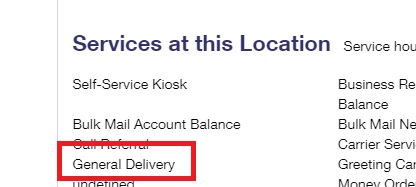 Then, scroll down to “Services at this Location.” If General Delivery is offered, it will be shown on this list. If it’s not listed, you’ll need to pick another Post Office.
After confirming that the Post Office offers General Delivery service, scroll to the top of the page, where you will see the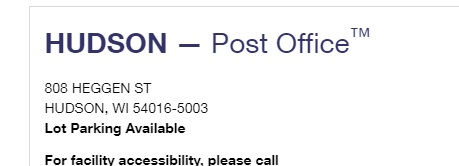 address of the Post Office. The street address is shown. You’ll obviously need this information later, so that you can find the Post Office to get your letter. The person sending the letter, however, will not need the street address. Instead, they will need the City, State, and first five digits of the ZIP code (but not the last four). So in this example, they will need: HUDSON, WI 54016
Addressing the Letter
Once you have found a Post Office where you can get your item, the sender can address the letter or package. The letter should be addressed with your full name. You will need to show identification when you pick up the letter, so make sure the letter is addressed to your real name, and not a nickname. The second line of the address should be: GENERAL DELIVERY. The third line of the address should be the City, State, and ZIP code. The nine-digit zip code for General Delivery always ends in -9999. So they should include this after the five digit ZIP. So in the example above, the ZIP code is 54016-9999.
Here’s an example of the address. You are sending a letter to John Q. Public, and he will pick it up at the main Post Office in New York City at 421 8th Avenue:
John Q. Public
General Delivery
New York, NY  10001-9999
Make sure the sender includes their return address. If something goes wrong, the letter will be returned to them. Of course, they should make sure to include enough postage, which they can calculate online. If it’s a small item they’re sending, the postage for a letter of up to one ounce is 63 cents (as of April 2023), or one “Forever” stamp. (For information on how to buy stamps, see our Buying Stamps During Quarantine page.)
Picking Up Your Item
After you have given enough time for your letter or package to arrive, you simply go to the Post Office to which it was sent. Just tell the clerk that you are expecting a General Delivery letter or package. They’ll go to the back room, and if it’s arrived, they will bring it out. You will need to show identification. When I picked up my letter, my out-of-state driver’s license was all I needed for ID.
General Delivery in Other Countries
The instructions on this page are specific to the United States, but most other countries offer the same service. So if you are traveling in another country and need to receive mail, you can probably take advantage of this service there. In most other countries, the service is called “Poste Restante”
Other Alternatives
The USPS is not the only way to send items if you don’t have a permanent address. Private delivery services such as UPS and FedEx allow you to pick up packages at fixed locations. However, USPS is still the least expensive. You can send a letter anywhere in the United States for only 55 cents.
And keep in mind that if you are buying an item from Amazon, another alternative is to have it sent to one of their lockers located all over the country.
The USPS official information about General Delivery can be found on their website.
Some links on this website are affiliate links, meaning that this site earns a small commission if you make a purchase after using the link.

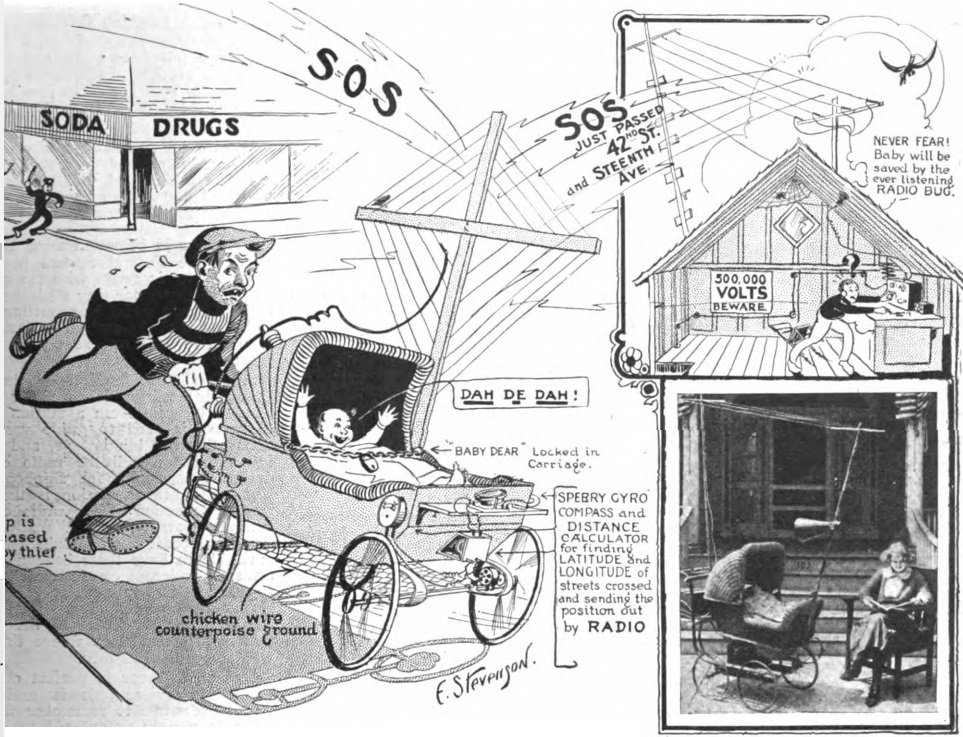
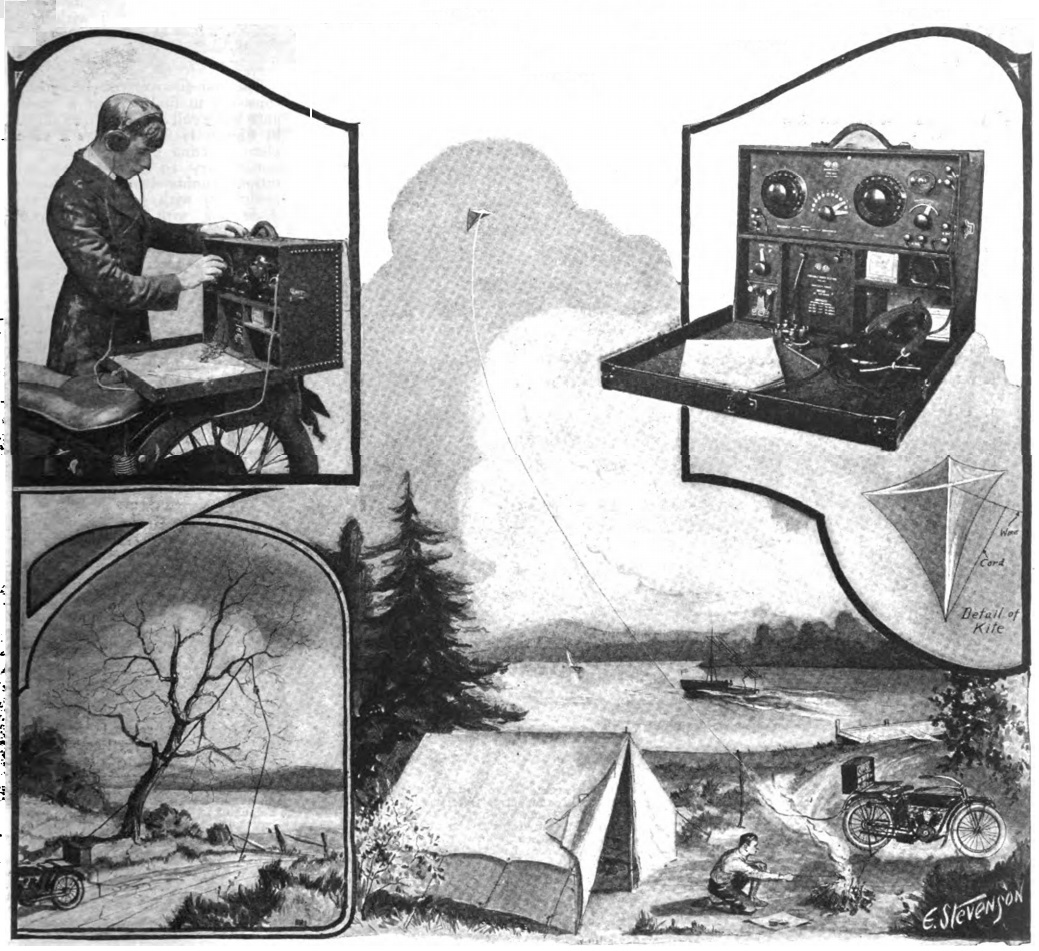 For the amateur radio enthusiast a hundred years ago, summer vacation didn’t mean a vacation from radio, and the August 1921 issue of Science and Invention contained some pointers on bringing the station along. Even if the method of getting there was canoe or motorcycle, the station shown here would prove very suitable. The transmitter-receiver combo is built into a compact case, with extra storage room for extra tubes, pencil, log, and whatever else was needed.