Monthly Archives: April 2026

1946 Solar Capacitors

This ad appeared 80 years ago in Radio Craft magazine, April 1946. We decided to get at the real backstory of how this young woman found her way into a capacitor ad, so we asked Google Gemini, who delivered this logical explanation:

In 1946, the world was finally trading in its olive drab for something with a bit more chrome. But for the boys down at the local radio shop, the “atomic age” was more than just a headline—it was sitting right there on the counter in a tailored trench coat.

Her name was Sarah, though behind her back, the consensus was that she was a total bombshell. She had a way of walking into a room that made every vacuum tube in the shop feel like it was about to red-plate.

She stepped up to the counter, reached into her pocket, and pulled out a cigarette. Before anyone could reach for a Zippo, “Sparky” Pete leaned over with his soldering iron. He offered the hot, tinned tip with a steady hand; she leaned in, took a light, and blew a cool plume of smoke toward the “No Smoking” sign.

“My portable,” she said, her voice like velvet. “It’s got a hum that won’t quit.”

She reached into her other pocket and pulled out a radio so small it seemed impossible. It was a sleek little set, the kind of miracle the magazines promised once the factories stopped making tanks.

Sparky popped the back off the set and whistled. “I see the problem, Miss. Someone tried to fix this with some old-fashioned, oversized wax paper caps. They’re crowding the chassis. In a set this small, that’s just asking for a meltdown.”

He reached for a yellow-and-black box on the shelf labeled Solar. He pulled out a handful of “Little Giant” MINICAPS. They were tiny, gleaming, and looked like they belonged in a watch, not a radio.

“You see these?” Sparky said, holding one up to the light. “These Solars are the real deal. During the war, they were the only thing tough enough and small enough to go into the proximity fuses of the actual bombs we dropped. If they could survive being shot out of a cannon and still trigger an explosion at the right microsecond, they can certainly handle your favorite swing station.”

He went to work, his iron dancing across the terminals. He cleared out the bulky, outdated components and tucked the Solar units into the tight corners of the chassis. They fit like they were born there.

“The military spent millions perfecting these so they wouldn’t fail under fire,” Sparky explained as he snapped the case shut. “Now, they’re the only reason you can fit a five-tube performance into a pocket like yours.”

He tuned it to the local station, and the music came through crystal clear—no hum, no hiss.

Sarah tucked the radio back into her coat. The lines of her pocket remained perfectly smooth, thanks to the space saved by the Solar tech. She gave the boys a wink that was more dangerous than a high-voltage rail.

“Thanks, boys,” the bombshell said, heading for the door. “It’s good to know the same stuff that won the war is now keeping me in tune.”

“Well,” Sparky muttered to the guys, “I guess it’s true what they say: it takes a set of those ‘bomb’ capacitors to keep a bombshell from having a blowout.”

Google Gemini was also kind enough to supply these Amazon affiliate links.  If you make any purchase after using one of these links, this website earns a small commission.

Gear Up Your Workbench

If you’re looking to do some “bombshell” level restoration of your own, here are a few essentials for the modern radio bench:


First Man in Space: 1961

Yuri Alekseyevich Gagarin. Wikipedia photo by Mil.ru, CC BY 4.0,

Today marks the 65th anniversary of the first human flight into space by Soviet Cosmonaut Yuri Gagarin aboard the Vostok 1 spacecraft, on April 12, 1961.  Vostok 1 was Gagarin’s only space flight.  Soviet officials were worried that a hero of the Soviet Union might die in a mishap in a later flight, so they grounded him.  Ironically, he was killed in 1968 at the age of 34, in a crash of the MIG fighter he was piloting in a training mission.


1941 Receiver Using Rectifier Tube

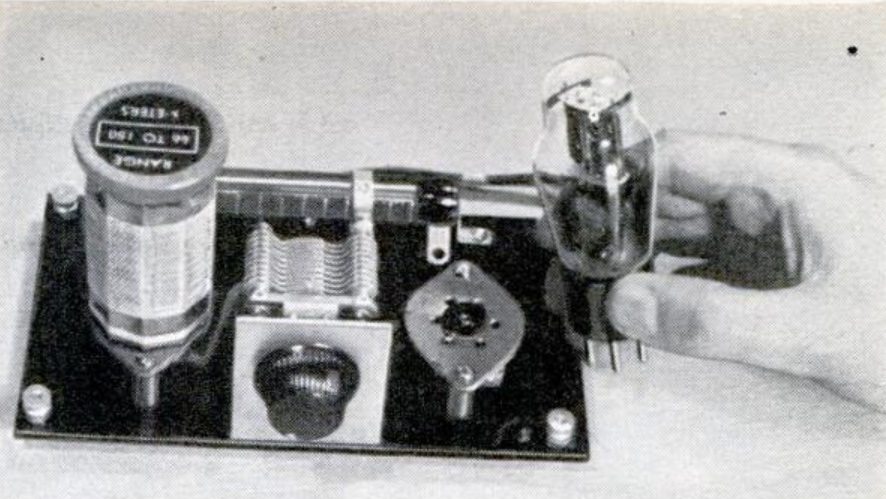
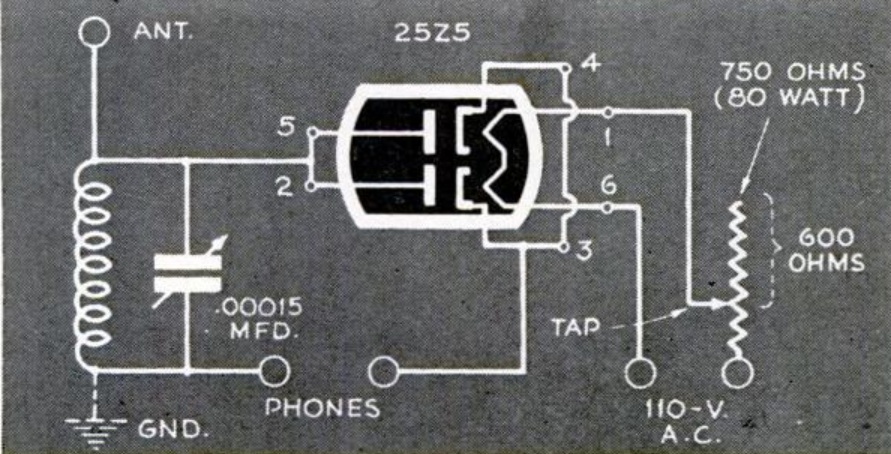
Eighty-five years ago this month, the April 1941 issue of Popular Science showed how to build this receiver. It’s essentially a crystal set, but instead of a crystal, it uses a 25Z5 rectifier tube. Since there is no B+ voltage in use, the magazine assures that there will be absolutely no hum. Also, it’s safe to ground the set, because there is no connection to the power, other than to light the filament.

Instead of 25 volts, the filament is powered with 5 or 6 volts, which is obtained by dropping resistors, and/or a “curtain burner” cord.


1946 Japanese Production of “Abraham Lincoln”

At first glance, this appears to be a picture of Abe Lincoln upset by being provided with a map produced by AI hallucinations, as he points accusingly at Nouth Calorina. He probably hasn’t even noticed that the Dakotas are there, despite not being admitted to the Union until a quarter century after that fateful night at Ford’s Theater.

But the map is actually the result of artistic license by the producers of the Japanese production of John Drinkwater‘s play Abraham Lincoln. And that’s not Honest Abe; it’s actually actor Chojuro Kawarasaki playing the role. The photo appeared in the April 8, 1946, issue of Life Magazine, which notes that this was the first such production since long before the war, at Tokyo’s Imperial Theater. The play was “very carefully tailored for Japanese playgoers’ consumption,” and the theater was off limits for American GIs. Despite wearing elevator shoes, the 5 foot 7 actor was unable to get up to Lincoln’s 6’4″.

The magazine noted that “many Japanese, including Emperor Hirohito, have recently been professing themselves great admirers” of the Great Emancipator. Audiences were reportedly “large but not house-packing.”

While we don’t have a video of the Japanese production, the 1952 CBS-TV Studio One production can be viewed at the following link:


1966 Homemade Headphones

If you need a pair of headphones today, you can run down to the dollar store and find some that are quite adequate. Or you can go to Amazon, such as this link of headphones with free shipping, sorted by price.

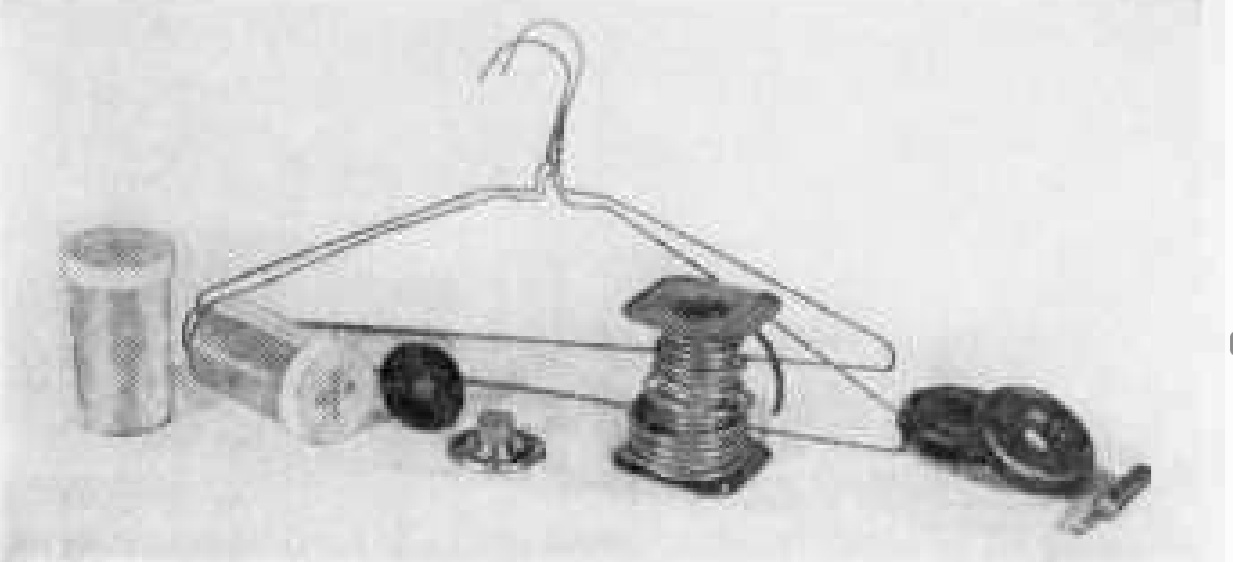
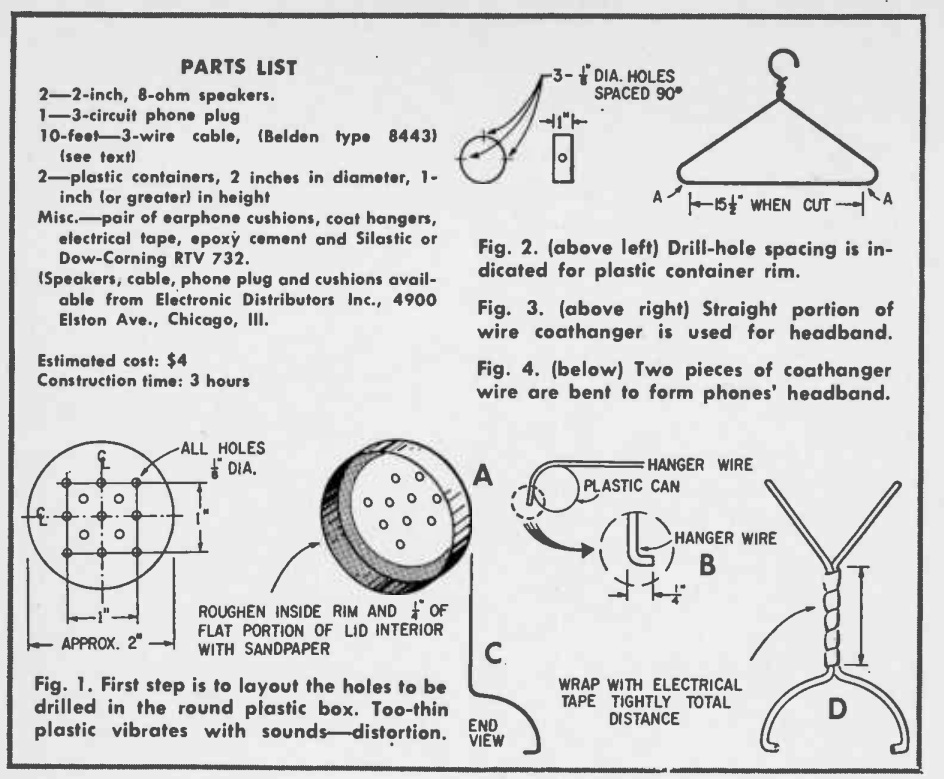
But sixty years ago, they could be rather pricey. Fortunately, the April 1966 issue of Radio-Television Experimenter showed you how to make a set yourself. The idea is pretty self-explanatory. You started with a couple of two-inch speakers, and the remaining components could be found at a variety of locations. You needed some wire coat hangers, some small plastic enclosures, some padding, and a little bit of ingenuity, and you would be the first on your block with a pair of stereo headphones.

The total cost was said to be $4, and the project would take about three hours.


Some links on this site are affiliate links, meaning this site earns a small commission if you make a purchase after using the link.

1956 Shortwave Converter

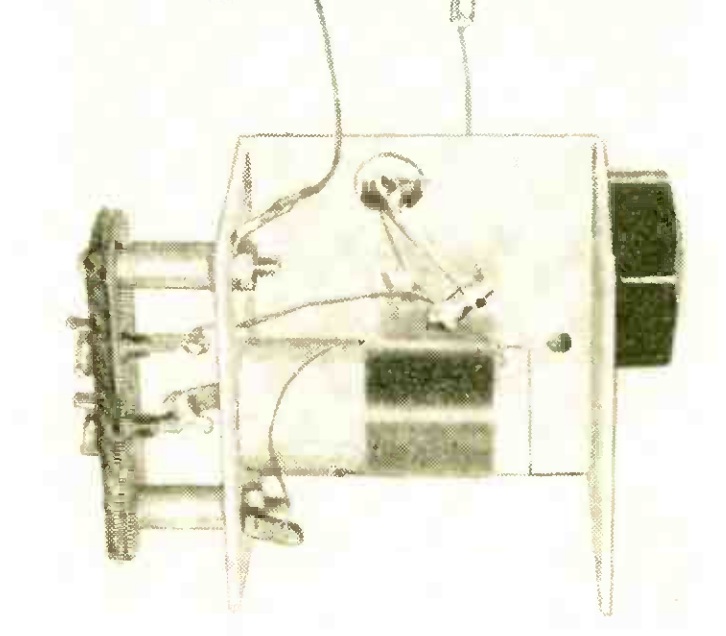
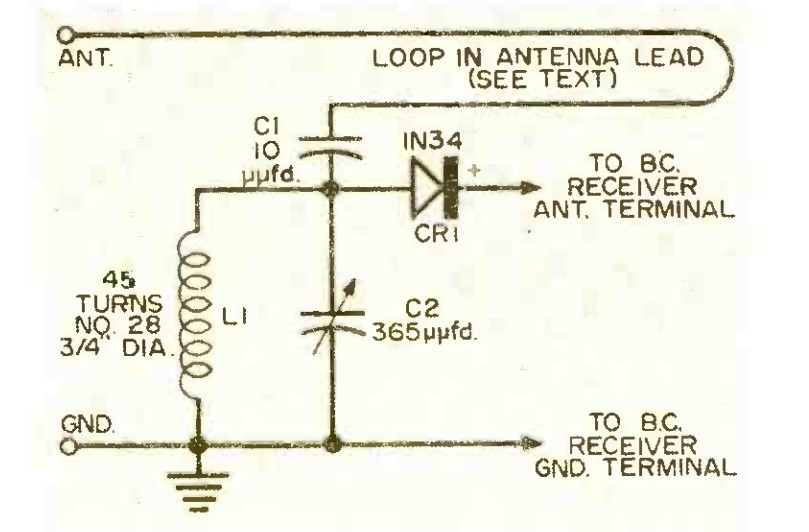
Seventy years ago this month, the April 1956 issue of Popular Electronics showed this extremely simple shortwave converter. It consisted of little more than a diode and tuned circuit, and the output went to the antenna terminals of an AM radio, or looped around the coil. (The loop antenna would pick up too many broadcast stations, so the author recommended replacing it with a small loopstick.)

The author doesn’t explain how it works, and I don’t know either, other than perhaps by brute force on strong signals. But according to the author, he was able to pick up foreign broadcast stations and amateurs on 40 and 80 meters. Even though it appeared in the April issue, I’m inclined to believe that it worked through brute force. We previously covered a similar idea for making prewar FM radios pick up signals on the new FM band.


1941 “Powerless” Keying Monitor

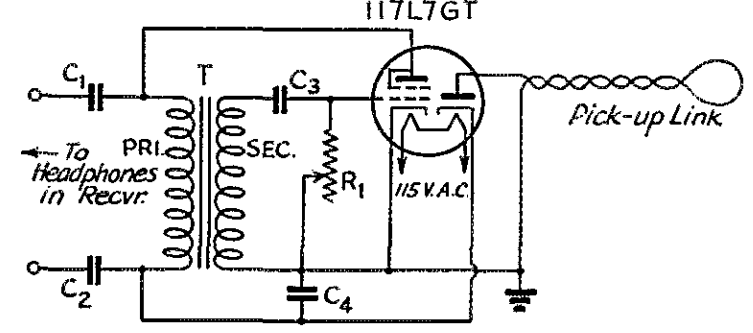
Eighty-five years ago, the April 1941 issue of QST included this hint (or perhaps it was a kink) sent in to the magazine by C. Ray Wagner, W2FEN, for a “powerless” (other than filament) keying monitor. It uses a 117L7GT tube, half of which is a simple audio oscillator.  The rectifier half of the tube is powered by a pickup from the transmitter, and this RF is rectified to supply the B+ for the oscillator.  The result is that when the circuit is powered up (in other words, when there’s RF coming from the transmitter), the oscillator puts out a side tone.


1946 British Homemade Canoe

Eighty years ago this month, the April 1946 issue of Practical Mechanics showed how to build this 8-foot canoe, described as a “serviceable craft for young people.” Canvas-covered boats were apparently more common in this size, but the magazine noted that the framework required sound knowledge and woodwork experience, and not everyone was up to the job. This craft, on the other hand, was made of all wood, and was recommended for boys 12-14.

It was built with watertight compartments fore and aft, so there was no likelihood of it sinking should it capsize. But just to be safe, we recommend wearing an approved life vest.

The boat had a flat bottom, making it suitable for shallow waters. Most of the lumber was 7/8 inch thickness, and was described as shelving. A coat of creosote, and then paint, rendered the vessel waterproof. The magazine noted that the completed boat might be somewhat awkward to move around on land. It suggested temporarily affixing tram wheels and axle to the stern.

In most states in the U.S., a vessel thus constructed does not require registration. For example, in Minnesota, no registration is required if the craft is less than ten feet. You are required to have aboard the aforementioned life vest, and we recommend that you wear it. Interestingly, in Minnesota (and probably most other states), you are required to have aboard a whistle or other noisemaker, as well as a flashlight.  The article explains how you can make your own paddles, but at Amazon, you can find these nifty telescoping paddles.


Some links on this site are affiliate links, meaning that this site earns a small commission if you make a purchase after using the link.