Monthly Archives: November 2025

1950 Television Excise Tax

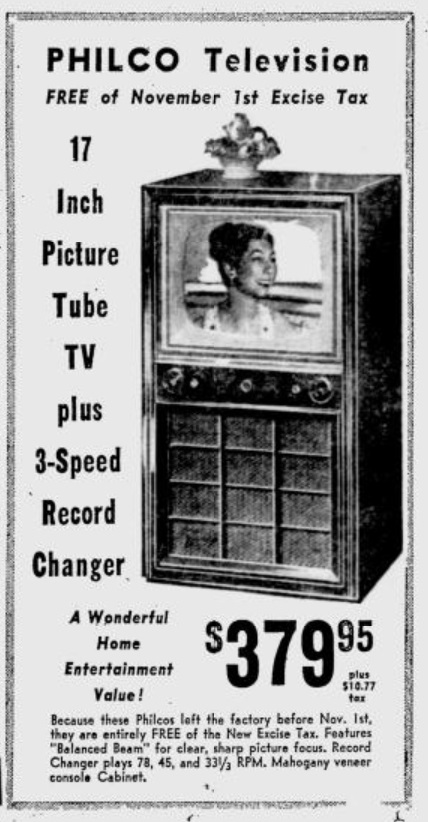
If you were thinking of being an early adopter and getting a television 75 years ago, it might behoove you to act fast, since Congress had just enacted a 10% excise tax.  But if you acted fast, you could get one without the tax, as reminded by this ad in the November 18, 1950, issue of the Pittsburgh Post-Gazette from the Hahn Furniture store.

This handsome Philco 17-inch set also featured a three-speed phonograph, all for $379.95.


1925 Record Sales Methods: The Audak System

1925One hundred years ago, times had changed in the record business, and the progressive record dealer had abandoned old-fashioned, profit-absorbing methods. Instead, they had adjusted to modern conditions by getting the Audak System, from the Audak Co., 565 Fifth Avenue, New York.

Instead of expensive booths, customers could privately listen to records they might want to buy the Autek units, six of which could be put in the place of the old-fashioned booths.

The ad appeared in the November, 1925, issue of Talking Machine World. Of course, very soon, most customers would probably reviewing records by listening to them on the radio.


POTA/WWFF Activation, Adams Homestead and Nature Preserve, SD

This morning, I did a Parks On The Air (POTA) and World Wide Flora and Fauna (WWFF) activation of Adams Homestead and Nature Preserve,  a state park in North Sioux City, South Dakota.  I was returning home after presenting a Continuing Legal Education program in neighboring Sioux City, Iowa,  The most direct route home would have kept me in Iowa, but I couldn’t resist adding a few miles to my drive and activating a park in the “rare” state of South Dakota.

The 1500-acre park along the Missouri River contains about 10 miles of trails, as well as an archery range.  It also features a number of historic buildings, including the original homestead, other cabins, a church and a school.  Admission is free.   Most of the buildings and visitor center are closed on weekends, but the grounds are fully accessible.

I started on 15 meters, which sounded relatively quiet, so I quickly switched to 20 meters.  FT8 results weren’t very promising, with only one QSO.

Since CW gets through no matter what, I switched to 20 CW, where I made 20 contacts over the course of an hour.  My best DX was NL7V in Alaska, who pulled my QRP signal out of the noise and gave me a 229 report.  I made a number of Park-to-Park (P2P) contacts, including KD8DEU, who was coincidentally just down the Missouri River from me at Blanchette Landing Access State Conservation Area in Missouri.

I was operating from my car, with my zBitX, with a Hamstick on the car.  As you can see from the maps below, I was getting out on both FT8 and CW.  The FT8 map from PSK Reporter has fewer spots than I would have expected, whereas the CW map from Reverse Beacon Network is pretty typical.

FT8 Signal Reports from PSK Reporter

CW Spots from ReverseBeacon.net.


1955 Gaertner One-Tube Radio Kit

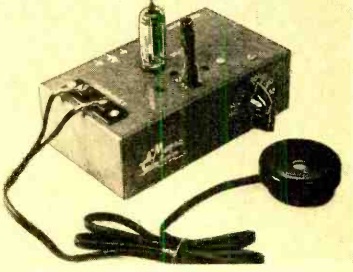
Shown here is a one-tube radio kit covering the broadcast band, from the Gaertner Co. of Los Angeles. The battery version was $6.95, and there was also an AC version for $8.95.

It was shown in the November 1955 issue of Popular Electronics, which stated that it could be assembled readily by someone with no previous knowledge of electronics.  The address for more information was  A & M Company, 616 S. Serrano Ave., Los Angeles.


General Television & Radio Model 534 Grand Piano Radio

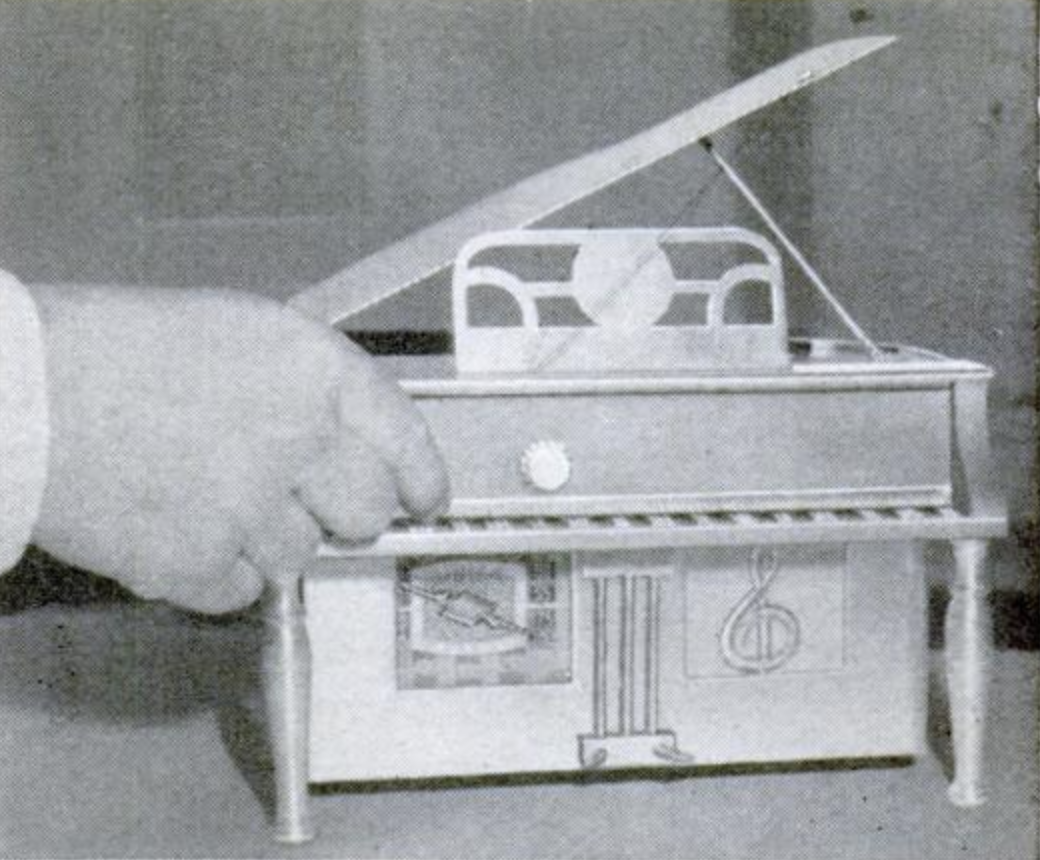
Eighty-five years ago this month, the November 1940 issue of Popular Science showed off this novelty radio disguised as a miniature grand piano. The volume and tuning knobs were above the keyboard, the the speaker and tuning dial appeared below.

The magazine does not give the manufacturer, but it appears to be General Television and Radio model 534, and if you would like to restore one, it looks like it’s available on eBay.


1955 Fire Box Telephone

Before the widespread availability of cellular phones, or even landline phones, the problem of alerting the fire department to an emergency was solved in many localities by the fire alarm call box, which dates back to the 1850’s. The device was essentially a telegraph sender. When it was pulled, it would encode a message via a rotary sender to headquarters. The message would indicate only that the alarm had been pulled, and the location. Apparently, the call box also had a telegraph key, which would allow responding firefighters or police to call back to the station to request a backup.

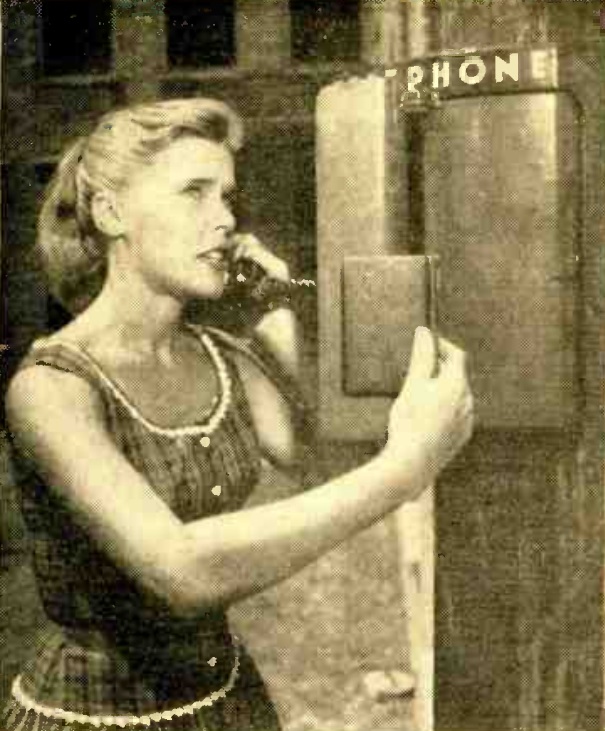
It wasn’t until 70 years ago that the system was updated by the addition of a telephone. This photo, from the November 1955 issue of Popular Electronics, shows this young woman calling in an emergency somewhere in Omaha, where the new boxes were being field tested by Bell Labs. They would soon be available in Indianapolis, Miami, Syracuse, and Sioux Falls.

As with the old call boxes, merely lifting the receiver from the hook would flash an alarm signal with location to headquarters. This young woman seems to have her wits about her, but the magazine noted that if the person was too excited to speak, the message would still get through. The operator at headquarters had the ability to transfer the call, such as to police headquarters. The phone would also allow responding police officers or firefighters to call directly to headquarters. Before the days of handheld radios, it wasn’t unusual for cops walking a beat to periodically phone in to the station with one of these.

When I was growing up in the 1960s and 70s, there was such a call box located on a utility pole across the street from our house. (We were also across the street from a school, which might have been the reason it was located there, to prevent another tragedy such as the 1958 Our Lady of the Angels fire in which help was delayed due to the lack of a call box. (A passing motorist saw the fire and went to a store to call the fire department, but was initially refused because the phone wasn’t for public use.)

I don’t remember whether the alarm near our house had a phone, or just an alarm to be pulled. I never got a close look at it, because I knew it wasn’t the kind of thing that I should mess with in the absence of a real emergency. False alarms were surprisingly rare. On a handful of occasions, I recall a fire truck showing up, looking around to confirm that there wasn’t any fire, and then resetting the alarm. But that didn’t happen very often.


Armistice Day Blizzard

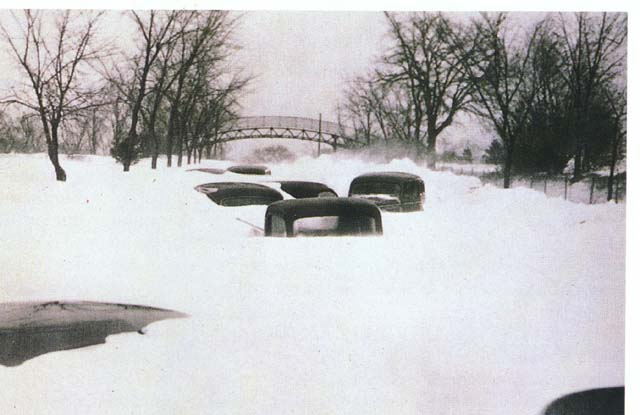
Armistice Day Blizzard, Excelsior Blvd., West of Minneapolis. Minn. Historical Society photo, NOAA.

Today marks the 85th anniversary of the Armistice Day Blizzard of November 11, 1940. Here are some of our previous posts:


Zenith M660A “Explorer” Receiver, 1965

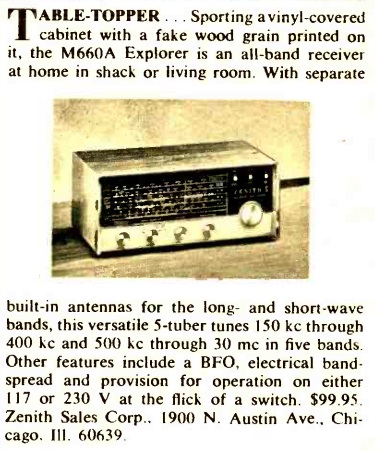
Sixty years ago this month, the November 1965 issue of Electronics Illustrated introduced the Zenith Model M660A “Explorer” receiver.  It covered longwave, the standard AM band, and shortwave, and included a BFO.  The picture here doesn’t really do it credit, but the handsome set really would have been in place in the living room.

You can see the set in operation at this video.


1940 Automatic Soldering Iron Switch

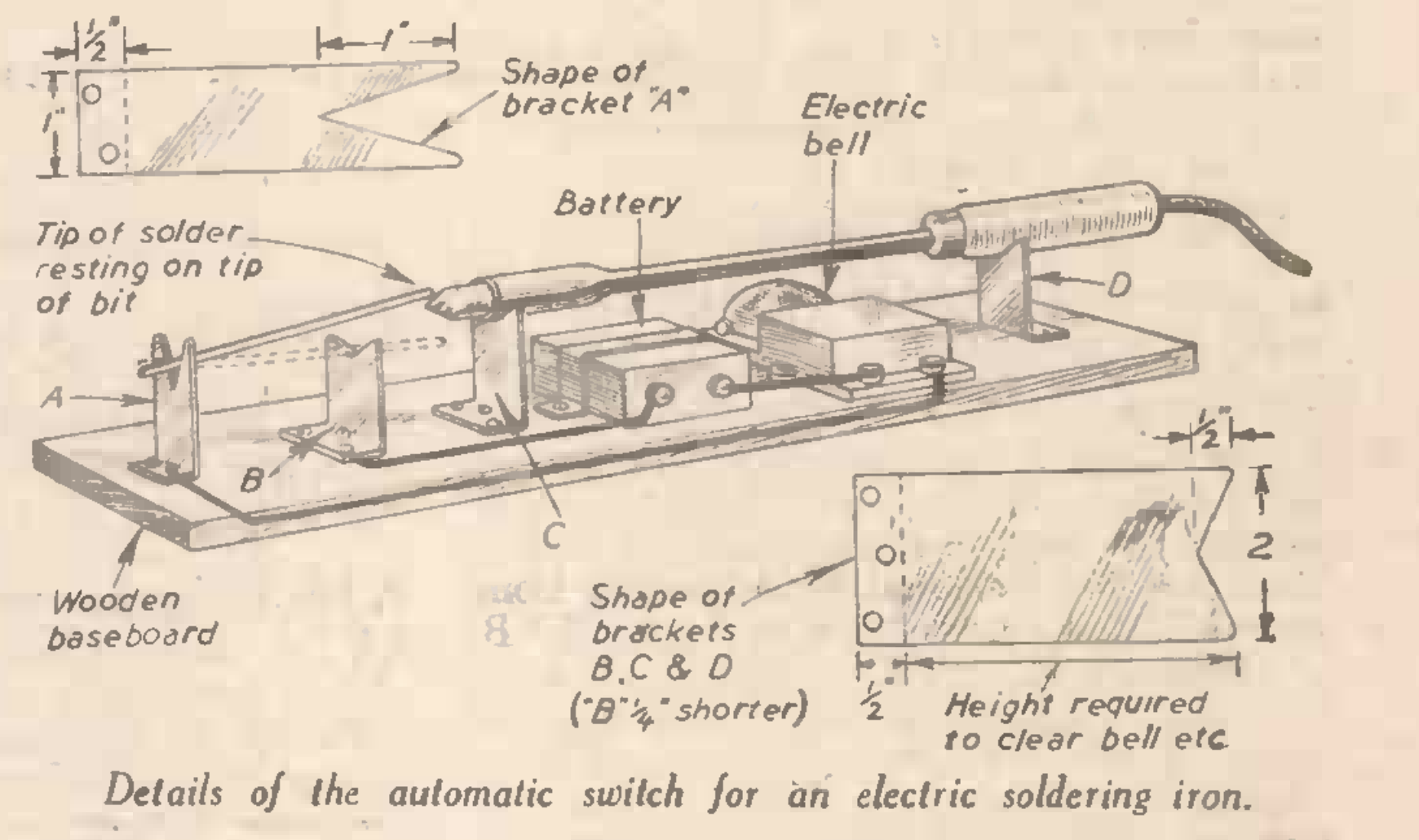
This helpful hint appeared 85 years ago in the British Practical Wireless magazine, November 1940. At first, I thought the idea had been sent in by Rube Goldberg, but it was actually one J. F. H. Aspinwall of Wirrall. who sometimes plugged in the soldering iron and forgot about it. His solution solved that problem, and also let him know when the iron was hot enough. He rested a piece of solder between one buzzer contact, with the other end on the iron, perched precariously above the other contact. When the iron was hot enough, the end of solder melted and the piece dropped onto the other contact, completing the circuit and sounding the buzzer.


1940 Bike Radio

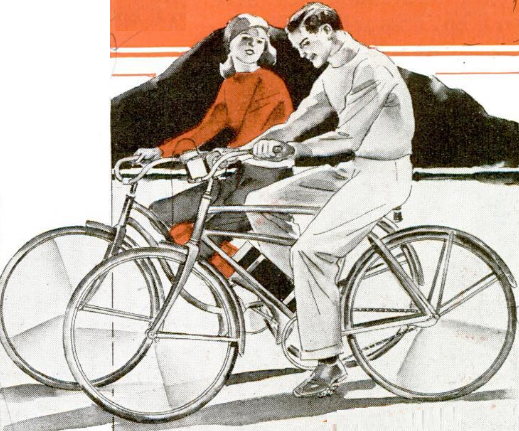
Eighty-five years ago, this couple enjoy a favorite radio program as the pedal the streets and roads, thanks to a three-tube radio that works in practically the same manner as a car radio. Two of the tubes are triple purpose, in addition to the power tube feeding the 4-inch speaker. The set came with antenna, mounting hardware, and the battery, which can be seen on the frame.

The radio appears to be the Motorola B-150, which we have previously written about.