Monthly Archives: October 2025

Wartime Halloween

Happy Halloween from OneTubeRadio.com!

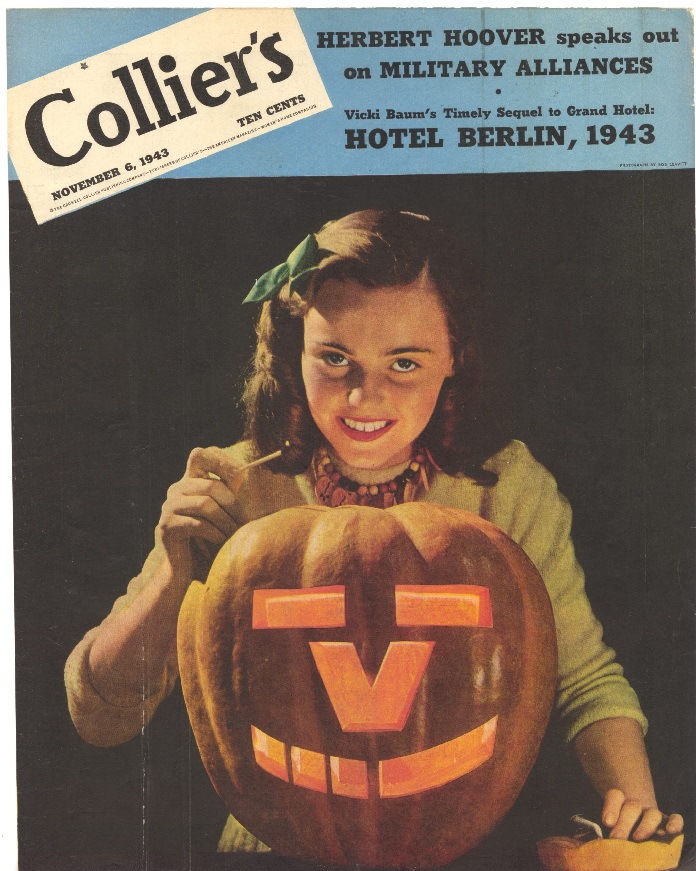
Just because there was a war going on didn’t mean that Halloween shouldn’t take place as scheduled. The cover of this 1943 issue of Collier’s magazine shows that even the Jack O’Lantern had gone to war. Instead of a scary face, it was proclaiming V for victory. In addition to the letter V, it included the …- Morse code for the letter.


Claypool Trio, Indianapolis, 1925

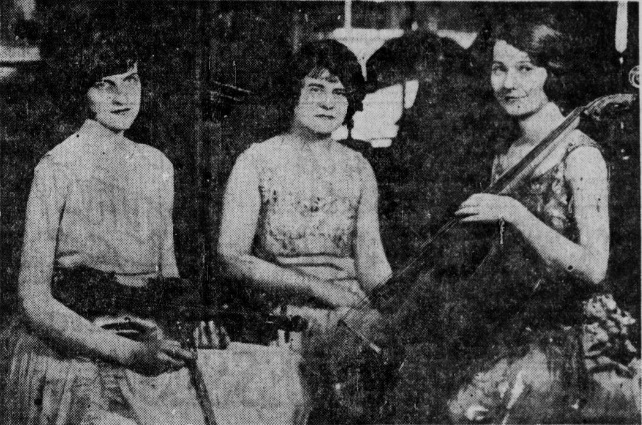
If you were listening to the radio 100 years ago tonight, October 30, 1925, in Indianapolis, you would be able to tune in to the Claypool Trio, composed of Alma Miller Lentz on the violin, Carolyn Turner at the piano, and Consuelo Couchman Rettig on cello. The program was heard on WFBM (now WNDE), and this photo appeared in the Indianapolis Times, October 29, 1925.


1950 Sales Opportunities

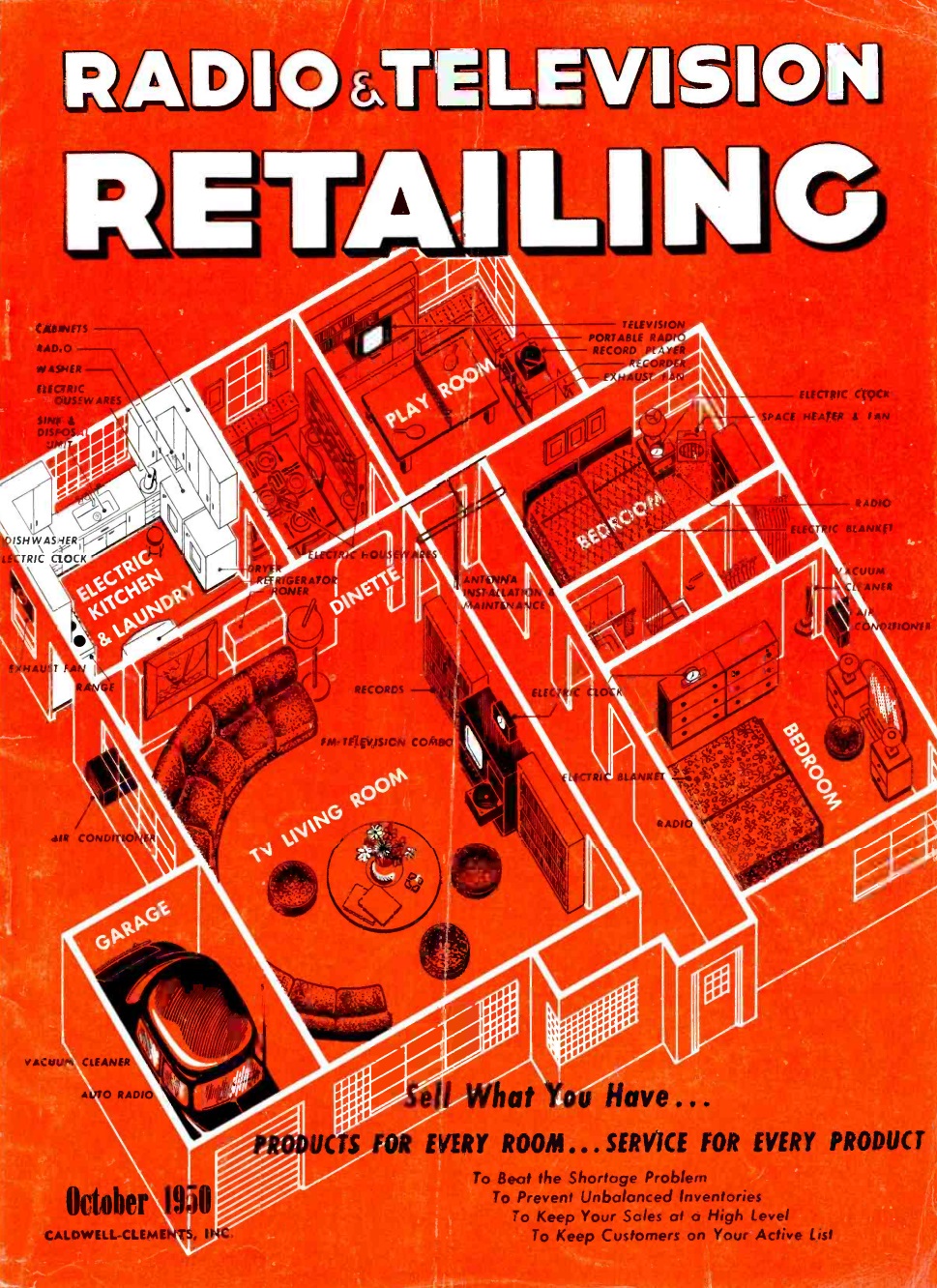
Seventy-five years ago, the cover of Radio and Television Retailing, October 1950, reminded retailers that there were sales opportunities in every room of the house. In addition to radio and television, many dealers carried a wide range of other electrical appliances.


1955 British Signal Tracer

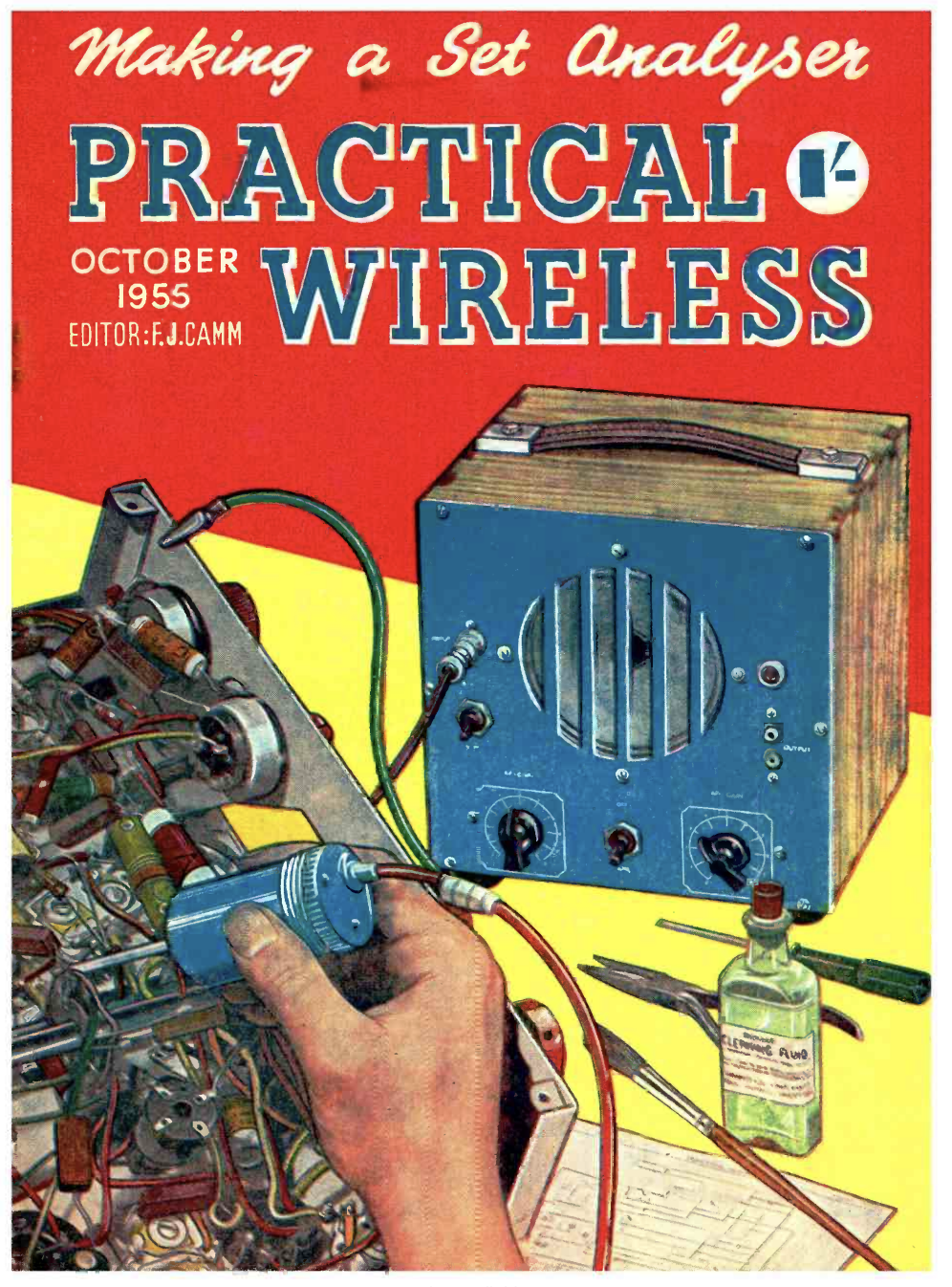
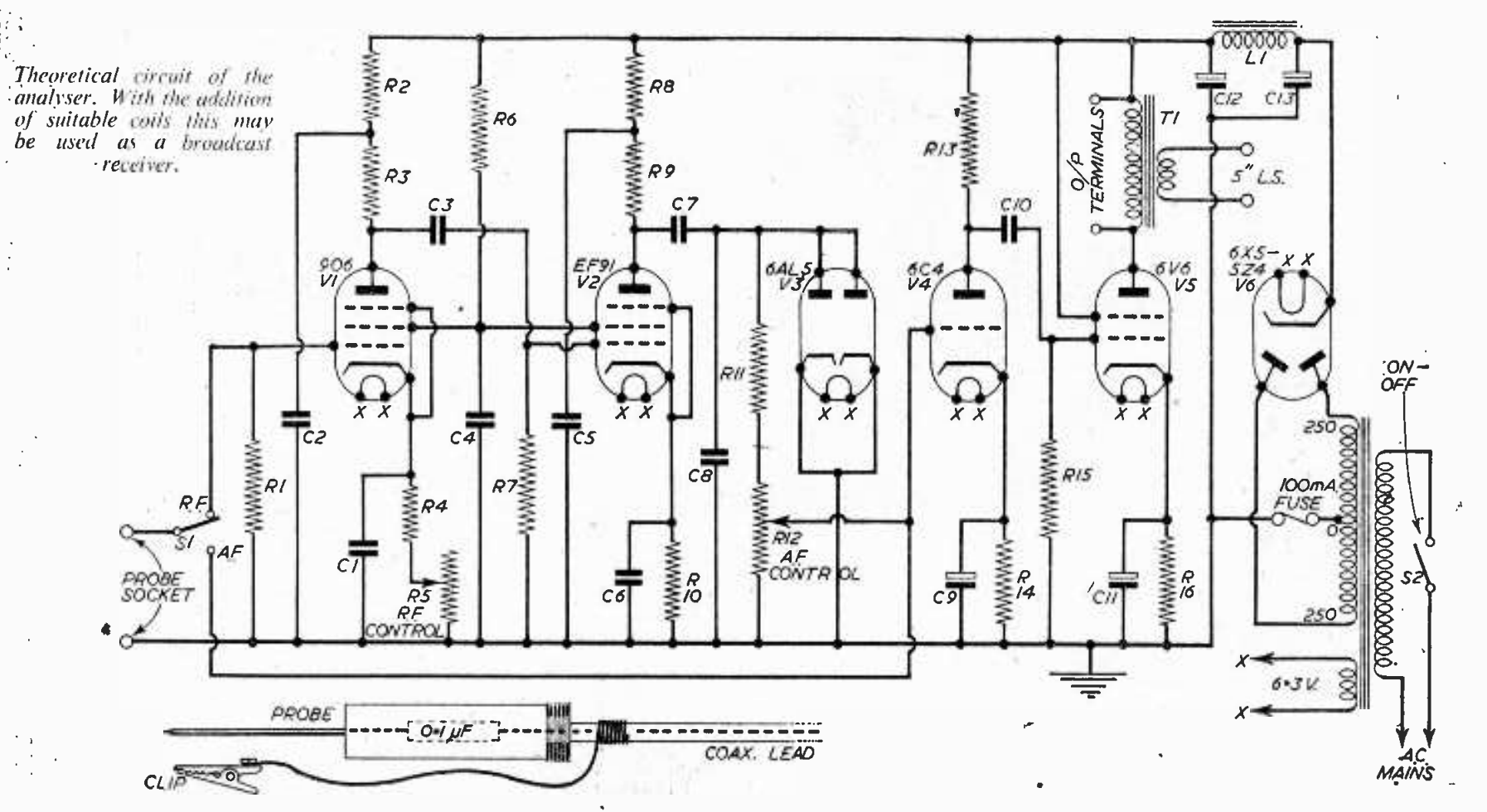
Seventy years ago this month, the British Practical Wireless magazine showed how to make this “set analyzer”, which we would more commonly call a signal tracer. The probe could be switched to AF or RF, and could trace the signal to zero in on the defective portion of a receiver.

And since the circuit contained an entire receiver, it could also be used as a backup for another radio, with the addition of a tuned circuit.


1955 Miniature Distance Getter

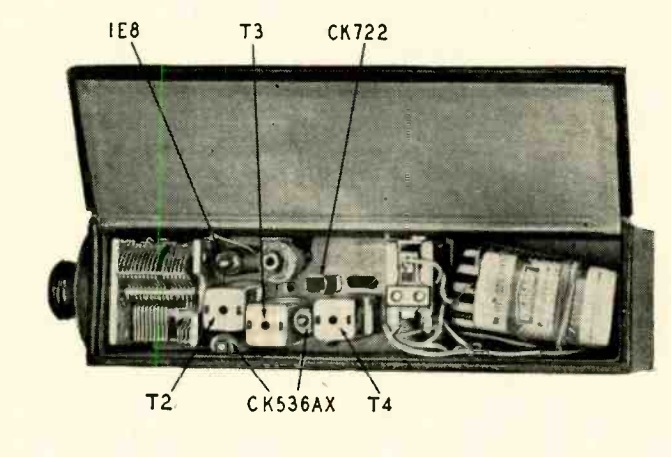
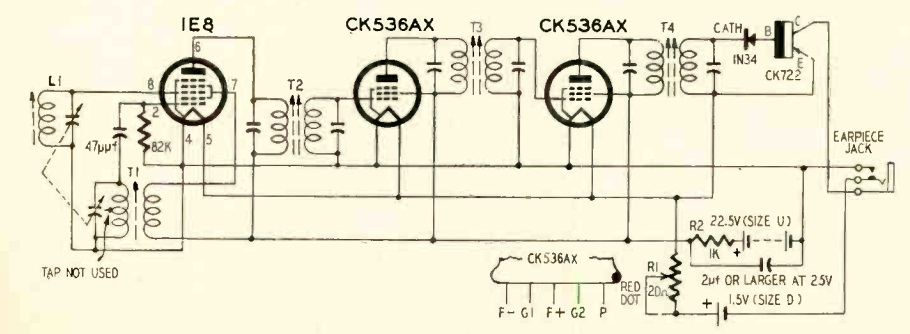
Seventy years ago, the October 1955 issue of Radio Electronics showed how to build this receiver, dubbed the DX Tiny Tuner. It was a miniature unit, designed for long-distance reception on the broadcast band. From a suburb of New York, the set picked up stations in Bridgeport (600 kHz), Philadelphia (610 kHz) and Newark (620 kHz). This compared with a good transistor set that picked up the 600 kHz station with a background of the one on 620, with no sign of the station on 610.

The author noted that the tiny set would pick up any station heard on a communications receiver of S2 or stronger. And surprisingly, it did it with the built-in antenna.

The superhet circuit used three subminiature tubes and one transistor.


1940 Pointers on Learning Morse Code

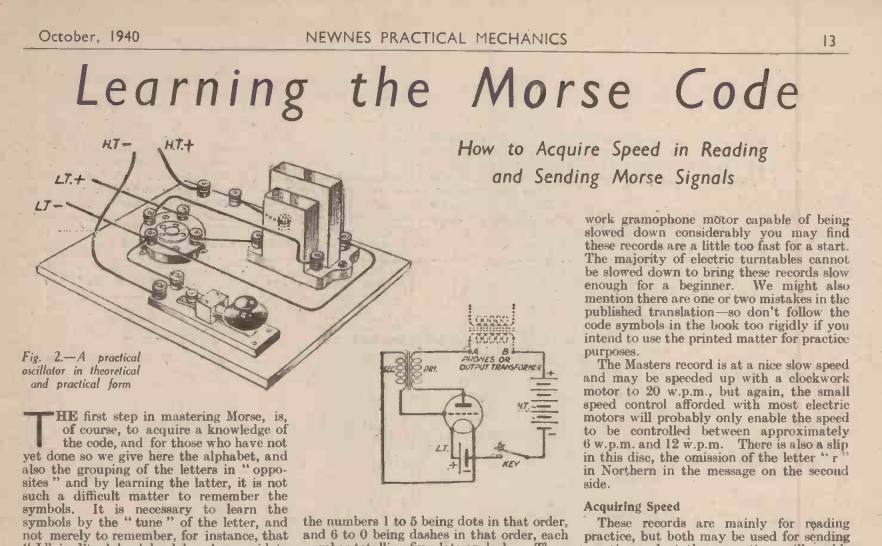
Eighty-five years ago this month, the British magazine Practical Mechanics offered some pointers on how to master the Morse Code, including the simple code oscillator shown here. The article included one idea that I’ve never seen before. It mentioned that code records, in addition to providing receiving practice, could be a source of sending practice as well. This was accomplished by having the text being sent, and then sending it in unison with the record.


1940 RCA Radio Lineup

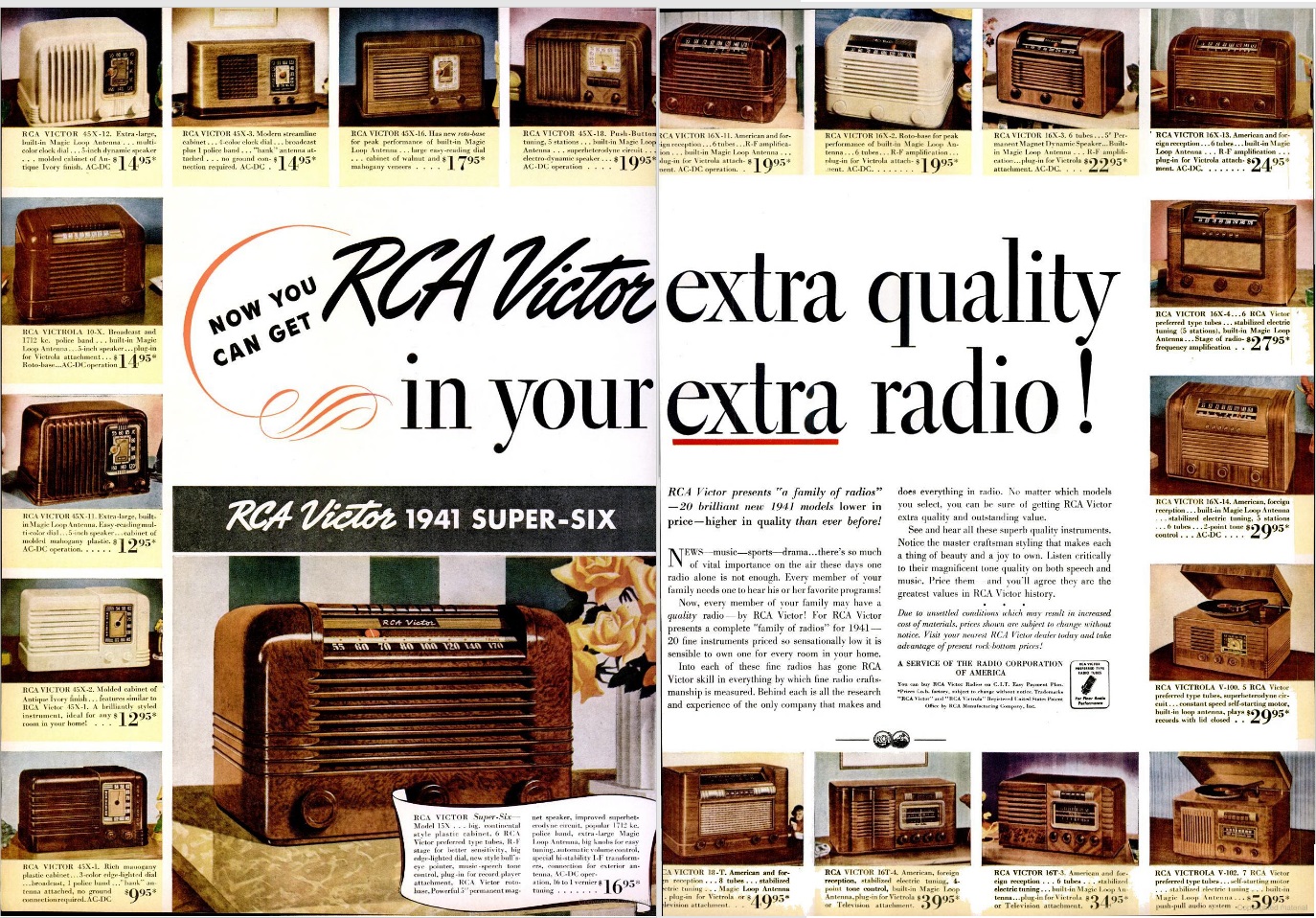
Eighty-five years ago, this ad in the October 21, 1940, issue of Life magazine reminded readers that every member of the family deserved to be able to listen to their own radio programs. That meant getting an extra radio, but one with extra quality from RCA Victor.

The least expensive model was the five-tube model 45X1 “Little Nipper” for only $9.95.


1945: Hams Coming Back in Droves

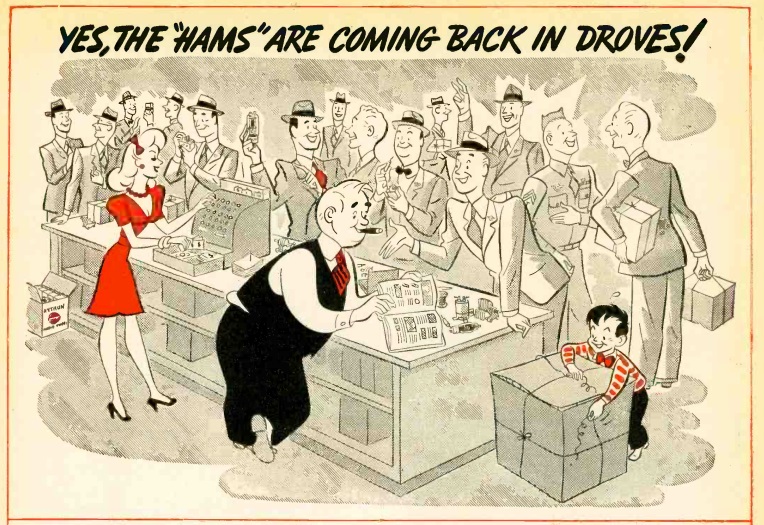
This illustration appeared 80 years ago this month, in the ad from Hytron Radio and Electronics Corp., in the October 1945 issue of Radio Service Dealer.

The ad pointed out that the 2-1/2 meter band had just reopened to hams, and dealers were probably already seeing the impact of hams coming in to buy. They pointed out that demand was sure to grow. Before the war there were 60,000 hams, but QST estimated that would grow to 250,000 within five years.

That meant that dealers should stock Hytron tubes, which had been advertised in QST. And as new tubes were announced, especially for VHF and UHF, dealers should add them to their stock.


Panasonic RF-8800 Portable, 1975

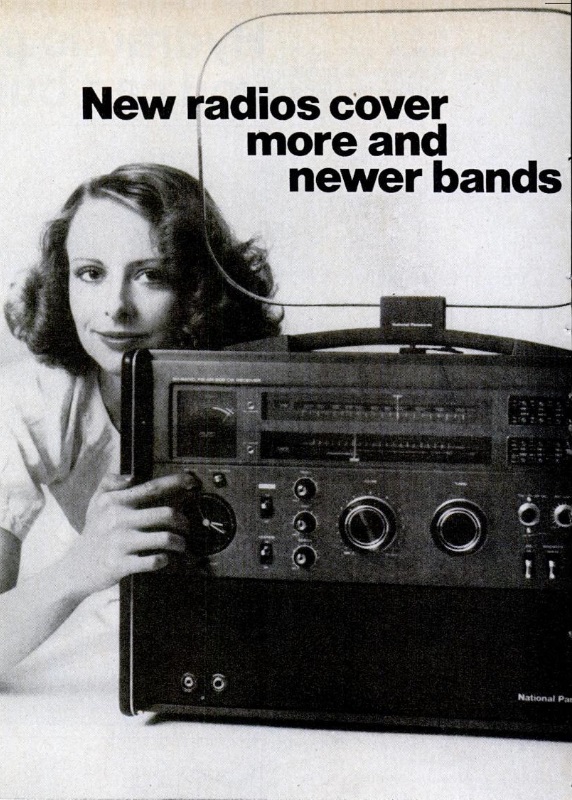
Fifty years ago, this discerning radio listener is showing off her new portable, the Panasonic RF-8000. The set hand a handle, meaning that it was portable, but it weighed in at 46 pounds, so the portability was somewhat limited. But it tuned 24 bands, including longwave, most of the shortwave spectrum, and continuous tuning from 30-230 MHz. It included a BFO for tuning CW and SSB transmissions. And, of course, it covered the standard AM and FM bands. It had three antennas, a clock, and a motorized tuning dial.

According to the October 1975 issue of Popular Mechanics, where this picture appeared, it retailed for a mere $2500.


1925: Making Faces for Beauty and Wiring Hospital for Radio

OneTubeRadio.com is a full-service blog. While we endeavor to bring radio history to life, we’re also on the lookout for other helpful information, and today, we offer a beauty tip that’s in danger of being lost to the ages.
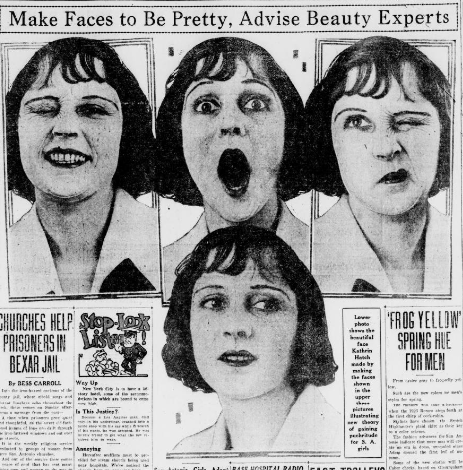
One hundred years ago today, the October 15, 1925, issue of the San Antonio Light newspaper carried this helpful hint for young women to stay beautiful. According to unnamed beauty experts, “making faces will keep girls young and sweet.” The technique is demonstrated by Kathrin Hatch.
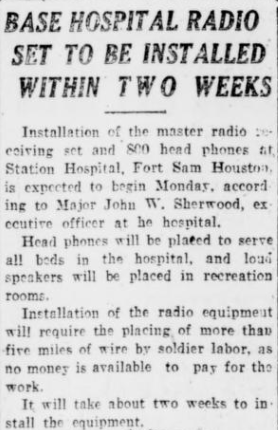
But Miss Hatch probably kept beautiful by also listening to the radio, and this same issue of the paper showed that one could regain health with the radio. According to Major John W. Sherwood of Fort Sam Houston, the base hospital was to be wired for radio. 800 headphones were to be placed in hospital rooms, and loudspeakers would be placed in recreation rooms. More than five miles of wire would be used, and the installation would take about two weeks.