Category Archives: World War 2

1941 British Four-Tube Portable

Eighty-five years ago, Britain was at war, but that didn’t stop the March 1941 issue of Popular Wireless from carrying instructions for building this 4-tube superheterodyne portable receiver, comparable with commercial sets. The “all dry” designation refers to the battery, which was a dry battery. A single “Type H” battery was used, as it contained one tap for the 1.4 volt filaments, as well as a higher voltage for the B+.

The construction article was to continue in the next month’s issue.


1941 British Wind Generator

Eighty-five years ago, the March 1941 issue of Practical Mechanics showed how to build a wind generator.  It used a propellor left over from the last war, and the axle from a Peugeot.  But with some ingenuity, it was made into a working unit.  The windmill managed 180 RPM, and since most car alternators required 1200 RPM, a 7:1 gear ratio was required.

I think of wind generators as an American phenomenon, since any respectable farm in the last century sported a windmill.  But the wind also blows in Britain, and was capable of being harnessed.

These days, wind generators such as this 1200 watt model are available on Amazon at a surprisingly low price.  Looking at the reviews, this particular one looks like a very good value, although one reviewer points out that the instruction manual is somewhat incomplete.  Our readers, of course, don’t need instruction manuals.  Also, a couple of parts needed some modification to properly mount it, but we have faith that our readers can deal with that issue as well.

Britain was at war when this article was written.  And this article serves as a reminder that wind power might play a role for some in providing electrical power in an emergency.


Some links on this site are affiliate links, meaning that this site earns a small commission if you make a purchase after using the link.

Atom Bomb Effects, 1946

80 years ago, the March 11 issue of Life magazine gave a brief overview of the effects of the atomic weapons used in Hiroshima and Nagasaki. A U.S. commission sent to Japan to study the effects had released some of its findings, and the magazine carried some graphics illustrating them. It noted that the blast at Hiroshima battered the city with waves of destruction. The first was heat, which caused clothing on people a half mile away to burst into flame. Trees a mile and a half away were set on fire, and patters of dresses were charred into skin.

In the following blast wave, the magazine noted that people’s bodies were terribly squeezed and internal organs ruptured, after which the bodies were blown at 500-1000 miles per hour. Practically everyone within 6500 feet was killed or seriously injured. At left, the graphic shows the effect on various types of buildings.


1941 British Pre-Tuned Two Tube Receiver

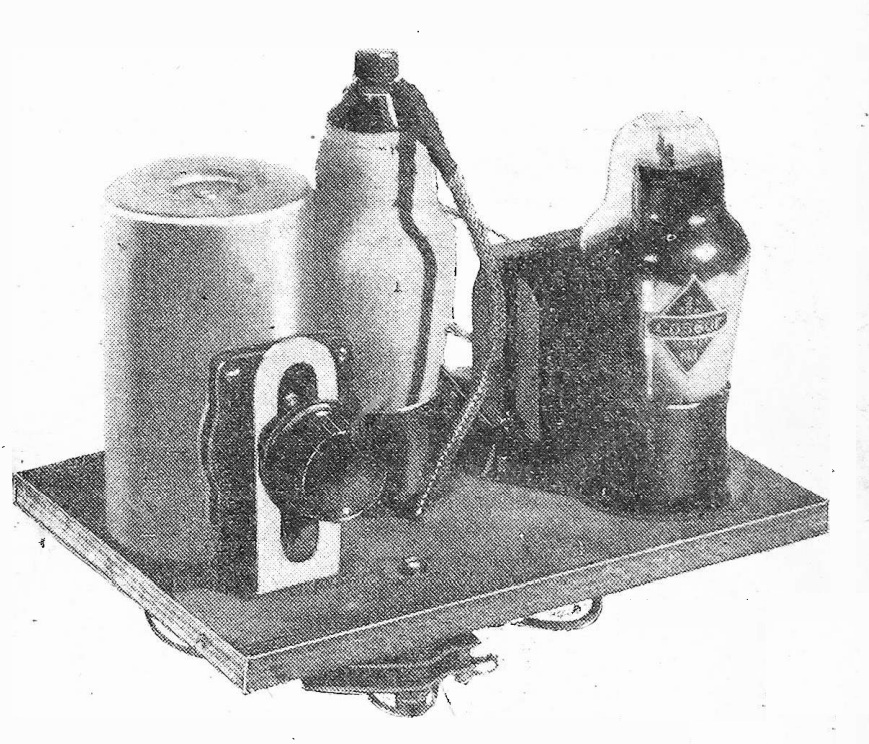
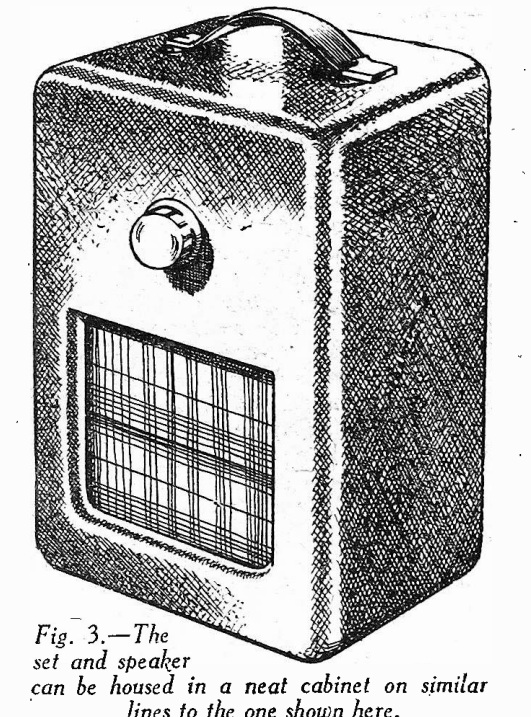
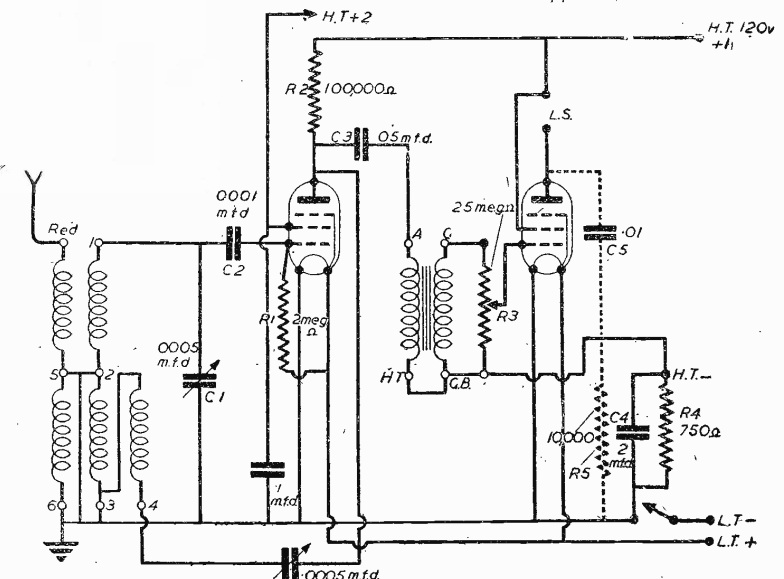
Eighty-five years ago this month, the February 1941 issue of Practical Wireless  showed how to build this two-tube receiver . It was specifically designed for use in an air raid shelter from which a reasonable external antenna had been mounted. It could be pre-set to either the Home Service or the Forces program, and once the tuning was set, it needed no further adjustment.

It boasted long battery life for both the filament and high tension batteries. The set could drive a loudspeaker, and the completed project was mounted in the case shown at right.


KGEI, 1941

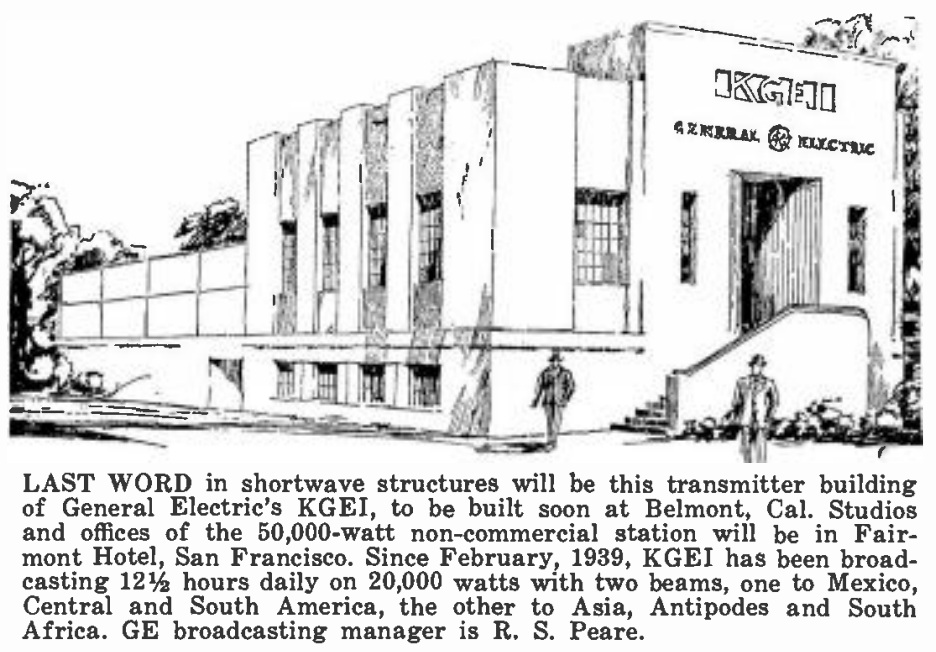
We’ve previously written about KGEI, GE’s shortwave station in San Francisco, and the role it played in World War 2. This item 85 years ago today in the February 17, 1941, issue of Broadcasting shows the transmitter building for the 50,000 watt transmitter that would soon be on the air.

The building is still standing, with the KGEI call letter restored, and is used by Silicon Valley Clean Water.


1940 Barrage Balloons

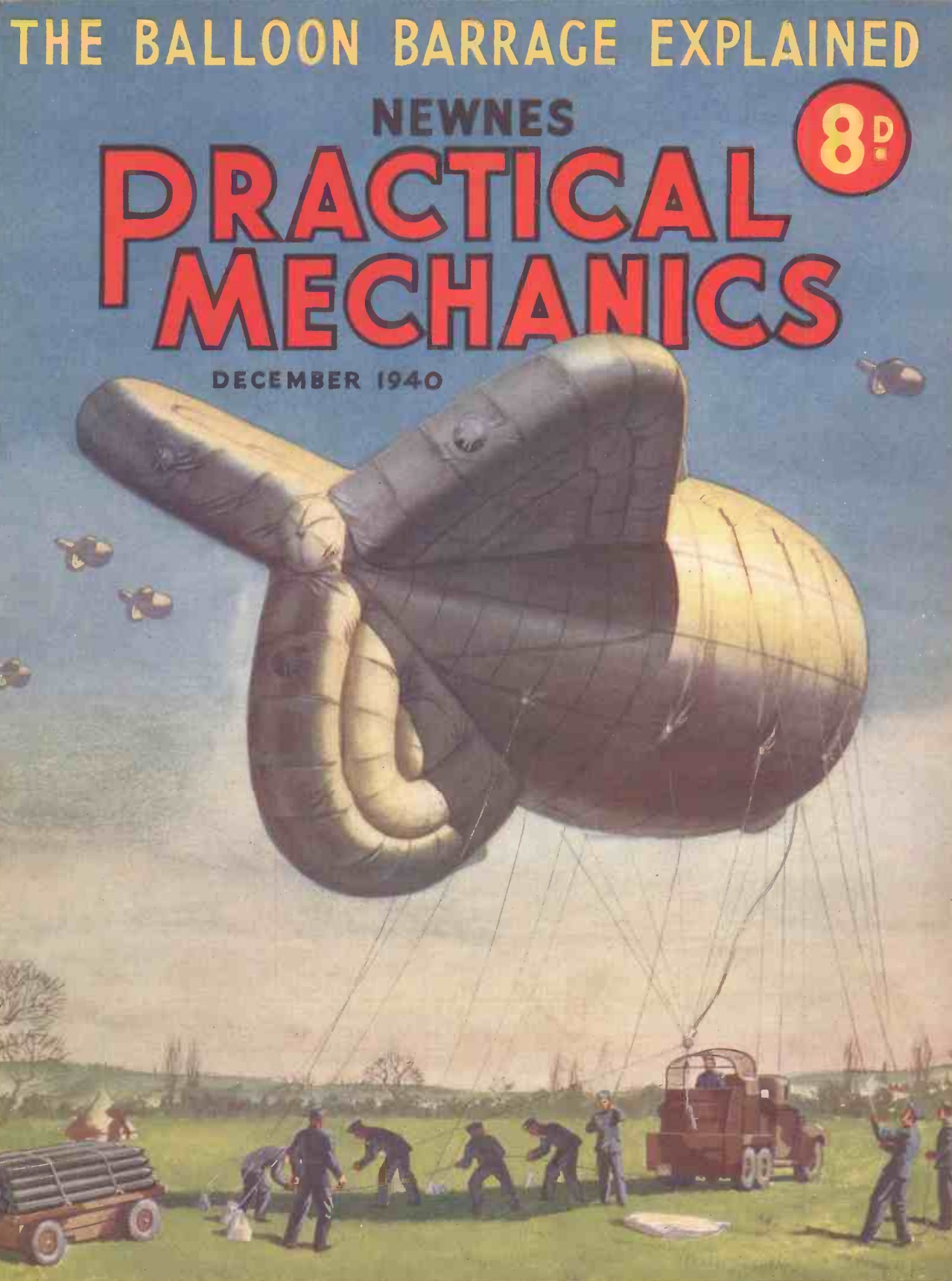
Eighty-five years ago this month, the December 1940 issue of Practical Mechanics had this illustration of the barrage balloons that were a familiar sight over London. My mid-1940, about 1400 such balloons had been deployed there and in other British cities. Each was tethered to a truck. They carried a steel cable to make navigation at lower altitudes dangerous or impossible. Enemy bombers were forced to higher altitudes. This made them more vulnerable to anti-aircraft fire, since the relative motion, as seen from the ground, would be much slower than a plane zooming by at ground level.


1945 Radio and Toaster Sales

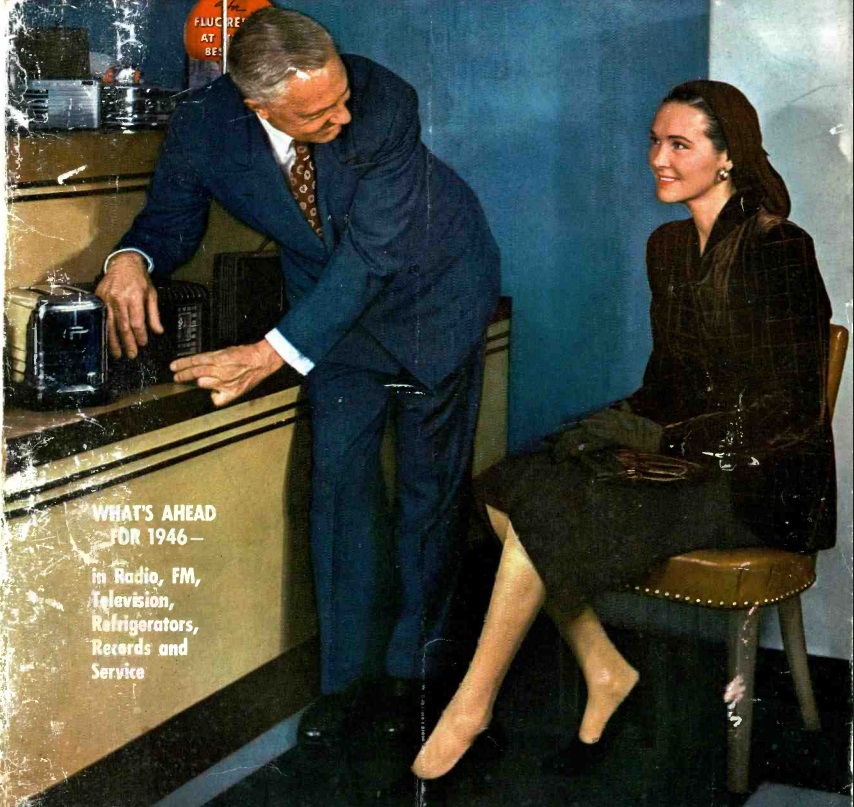
Eighty years ago, this picture appeared on the cover of Radio Retailing, December 1945. I wasn’t quite sure what was going on, so I asked ChatGPT for the back story:

In the winter of 1946, the little shop on Westbury Avenue still smelled faintly of machine oil and warm dust—the scent of radios waking up after a long night. Mr. Harland, the shop’s proprietor, prided himself on being able to fix anything with a dial, but that morning he wasn’t repairing a set. He was demonstrating one.

“This one,” he said, patting the glossy black radio as though it were a fine horse, “has FM. Not many folks know it yet, but FM is the future. Clear as a bell—no static at all on a good day.”

Across from him sat a young woman in a tailored dark suit, gloves folded neatly in her lap. Her name was Margaret Hale. She had just returned from Washington, where she’d been decoding signals for the Navy. The war was over, but she hadn’t quite learned how to live quietly. She felt strange having nothing urgent to listen for.

Her aunt had suggested she buy a new radio. “Something cheerful,” the aunt had said, “to bring a bit of the world back into the house.” So Margaret found herself in Harland’s shop, watching the man beam with pride over the technology he’d been waiting years to see flourish.

He turned a dial, and warm music floated out—strings, a gentle swing rhythm, the kind of melody that wrapped itself around a person’s shoulders. Margaret smiled for the first time in weeks.

“It’s lovely,” she said.

“It is,” Harland agreed. “And next year—television. Mark my words. Pictures through the air. Folks’ll gather around these things like they once did around the piano.”

Margaret imagined it. Scenes unfolding in real time, stories arriving right into one’s home. She wondered what sort of world would rise now that the explosions had quieted. Maybe one with more voices, more connections, more ways to understand one another.

“I’ll take it,” she said.

Harland brightened even further. “Excellent choice. I’ll have it delivered this afternoon.”

As she stood to leave, she paused beside the radio. The music was still playing, light and hopeful. For the first time since the war ended, Margaret felt the faint stirrings of a life with room for ordinary joys—songs in the morning, news in the evening, perhaps even laughter filling the quiet corners of her home.

Outside, the cold wind of January 1946 swept past, but she felt warm. The world was humming again, and she was ready to listen.

I’m pretty sure that’s a toaster, and not an FM radio just to the left. But I can’t quite see what Mr. Harland is fiddling with, so it’s quite possible it’s an FM radio.  But one way or another, the world was humming again.


A Look Ahead at World War III: 1945

Eighty years ago the Second World War was barely over, but the November 19, 1945, issue of Life Magazine was making predictions of what the next war might look like. The scene above shows the ruins of the New York Public Library, as technicians measure radioactivity levels.

Specifically, the magazine reviewed the findings of Army Air Forces General Henry H. Arnold in his report to the Secretary of War. It called it the “36-hour war,” and speculated that it would begin with atomic blasts in places like London, Paris, Moscow, or Washington. The speculated attack began with rocket-launching sites built secretly by some enemy in the jungle of equatorial Africa. In an hour, they would be on American soil, but American radar could give about 30 minutes of warning.

The defense would come in the form of a a counterattack, from firing tubes of American bases deep underground. This would deliver “an immensely devastating air-atomic attack” on the enemy.

Arnold speculated that the last phase of the attack on the U.S. would be in the form of airborne troops, armed with rockets to attack far distant points. But before they arrived, the U.S. could see 40 million fatalities.

“But as it is destroyed the U.S. is fighting back. The enemy airborne troops are wiped out. U.S. rockets lay waste the enemy’s cities. U.S. airborne troops successfully occupy his country. The U.S. wins the atomic war.”


Wartime Halloween

Happy Halloween from OneTubeRadio.com!

Just because there was a war going on didn’t mean that Halloween shouldn’t take place as scheduled. The cover of this 1943 issue of Collier’s magazine shows that even the Jack O’Lantern had gone to war. Instead of a scary face, it was proclaiming V for victory. In addition to the letter V, it included the …- Morse code for the letter.


1945: Hams Coming Back in Droves

This illustration appeared 80 years ago this month, in the ad from Hytron Radio and Electronics Corp., in the October 1945 issue of Radio Service Dealer.

The ad pointed out that the 2-1/2 meter band had just reopened to hams, and dealers were probably already seeing the impact of hams coming in to buy. They pointed out that demand was sure to grow. Before the war there were 60,000 hams, but QST estimated that would grow to 250,000 within five years.

That meant that dealers should stock Hytron tubes, which had been advertised in QST. And as new tubes were announced, especially for VHF and UHF, dealers should add them to their stock.