Category Archives: Radio history

The Luxembourg Effect

LuxembourgEffect

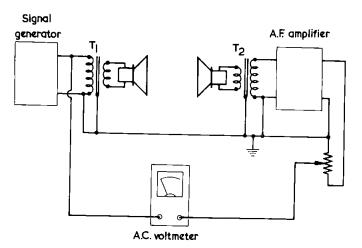
An interesting ionospheric effect was first noticed about 80 years ago, and reported 80 years ago this month in Radio Craft magazine, February 1935.  Radio Luxembourg operated on 252 kHz, with a powerful 150 kw signal designed to provide coverage in England.

The phenomenon was discovered in 1933 by B.D.H. Tellegen, in Eindhoven, Netherlands, who was listening to a station in Beromunster, Switzerland, on 652 kHz. In the background of the Swiss signal, he could hear the audio of Radio Luxembourg. This same phenomenon was reported by other listeners. Due to the distance between the three points involved, it could not be explained by the receiver being overloaded. The Luxembourg signal could be heard only when the Swiss station was transmitting.

Tellegen noted that the three points were in a straight line: When the signal from the Swiss station made its way to the Netherlands, it passed directly over Luxembourg. He correctly theorized that the carrier of the Swiss station’s signal was being modulated in the ionosphere as it passed through the strong signal of Radio Luxembourg in the ionosphere.

The ionosphere had only recently been discovered, and was not totally understood. It was previously supposed that the ionosphere was a linear medium, through which radio waves passively reflected. But the existence of the Luxembourg Effect showed that the ionosphere could be artificially “heated,” to produce non-linear effects.

Interestingly, the carrier frequency of the signal didn’t seem to be critical.  The modulation of the interfering signal was superimposed on the other signal without regard to the carrier frequency.  Subsequent research showed that most of the effect took place in the lower range of the audio frequencies.

Much to the dismay of conspiracy theorists, this is the phenomenon that the High Frequency Active Auroral Research Program (HAARP) was working with. It’s relatively easy to generate a strong radio signal in the High Frequency (HF) region. HAARP had transmitters that could generate 3.6 MW signals from 2.8-10 MHz and radiate them toward the ionosphere. This strong signal was able to generate the same kind of “heating” effects caused by Radio Luxembourg.

It’s more difficult to generate signals in the Extremely Low Frequency (ELF) region. Among other things, ELF signals are used to communicate with submarines. The main idea of HAARP was to generate these signals not in a transmitter, but in the ionosphere itself, by mixing two strong HF signals. For example, it would be practically impossible to generate a radio wave of 0.1 Hz with a transmitter. But by beaming two signals into the ionosphere, one at 4.000000 MHz, and one at 4.0000001 MHz, the result would be a radio wave, generated in the ionosphere, with a frequency of the difference, 0.0000001 MHz, or 0.1 Hz.

The phenomenon is sometimes called the Luxembourg-Gorky effect, since the powerful longwave transmitter at Gorky, USSR, produced similar effects.

References


One-Tube Wartime Receiver, 1945

RadioCraftFeb45

Radio parts were in short supply during the War, and radio enthusiasts had to make do with what they had. “H.T.,” a resident of Bothell, Washington, apparently had in his junk box a 1D8GT tube, and a low-impedance earphone, and wanted to know what he could do with them. So he wrote to the editors of Radio Craft magazine asking for a diagram of a receiver covering the broadcast band making use of the parts he had. He wanted to mount the earphone in the cabinet for use as a small speaker.

The editors indulged him and provided this diagram in the February 1945 issue. It was reprinted from the July 1940 issue, and showed how the combination diode-triode-pentode tube could be used in this circuit. The triode section of the tube was an RF amplifier, followed by the diode detector, with the pentode serving as an audio amplifier. Unfortunately for H.T., the low impedance earphone would need to be used in conjunction with an audio transformer. This set would drive a pair of high-impedance headphones, but to use it with his low-impedance earphone, it would need to be wired as shown for the speaker. So H.T. had to find himself either a set of hi-z headphones, or the output transformer, in addition to what he already owned.

The other hard-to-obtain part would be the variable capacitor. The circuit here shows a ganged condenser, but the response pointed out that two separate condensers would provide better results.

Click Here For Today’s Ripley’s Believe It Or Not Cartoon


1940 Two-Tube Two-Band Receiver

1940FebPM75 years ago, Popular Mechanics, February 1940, carried the plans for this simple two-tube, two-band receiver, which could be run off flashlight batteries, 8 for the B+, and one for the filaments. It used two Type 49 tubes, and tuned both the broadcast band and short wave. The short wave band covered the then-police freuencies, as well as the 160 and 80 meter ham bands. It was mounted on a wooden chassis and had a wooden front panel.  It was a very simple design, with one tube serving as the regenerative detector, and the second as audio amplifier.

This particular receiver would be difficult to duplicate, since the coils are unobtanium. The article notes that the coil is a “three-circuit tuner” which did away with “tedious coil winding, often a stumbling block for beginners.” The coil came with a pre-marked terminal strip which made wiring errors next to impossible. The rotating tickler coil was included. It even had a built-in switch wired to the taps on the coil for easy switching from broadcast to short wave.

As was often the case, the Popular Mechanics project was available in kit form from Allied Radio. The 1941 catalog shows this kit as selling for $4.70, plus $1.39 for the tubes and batteries.

Click Here For Today’s Ripley’s Believe It Or Not Cartoon



Heathkit CB-1 “Benton Harbor Lunchbox”

HeathCB1

Most hams who have been around a while have encountered the “Benton Harbor Lunchbox.”  This was a series of transceivers from Heathkit, and the most common were the HW-30 “Twoer,” which covered two meters, and the HW-29 “Sixer” for six meters.  Less common was the HW-19 “Tener” for, you guessed it, ten meters.

These were very popular in their day.  They were a single-band transceiver.  The transmitter put out about 5 watts of AM, and the receiver was superregenerative.  The tuning was very broad, but once they locked on to a signal, they were surprisingly sensitive.

By the time I became a ham in the 1970’s, VHF AM was virtually gone.  There was one six-meter AM net in the Twin Cities that hung on, and I was a regular check-in with my Sixer and later a Gonset Communicator.  But FM had taken over two meters by then, and Twoers were basically given away for practically nothing, even though they were often in pristine condition.  I owned many of these little rigs, and at one time I owned a complete collection.

My collection included the lesser-known cousin, the Model CB-1 CB transceiver shown here.  The CB model came out in about 1960, and is shown here in this ad in the February 1960 issue of Popular Electronics.

It sold in kit form for $42.95, and was also available wired for $60.95.  It featured one crystal-controlled channel (the crystal was included).  The receiver was the same superregenerative receiver used in the other Lunch Boxes, and was calibrated for channels 1-23.  It had a built-in power supply for 120 volts.  For mobile use, it used an external power supply, which consisted of a vibrator and transformer.  The power was supplied to an octal plug on the back (the same as the bottom of a tube).  The 120 volt power cord and the DC power supply had  octal sockets on them, along with appropriate jumpers.

Click Here For Today’s Ripley’s Believe It Or Not Cartoon


WW2 Shortwave Broadcasting

CBS Short Wave Listening Station, Long Island. Wikipedia photo.

CBS Short Wave Listening Station, Long Island, 1941. Wikipedia photo.

In earlier posts, I’ve looked at the shortwave broadcast bands, and short wave listening during World War 2.   75 years ago, the Saturday Evening Post carried an interesting look at the war of words that was then filling the short wave bands. It gives a fascinating and detailed look at what the bands must have sounded like for short wave listeners as Europe was at war. The original article is now available at the Saturday Evening Post website.  There is a link to the original 1940 article, “The War of Lies and Laughs: The Story of Radio’s 24-Hour A Day Word Battle,” which was written by freelance writer J.C. Furnas, and appeared in the February 3, 1940, issue of the magazine, at page 16.

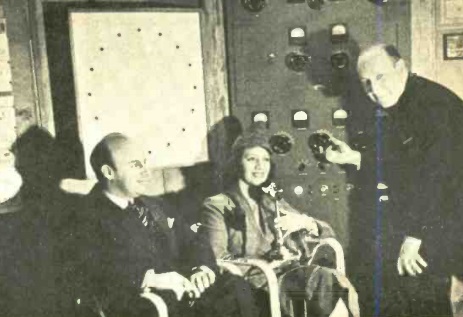
In addition to the informative text, it contains a couple of photos of the CBS shortwave listening station on Long Island, New York, complete with at least three National HRO receivers. From the look of the listening station in 1940, it appears that the station was thrown together hastily by CBS. The tables are unfinished wood, and the staff are making use of folding chairs.

Shown operating the receiver at the CBS listening post was one Carl Schutzman, and CBS newsman Elmer Davis is shown combing through the news picked up from the short waves.

Furnas begins his account of the propaganda war with the reaction of a loyal German-American Iowa farmer, who is outraged to hear an old acquaintance, one Fred Kaltenbach–or someone claiming to be him–persoanlly addressing the Iowa farmer on the Berlin radio. The speaker, ostensibly a German immigrant who returned to the old country, mentions the Iowan by name and even mentions the name of his old schoolteacher in an effort to establish his bona fides. He tells the Americans that they shouldn’t fall for the British propaganda cooked up by that liar Winston Churchill, and stay out of Europe’s war. (Kaltenbach was indicted in absentia,  for treason, but died in Soviet custody after the end of the war.)

The scuttling of the Graf Spree in Montevideo harbor was still fresh on the American mind, and Furnas’ article points out the contradictions of the various short wave accounts coming from Europe. The article discusses both broadcasts directed to America, as well as broadcasts directed by the beligerents to the other warring nations. It notes that in neither case is it possible to determine exact numbers of listeners. It points out that listening to foreign radio is a criminal offense in Germany, and notes that a four-year sentence was reportedly handed down recently for that offense.

Furnas does point out that prior to the war, NBC received about 600 letters a month from German listeners, which dropped to six per month after the war began. But he’s quick to concede that the drop in mail volume was probably because the Germans didn’t want to get caught listening–not because they actually stopped listening. And according to Furnas, very few Americans actually listened to German broadcasts, despite the fact that 40% of American receivers tuned the short wave bands. “When crack receivers with expert staffs, working for broadcasting companies, have trouble getting clear reception for days on end, what can the man in the average living room expect?” He answers this question by saying that their likely to revert to Charlie McCarthy.

Lord Hawhaw, 1943 artists' conception. Wikipedia image.

Lord Hawhaw, 1943 artists’ conception. Wikipedia image.

The most interesting part of Furnas’ article, except possibly for the photos, is the accounts of the English-language programs coming from each side. At that time, the identity of Lord Hawhaw was not known, and Furnas speculates that it was Norman Baillie-Stewart.  Baillie-Stewart had actually been connected with the broadcast until 1939, but had been replaced by the time the article was published by William Joyce,
who was executed for treason in 1946.

Despite the fact that few Americans were listening to foreign broadcasts, Furnas points out that the situation was better for the Germans in South America. Many South American newspapers, unable to afford wire services, were said to collect most of their news from foreign broadcasts, and the Germans capitalized. But even before the U.S. entered the war, the Americans made a concerted effort to target South America, with much success, probably for the same reasons that the Germans were successful–it was an easy source of news for small papers. And the American stations came in a lot stronger.

The article details the propaganda styles in use between Germany and Britain. British broadcast contained quite a few recordings of Hitler, in the hopes of pointing him out as a liar with his own words. German broadcasts to England, on the other hand, were heavy with insults such as “England will fight to the last Frenchman,” and various insults against “the old liar” Churchill, whose initials, the German announcers were quick to point out, were the same as those of a Water Closet.

Germans also concentrated on the empire. “Berlin loves to put eminent Hindus on the air,” and broadcasts to South Africa did their best to incite the Boers.

Britain broadcast the names of German prisoners of war, and the Germans followed suit. (For more information on prisoner broadcasts, see my earlier post.)

Of course, in 1940, American SWL’s had no means of making recordings of broadcasts, but Furnas’ descriptions to some extent make up for the paucity of recordings. In the 2015 update to the article on the magazine’s website, there are, however, a handful of recordings, both before and after America entered the war.  But Furnas’ article itself is one of the best I’ve seen to depict what an American SWL might have been able to hear during the war years.

For a look at Japanese shortwave propaganda later in the war, please see my recent post on Japanese propaganda directed toward African Americans.

Click Here For Today’s Ripley’s Believe It Or Not Cartoon


Another Crystal Set for CONELRAD Reception

EmergencyXtalSetRadioTVExperimenter1955

60 years ago, CONELRAD was the system planned for keeping the American public informed in the event of a nuclear attack. As I’ve explained previously, the idea was for designated broadcast stations to operate on 640 or 1240 kHz. Stations would not transmit station identification, transmissions from individual stations would be short, and enemy bombers would be presented with a cacophony of signals useless for navigation purposes.

But power might be out. Battery-operated sets were rare, and most of those that existed sucked through expensive batteries quickly, since they had to power the filaments of the tubes. Undaunted, radio enthusiasts realized that a crystal set could be put to use. As I previously reported, Boys’ Life magaine touted a crystal set that could be put to use in an emergency.
Another Boys’ Life article included a CONELRAD receiver with one transistor that could run on two penlight batteries. And in a pinch, that set could be used without a battery, operating as a simple crystal set. And during the 1956 CONELRAD test, a Heathkit crystal set performed surprisingly well at receiving the emergency broadcasts, even outperforming commercial tube and transistor radios.

EmergencyXtalSetRadioTVExperimenter1955SchematicAnother example of crystal sets for emergency use is shown here, in the 1955 edition of Radio-TV Experimenter.  Author George P. Pearce (probably shown in the illustration above) describes the need:

If flood, tornado or air raids cause power failures, could you get emergency directions from the Conelrad stations the government has at 640 and 1240 on the dial? Even battery-powered sets couldn’t operate over an extended period of weeks, so why not build a crystal set that needs no power except the broadcast signal.

The author describes this set, which uses two 1N35 diodes along with two .001 uF capacitors in a voltage-doubler circuit. It uses basket-wound high-Q coils to pull in weak signals. It recommends a 100 foot antenna and good ground. He also suggests the use of the house wiring as an antenna, using a lamp cord, capacitor, and plug going in to the 120 volt house wiring. This ought to work, but if the power is on, you would be putting a lot of faith in that capacitor not being leaky as you put the headphones hooked to that antenna onto your head, just like they place the electrode of an electric chair.

The author notes that there’s nothing to wear out, and his set has operated for over three years.

Click Here For Today’s Ripley’s Believe It Or Not Cartoon


Japanese Short Wave “Negro Propaganda Operations” of WW2

African-American soldiers preparing to fight the Japanese. US Gov't photo.

African-American soldiers preparing to fight the Japanese. US Gov’t photo.

Most Americans believe that Axis propaganda during World War 2 was basically unsuccessful, since America and the Allies relied on truth, whereas the Axis relied on deception. I generally take this same view, but as with many oversimplifications, it is not entirely true. An interesting article detailing a Japanese propaganda campaign that was somewhat successful can be found in a scholarly journal, the Historical Journal of Film, Radio and Television, Volume 19, Number 1, March, 1999. The article, by Sato Masaharu of Shobi University and Barak Kushner of Princeton University, is entitled “Negro Propaganda Operations: Japan’s short-wave radio broadcasts for World War II Black Americans.” It’s not available free anywhere online, but it is available at most University libraries, and your public library should be able to obtain a copy by interlibrary loan. The article is a look at a Japanese propaganda operation that did have a measure of success.

The authors concede that the Japanese campaign was by no means successful in the sense that any appreciable number of African Americans were swayed to the Axis side. But the existence of such propaganda, largely based upon truth, did force the United States Government to confront those realities. Some groups, such as the NAACP, used this propaganda as a tool, even though  quick to concede that it couldn’t simply be accepted at face value.


In addition, the Japanese propaganda was successful to some extent in diverting U.S. Government resources to unproductive use. During the War, almost all African-American newspapers were investigated by the FBI.  FBI Director J. Edgar Hoover, in part because of the existence of the Japanese propaganda, was convinced that these newspapers were disloyal.

Some Americans were also convinced that the Japanese were responsible for racial agitation. An officer stationed in Little Rock complained to the War Department that the “Negroes of Little Rock were being organized and incited by the Japanese.” There was, of course, no evidence that any such Japanese agitation had occurred, but that didn’t stop the belief, which was in part fueled by the Japanese propaganda.

African-Americans, like other Americans, were well aware of what the Japanese had been doing in China. W.E.B. DuBois, for example, who provided a certain amount of overt support for the Japanese propaganda, opined: “It is not that I sympathize with China less but that I hate white European and American propaganda, theft and insult more. I believe in Asia for the Asiatics and despite the hell of war and the fascism of capital, I see in Japan the best agent for this end.”


Black Americans were also cognizant of the fact that Japan had been on our side in the First World War, and had brought to the table at Versailles matters of racial equality. These concerns were quickly brushed aside by President Woodrow Wilson, who was in very many ways a typical Democrat racist, who had segregated the Army. White Americans were generally not cognizant of this, but African Americans were. So there was a certain amount of natural sympathy on which the Japanese could play.

The U.S. military was certainly aware of this image problem, and was doing its best to counter it. For example, in 1944, it released the film, The Negro Soldier, produced by Frank Capra, which is available on YouTube.

The focus of Japanese broadcasts was that only Japanese victory could ensure Blacks of the elimination of racial discrimination. To reach this conclusion, the Japanese broadcast largely true accounts of discrimination, violence, and even lynchings.  In addition, comparisons were frequently made between Japanese leaders and African Americans such as Frederick Douglass and Booker T. Washington.

Throughout the war, Japanese embassies in neutral countries were tasked with researching American news for items of interest regarding discrimination against Blacks, and this news made up much of Tokyo’s propaganda content.

An additional source of program material came in the form of African-American POW’s, and there were plans in place to include them in programs discussing discriminatory conditions in American civilian and military life, reactions to conditions supposedly prevailing in Japan, and the humane manner in which Black POW’s were supposedly treated by the Japanese.

The first POW broadcast took place on December 2, 1943, during the Hi No Maru Hour program, which was beamed to America on short wave. It’s unclear whether any actual POW’s appeared on the program, or whether they were African American. But they were passed off as being POW’s.

POW’s were “encouraged” to take part in these broadcasts, and the Japanese pointed out that “we do not guarantee the life of those who refuse to cooperate.” Some prisoners did cooperate, and were tried after the War for doing so. They were able to point to this portion of the order to demonstrate that they had done so only under duress.

Unfortunately, as might be expected from a scholarly article of this type, the authors do not go into any detail as to the details of the broadcasts or the extent to which they were heard. It does note that the U.S. Government extensively monitored them, but it doesn’t address the critical question of how many Americans–Black or otherwise–actually listened to them.

1944TokyoListingsBut the Axis stations were easy to hear by anyone in the U.S. with a short wave receiver.  I’ve noticed that the short wave listings in many American newspapers stopped carrying listings of Axis stations after the U.S. joined the war.  But the clipping here, from the February 1943 issue of Radio Guide, clearly shows the times and frequencies of English broadcasts from Tokyo.

Despite the lack of information that the SWL historian might like to see, this article is an interesting look at the program content during the war, and it does a good job of refuting the notion that Japanese propaganda was ineffective.  The article is extensively footnoted, and those wishing to learn more about this forgotten chapter in war history will have many sources available.

For more history of radio and short wave listening during the war, please see the following earlier posts:


Click Here For Today’s Ripley’s Believe It Or Not Cartoon


1935 3-Tube Broadcast Receiver Project

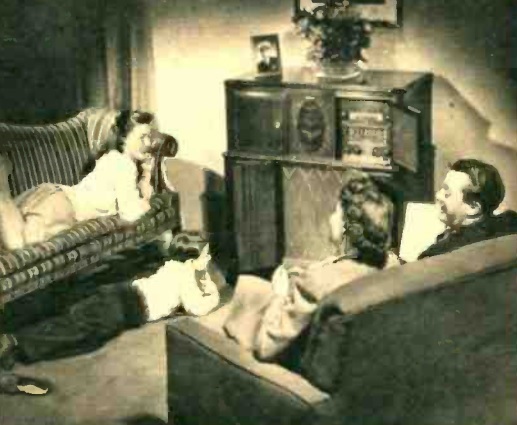
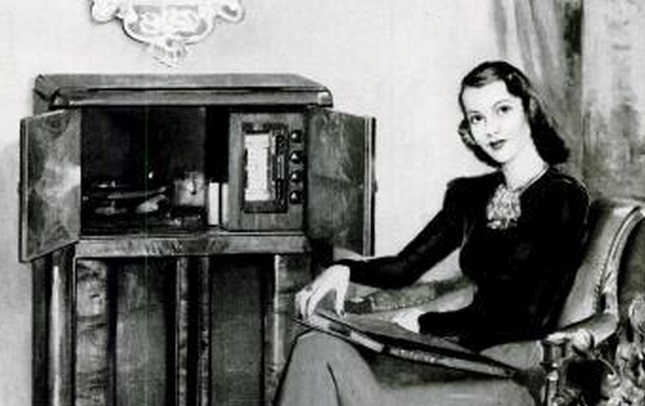
1935PM3tubeThe depression-era couple shown here are relaxing to the sounds of a three-tube standard broadcast receiver constructed according to plans which appeared eighty years ago, in the February 1935 issue of Popular Mechanics.

The three tubes served as an RF amplifier, detector, and audio amplifier. The 12A7 power amplifier also contained the rectifier, allowing the set to operate on either AC or DC household current. The filaments were wired in series, with a 300-ohm “curtain burner” cord used to drop the voltage. The article reported that the set would pull in stations up to 150 miles away during the daytime with a 20-foot indoor antenna, with reception of up to 1500 miles with good volume at night. The cost of parts was reported as being $6.50.

KnightG9503The least expensive radio in the Allied Radio catalog in 1935 appears to be the 4-tube model shown here, Knight Model G-9503.  Even though this Knight radio featured four tubes rather than three, the circuits were almost identical, since the Knight set had a separate rectifier, rather than the combined tube in the Popular Mechanics model. Therefore, the value-conscious buyer in 1935 could still save a few dollars by building his own radio.

The volume control of the Popular Mechanics receiver was actually an RF gain control, since it controlled the gain of the RF amplifier.

Click Here For Today’s Ripley’s Believe It Or Not Cartoon


1955 Boys’ Life Radio Contest

Pedro delivering prizes to lucky winners in BL radio contest.  June 1955 Boys' Life.

Pedro delivering prizes to lucky winners in BL radio contest. June 1955 Boys’ Life.

60 years ago this month, Boy Scouts were busy trying to win valuable prizes, including a Hammarlund HQ-140-X receiver, a Hallicrafters S-85 receiver, or a National NC-88 receiver. Unlike prior years, licensed amateurs were not eligible for prizes (probably because they swept them earlier years). But these prizes were available for logging as many stations as possible. Each station counted for one point, each country and U.S. call area 10 points, each state 10 points, and each continent 50 points. There were also bonus points for logging all continents, all states, and all call areas.

There were two classes of entries: one for commercial or surplus receivers, and one for homemade receivers. The contest was in effect during the month of February, 1955. The full rules were contained in that month’s issue of Boys’ Life.

The winners were announced in the June issue.  In “Class A” (manufactured receivers), the HQ-140X went to Ralph Overton of Mechanicsville, NY. Norb Harnegie of Berea, Ohio won the S-86.Henry Weir of Charleston, West Virginia, John Bryant of Stillwater, Oklahoma, John Tull of Kansas City, Missouri, and Francis Jacobs of Anson, Maine, won either a Hallicrafters S-38D or a National SW-54.

In “Class B” (homemade receiver), the winner of the Hammarlund was Gary Dobbs of Arlington, California, and Jay Hall of Maplewood, New Jersey took the second place prize of a National NC-88. Winning either an S-38D or SW-54 were Walter Piper of Ravenna, Ohio, Paul Stein of Uvalde, Texas, Don Cannon of Lubbock, Texas, Howard Ferber of Brooklyn, New York, and Bob Samson of Chicago, Illinois.

Over 200 other prizes were awarded to some of the 1049 entrants.


Unlike earlier contests, licensed hams were not eligible for prizes in this run of the contest.  However, at least two of the winners went on to become licensed hams.  As explained on my website, only a few call books are available for online searching, and the first one after this contest is from 1972, sixteen years later.  There might have been more, since some had common names, and some might have moved to different call areas.  But Norb Harnegie of Berea, Ohio, who won the S-86. was licensed in 1972 as W8FCV.    And Francis Jacobs of Anson, Maine, was licensed in 1972 as W1EST.

It would be interesting to know how these rather generous prizes affected the winners.  If you Googled your name and found this page, I would love to hear from you in order to write a follow-up.  You can reach me at clem.law@usa.net, or leave a comment below.

Click Here For Today’s Ripley’s Believe It Or Not Cartoon


Sleep Alert: Warning the Public of Nuclear Attack at Night

A 1969 report prepared for the Office of Civil Defense details a proposal that was never adopted for a program called CHAT: Crisis Home Alerting Technique. In recognition of the fact that this military acronym wouldn’t be of much use with the public, a more descriptive name was proposed for dealings with the public: Emergency Broadcast System Sleep Alert.

The Emergency Broadcast System was designed to alert the public through normal broadcast stations of enemy attack. Sirens were available in many areas, but large portions of the population would be unable to hear them, especially at night. And at night, most Americans would be asleep, and not listening to radio or television. A nighttime attack would catch Americans by surprise, unless they were sleeping in shifts to listen to the news.


In a “bolt out of the blue” attack, the problem of nighttime alerts remained problematic. But during periods of strategic crisis, such as the Cuban Missile Crisis, CHAT or “Sleep Alert” provided an answer. During such a crisis, Americans could get their sleep, but also be able to receive warning. Upon determining that a crisis existed which might require warning the population, the President would activate the system, and the public would be notified to tune to participating stations in their area. The President would then make the following announcement, probably at 11:00 PM Eastern Time:

In a moment my voice will begin to fade; merely turn your volume up until you can hear me again. This is part of a system which will permit you to receive later emergency information. Please leave your receivers on constantly; when you wish to sleep, turn the volume down to a comfortable level, and I will be able to reach you my means of your radios and televisions.

The stations would then reduce their modulation to 10-20%. VHF TV stations would reduce the audio to zero. Viewers tuning in after 11:00 would know that they were tuned in, because they would see a message on the screen explaining that the station was operating in the sleep-alert mode. In addition, the detent tuning of VHF television receivers would ensure that the viewer was properly tuned in.

AM radio stations presented a problem, because listeners tuning in after 11:00 would need to know that their radio was tuned in to the proper station. Therefore, it was decided that “subdued materials” could be broadcast. The report noted that “the more exciting up-tempo kinds of music or the strident, demanding voice delivery techniques employed at many rock and roll stations” should be avoided. Instead, the program would be soft music or perhaps a clock ticking, with occasional station identification by “an announcer speaking softly but with calm authority” with the following message:

You are listening to the Emergency Broadcast System Sleep Alert. Stay tuned for a possible emergency warning from the United States Government. Adjust your radio volume to a level at which you can sleep. This station will resume broadcasting more loudly if warning is necessary. See your newspaper for more information.

Station personnel would then monitor the AP and UPI wires for warning messages. Stations without wire service would monitor Emergency Broadcast System primary stations. In the event of that fateful message, the station would turn up the volume to normal modulation, meaning that all of the listeners would confront a radio playing at full blast, which would presumably be enough to wake them. The station would then transmit a loud alert signal, followed by the following message:

Attack–Attack. The United States is Under Nuclear Attack. I repeat–the United States is under nuclear attack. Take shelter. Take shelter immediately. You are in danger–you can save your life if you take shelter immediately. This is the emergency broadcast system.

Assuming that there was no attack during the night, the station would gradually increase its modulation at 7:00 AM, and resume normal programming.  CHAT was viewed as an interim measure, and had the advantage of not requiring any new equipment either on the part of broadcasters or the public. The plan was to replace it eventually with a more reliable system. But as a stopgap, it had the advantage of being able to be adopted readily. It was, however, never adopted.

It was at least a decade before the first 24-hour warning system came into effect, in the form of alerts broadcast on NOAA weather radio in the mid-1970’s. However, it was always subject to question how well NOAA weather radio was integrated into the national warning system. However, NOAA now makes clear that it will broadcast Presidential alerts during a national emergency, and it appears to be well integrated into the National Warning System. Modern NOAA weather receivers, such as the one shown here, take advantage of digital encoding (SAME), which will limit the number of false alarms for weather events in surrounding areas.

Click Here For Today’s Ripley’s Believe It Or Not Cartoon