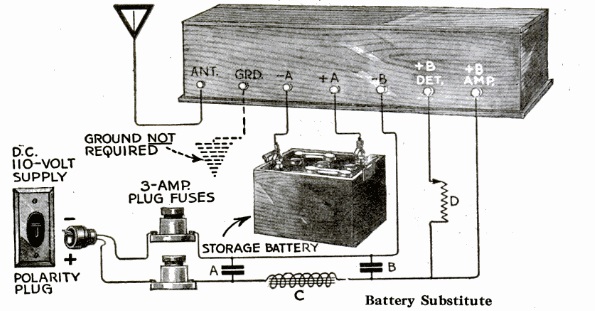
 If you were one of the growing number of Americans who owned a radio 100 years ago, the cost of batteries would soon become a concern, and you would be thinking of ways to run the radio from your lighting current.
In many large cities, the power company supplied 110 volts direct current, and if that was your situation, the March 1925 issue of Popular Science showed you how to power the radio. Even though the power was DC, the generators down at the power plant generated a lot of ripple, and if you just ran the radio straight from the line, the result would be a loud high pitched whine. So the filtering arrangement above could be used.
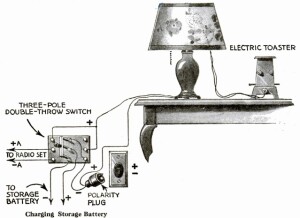 For the filaments, since you already had a battery, you could just use that, but then recharge it with 110 volts DC, as shown here. To drop the voltage, you would start with a 60 watt lightbulb in series. But to finish the job, you would want to lower the current, which meant putting the toaster in series.
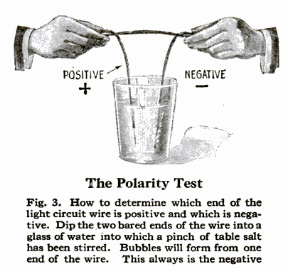
If you weren’t sure about the polarity, you could run the simple test below:

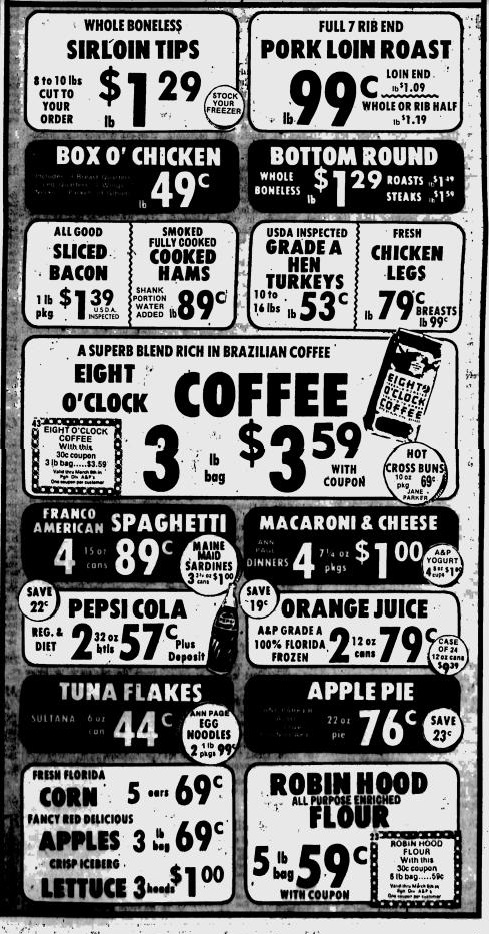 For a snapshot of the cost of living in the Bicentennial year, this ad for A&P stores appeared in the Pittsburgh Post Gazette on March 5, 1976. While the prices look low, this was the era of the WIN button, and there was a lot of inflation in progress. According to this online calculator, one dollar in 1976 works out to $5.58 in 2025 dollars. So 59 cents for a five pound bag of flour works out to about $3.29 per pound today. You can check the current price at Amazon at this link.