Author Archives: clem.law@usa.net

Human Reflex Science Fair Project

1941JunePSIf Junior is looking for an interesting demonstration for the first post-COVID science fair, he or she can’t go wrong with this illustration of how human reflexes work.  If you touch a hot stove, your body needs to react before the brain kicks in.  Therefore, you are hardwired to jerk your hand away.

This demonstration illustrates the principle.  A flame is brought close to a simulated human hand, but as soon as it comes into contact with the simulated nerve, the solenoid energizes and jerks the hand away.

The idea appeared 80 years ago this month in the June 1941 issue of Popular Science.  For the young scientist wishing to duplicate the project, all of the parts are readily available on Amazon:  This switch will kick in at 40 degrees Celsius, an uncomfortably warm, but not dangerous temperature.  This 3-volt solenoid will reliably move the hand.  And there’s no need for the old-school dry cell batteries shown above.  Alkaline D cells will work very well, especially if you have a battery holder for them.   And while Junior can make the hand out of cardboard, he or she will be virtually guaranteed the blue ribbon with a realistic looking plastic hand.

Some links on this site are affiliate links, meaning this site earns a small commission if you make a purchase after clicking on the link.

Ration Challenge: Monday-Tuesday

RationChallengeMon1I’m continuing with the Ration Challenge. For this week, my diet consists of the same rations provided to Syrian Refugees in Jordan. This is a fundraiser for Church World Service. You can make your donation at this link:

My lunch Monday was similar to what I had Sunday, except my soup, shown above, contained  chickpeas (garbanzo beans)  rather than  lentils.  It also contained  rice and chicken bouillon.  I served it with the rice cakes I made Sunday. (which I made yesterday), which contains about 1/4 cup of flour.

RationChallengeMon2Supper consisted of rice and about a third of the can of sardines.  I served it with the flatbreads shown here.  They contained a total of a half cup of flour, a little oil, and water.  I had some rice left over, and I had some both Monday night and Tuesday morning with a little milk.

Lunch Tuesday consisted of the same lentil soup as Sunday, along with a couple of rice cakes.  For dinner Tuesday, I made more flatbread, and made some patties from the remaining sardines (1/3 can), rice, a little flour, and a little oil.  I fried them up, and they were palatable:

RationChallengeTues


If you are able, please make a donation to Church World Service at this link:


Some links on this site are affiliate links, meaning this site earns a small commission if you make a purchase after clicking on the link.

1961 Electronic Project Lab

1961JuneRadioElecSixty years ago this month, the June 1961 issue of Radio Electronics posed the question, “how can I prepare my child for today’s electronic world?” The answer was shown on the cover. A kit such as this would not make a child an electronic genius overnight, but it would let the parent find out of the child had an interest in and aptitude for electronics.

Shown here is the Heathkit Electronic Workshop model SK-50, and the magazine reviewed a number of similar kits. This one allowed the young radio fan to build 19 different electronic projects, simply by wiring the components together according to the instructions. The magazine article doesn’t state the price, but the kit was still in Heath’s 1966 catalog for $19.95.

I sometime hear it lamented that these kits are no longer available, but that’s not true. First of all, from the picture above, it would be possible to recreate the kit shown above simply by looking at the picture. But if you want to buy a similar set for Junior, then one of the Elenco Snap Circuit kits shown below fits the bill:


Ration Challenge Update: Sunday

RationChallenge2Today was my first day of the Ration Challenge. For this week, my diet consists of the same rations provided to Syrian Refugees in Jordan. This is a fundraiser for Church World Service. You can make your donation at this link:

My first meal is shown above.  I made soup from rice, lentils, and chicken bouillon.  I served it with one flatbread (which I made yesterday), which contains about 1/4 cup of flour.  I am allowed one spice for the challenge, and surprisingly, the bouillon qualifies as a “spice.”  It is very helpful, since it will turn just about anything into chicken soup.  As an added bonus, it also provides a few needed calories.

RationChallenge3Since I have more rice than I have flour, I decided to use some of the rice for making a cake, shown here.  Using an electric coffee grinder, I turned the rice into flour and added a little oil.  I added enough water for a doughy consistency, and fried it on the griddle.  It was a little bland, but should go well with soup, sardines, or beans.

Dinner consisted of the rice leftover from lunch, fried with 1/4 can of sardines (and the oil in the sardine can), along with the last piece of flatbread and a glass of (unsweetened) iced tea:

RationChallenge4

To prepare for tomorrow, I made another batch of rice cakes and put them in the refrigerator.  This time, I remembered to add a little salt.   I also put half of my chickpeas (garbanzo beans) in to soak overnight, and I’ll add them to my soup tomorrow.

If you are able, please make a donation to Church World Service at this link:


Some links on this site are affiliate links, meaning this site earns a small commission if you make a purchase after clicking on the link.

Ration Challenge Update: Saturday

RationChallenge1
Here’s the bulk of what I’ll be eating Sunday as I start the one week Ration Challenge. I won’t have time to cook in the morning, so I had to do some pre-cooking.

The flatbread isn’t bad, if I do say so myself. I used one cup of flour, a half cup from the house, and a half cup from my rations. So half is to test today, and the other two breads are for tomorrow.

The rice will mostly go in soup, since I’m allowed to use chicken bouillon as my “spice.” I also started soaking half of my lentils, which I’ll add to the soup as my protein for the day.

Thank you to those who have donated already. If you are able, please consider making a small (or large) donation. I’m about $72 away from getting the luxury of one (1) vegetable to enjoy during the week! So your generous early donations will prevent needless suffering. On the other hand, if you don’t like me and want me to suffer, then wait until next Sunday evening, and make a huge donation then!

Either way, your donation helps Syrian refugees who are going through the same exercise, through no fault of their own.

Donations go to Church World Service, which has an extremely good reputation for making sure donations efficiently go to where they are needed. You can make your donation at this link:


Eclipse Report: June 10, 2021

NYEclipse

Wikimedia Commons photo by Anthony Quintano from Mount Laurel, United States – Statue of Liberty Annular Solar Eclipse, CC BY 2.0.

As we previously reported, we travelled to near Grand Marais, Minnesota, on the North Shore of Lake Superior, to view the annular eclipse of June 10, 2021. You win some, and you lose some, and we lost this one, as the event was completely clouded out.

Local sunrise was at 5:05 AM, and we should have seen a view similar to the one above (but probably without the Statue of Liberty). Unfortunately, we awoke at about 3:00 to the sound of rain, and the weather within a hundred miles driving distance reported cloudy.

We set out in hopes of finding a hole in the clouds, but with no luck.

The photo above was taken by New Jersey photographer Anthony Quintano, whom we thank for releasing this image on a Creative Commons license.  Prints are available at his website.


Ration Challenge Update

Here’s an update on the Ration Challenge I will be taking from June 13-19. Please consider donating to Church World Service to assist Syrian refugees. You can read more and donate at this link:

https://www.rationchallengeusa.org/richard-clem


1946 Two Meter Transceiver

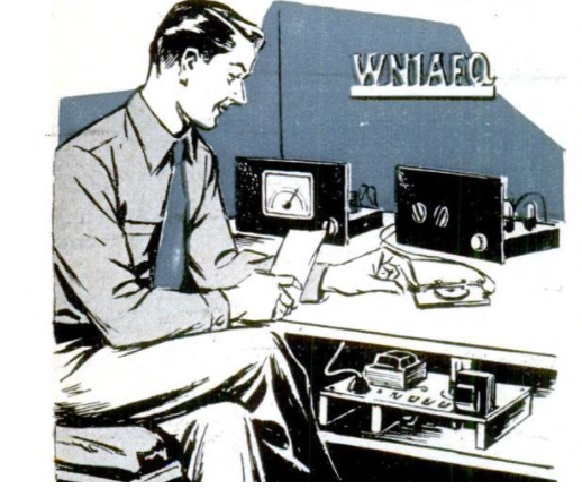
1946JunePMSeventy-five years ago, this ham was just getting back on the air after a wartime hiatus, thanks to a two-tube two meter transmitter described in the June 1946 issue of Popular Mechanics. The magazine noted that for the ham licensed prior to Pearl Harbor, as well as the newly licensed, the simple set would provide an efficient way of getting on the air for local contacts while the big rig was still under construction.

The set used a 6N4 to serve as oscillator, with a 7C5 modulating. On receive, the 6N4 became a superregenerative detector, with the 7C5 serving as audio amplifier. Also shown above is a 300 volt power supply, although another supply, such as a vibrator supply in a car, could be used to power the rig. The recommended antenna was a folded diple constructed of 300 ohm twin lead.

1946JunePM2


1941 RCA BP-10 Portable

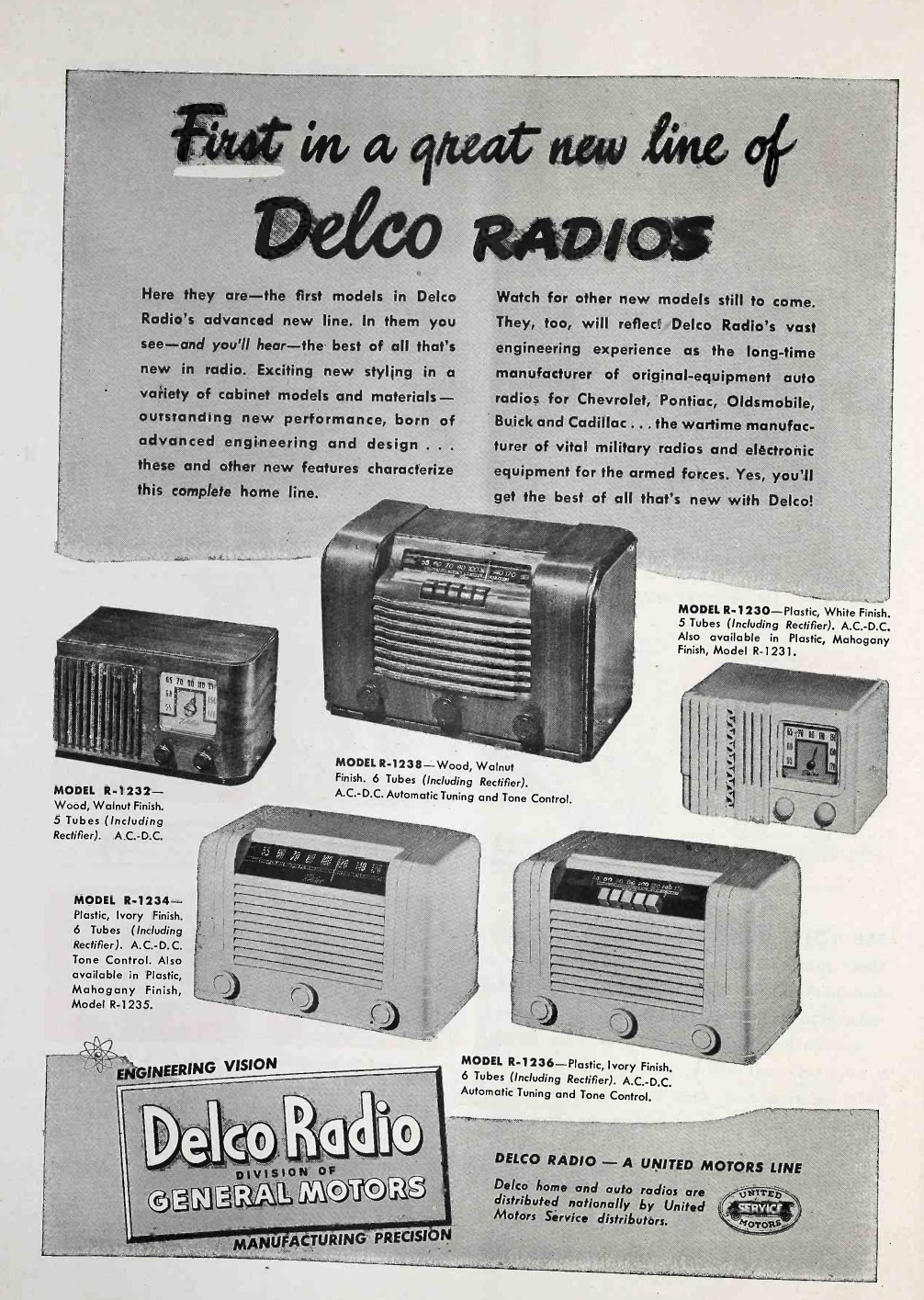
Screen Shot 2021-06-03 at 12.04.10 PMEighty years ago today, the June 9, 1941, issue of Life magazine showed some of RCA’s offerings. The portable was the main feature, and was billed as the perfect Father’s Cay gift. The superhet weighed in at only 4-1/2 pounds, but was a full toned powerful set. It featured a built-in antenna in the lid, and the speaker was said to pay symphony music with amazing tone and volume. The set sold for $20, and if you acted fast, they would toss in the leather case.

The set appears to be model BP-10, a four-tube set powered by a 67.5 volt B battery and 1.5 volt filament battery.


Homemade Cardiac Monitor: 1961

1961JunePEIf Junior is looking for a spectacular science project in the field of biomedical engineering, this one is a sure winner.

Sixty years ago, the June 1961 issue of Popular Electronics showed how to construct this simple cardiac monitor. The circuit was simple, amounting to a 4 transistor audio amplifier. The diagram called for 2N279 transistors, which are apparently unobtainium today, but this substitution guide lists the 2N2431 as equivalent, and it is available at a reasonable price.

The input comes from two electrodes, one of which is placed on each arm. In this position, they will pick up the currents from the heart, which are alternating currents of up to 100 kHz. The audio portions will be audible in the headphones, and also displayed on the meter. The magazine notes that you are not hearing the actual sound of the heart, merely the amplified voltage sent to the heart muscle. Other muscles can be monitored by placing the electrodes on either side of the muscle in question.

The electrodes are simply pieces of metal placed on the body. Prior to placing them, the skin needs to be scrubbed to improve the conductivity. This is done by scrubbing with Lava soap
or Ajax cleanser. (However, since Ajax is now billed as “non-scratching”, I’m not sure it would still work.) The article notes that the device is completely safe, even for children. First of all, it runs off only three volts. And the connection to the electrodes goes through a capacitor, so even that voltage has no pathway to the body.

More advanced versions are available today, but the advanced student will almost certainly bring home the blue ribbon in the science fair by building the medical device at home.

1961JunePE2