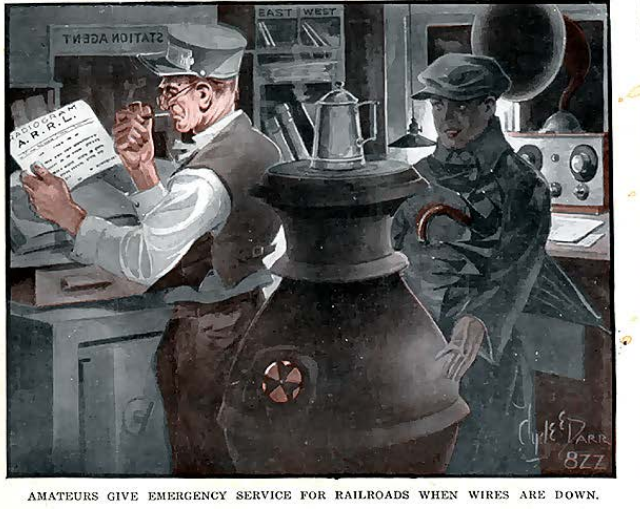
 A hundred years ago, this railroad station agent was reviewing a message sent from another station via amateur radio. You need communications to run a radio–before sending a train down a westbound track, you better make sure that there’s not an eastbound train coming toward you. Normally, those orders go out via telegraph, but if the wires were down for any reason, that was a problem.
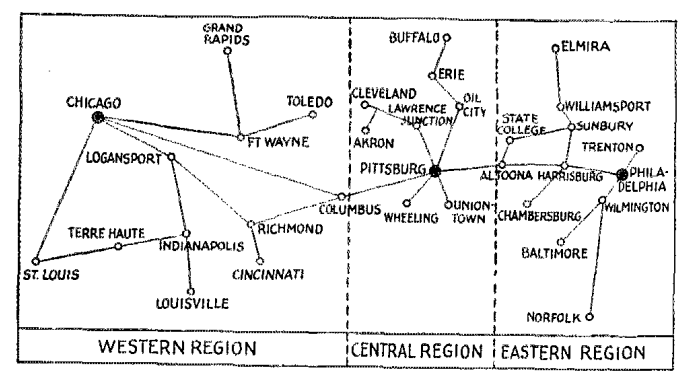
As late as the 1940s, you see occasional reports of amateur radio operators helping out the railroads with this vital traffic, such as during the 1949 Midwestern blizzard. It is illustrated here on the cover of QST, May 1926. The accompanying article explains how the ARRL was approached by the Pennsylvania Railroad to set up a reliable backup system. Over the course of 10 weeks, tests were conducted to make sure there would be a smooth transition in case of emergency. All of the cities shown on the map below were represented, in most cases by multiple stations.