 Seventy years ago, the January 1956 issue of Popular Electronics gave some suggestions on the kinds of things that electronics hobbyists could think about inventing. The ideas came from the National Inventors Council, a governmental agency tasked with encouraging independent inventors to come up with ideas useful to the government and military.
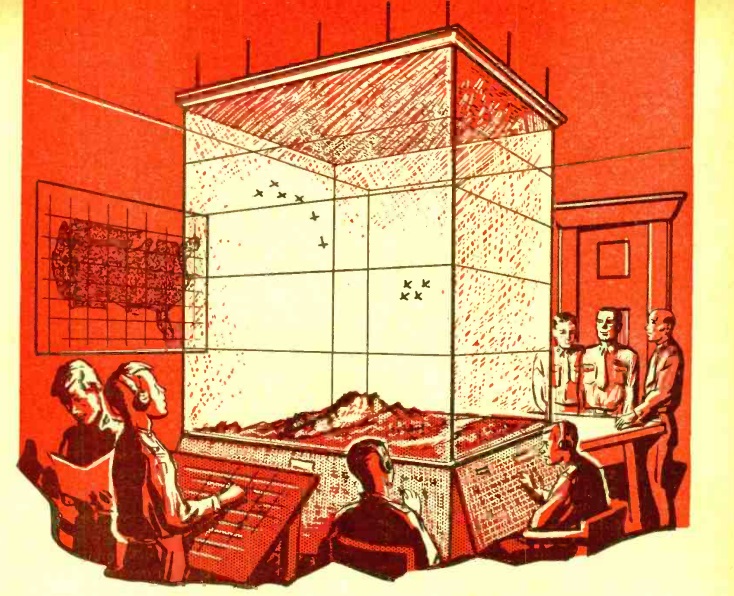
Shown above is a 3D radar display. The magazine noted that a “truly three- dimensional display would not only have wide application in military work, but might have wide commercial application in the development of a three -dimensional television system for home use.” (We should note that Mr. Whoopee didn’t come up with his version until 1963.)
Some of the inventions described in the magazine did come to fruition. For example, it mentions that the military is in need of a recording method which would cover a huge spectrum, up to 1000 MHz, but that current tape and wire recorders weren’t up to the task. Today, it’s pretty commonplace for a software-defined receiver (SDR) to have recording capabilities, so that you can play back a huge chunk of spectrum. Today, your computer has enough capability to do just that.
Similarly, the portable power sources that the military was looking for 70 years ago are probably in your pocket right now, as the battery in your phone meets most of those specifications.
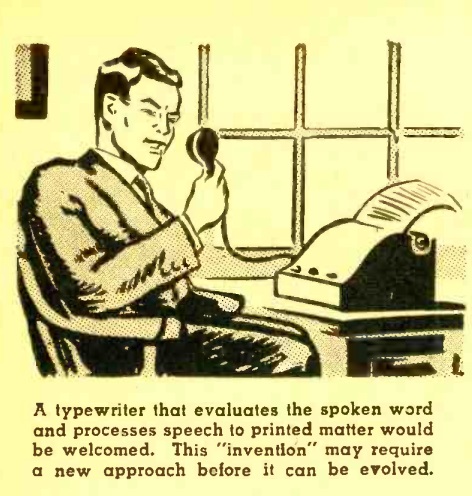
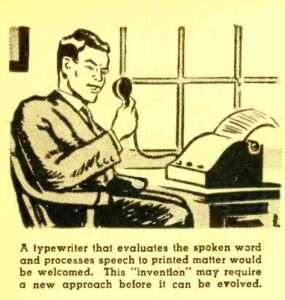 The magazine mentioned that hams could probably come up with a “microwave oscillator, suitable for both continuous – wave and pulsed operation, with an output of 1 kw. or more.” The idea shown at left did, indeed, come to fruition, and you probably have it installed on both your computer and phone, in the form of some kind of voice-recognition software. So someone must have come up with that new approach mentioned in the caption.

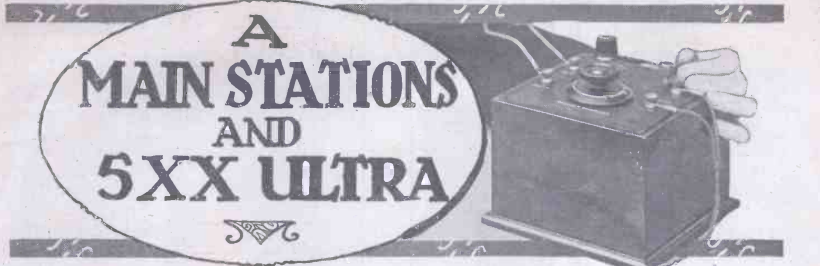
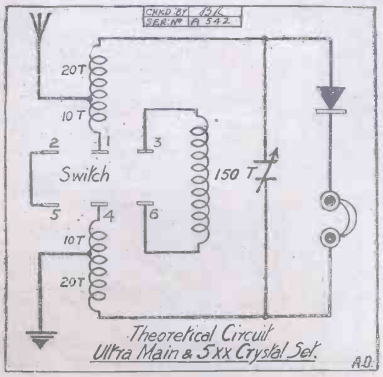
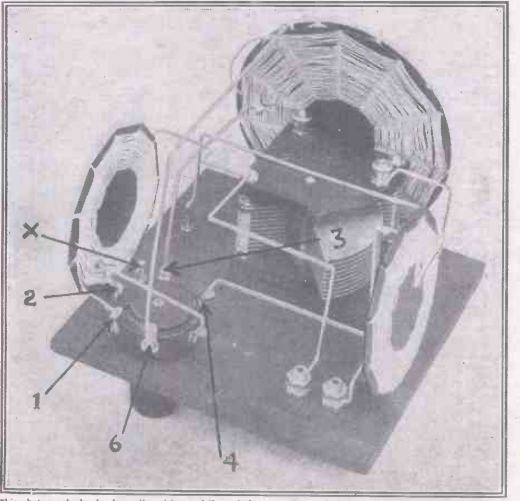 A hundred years ago, the January 1926 issue of theBritish publication Popular Wireless showed how to put together this “ultra” crystal set. It was designed to pull in the main BBC broadcast, as well as the then-new transmissions of station 5XX on 187.5 kHz. That station broadcast from Daventry with high power (then 25 kW), with the idea of blanketing Britain with its signal.