Monthly Archives: October 2025

1925 Wearable Crystal Set

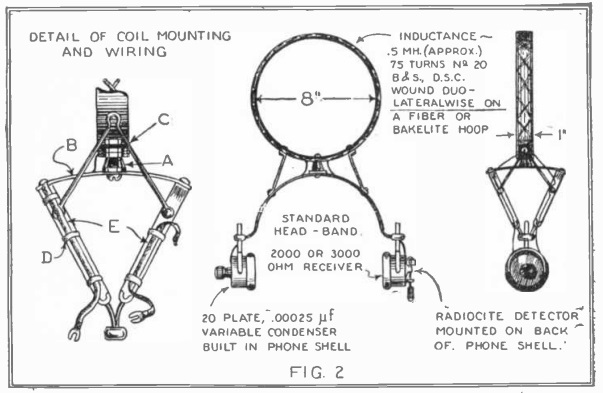
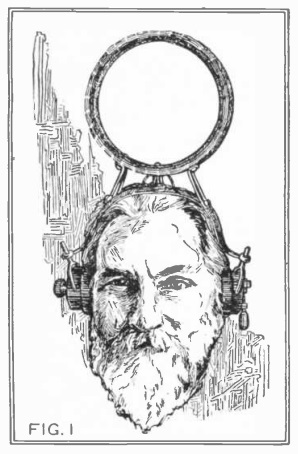
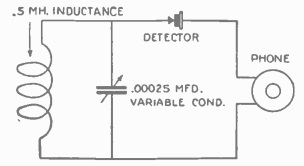
The gentleman shown at left, pictured in the October 1925 issue of the magazine The Experimenter, is, according to the article, what the well-dressed radio man would be wearing in the near future. He is equipped with a self-contained receiver, capable of pulling in stations within 10 miles.

It’s a crystal set, and the loop antenna means that you don’t have to worry about an antenna or ground connection. You can move about freely listening to your favorite program.



Radio Actress Lorna Lynn, 1945

Shown here on the cover of Radio Mirror, October 1945, is eleven-year-old radio actress Lorna Lynn. When this photo was published, she had already had an eight year career in radio, and was on the air five days a week. She appeared on the CBS show Danny O’Neil, and had previously been on The March of Time, Salute to Youth, We the People, Arthur
Hopkins Presents, Big Sister, American School of the Air, Here’s to Romance, and Appointment with Life.  She later appeared on the Lux Video Theatre, The Billy Rose Show, and Crime Photographer.   She passed away in Florida in 2011.


1945 One Tube Portable

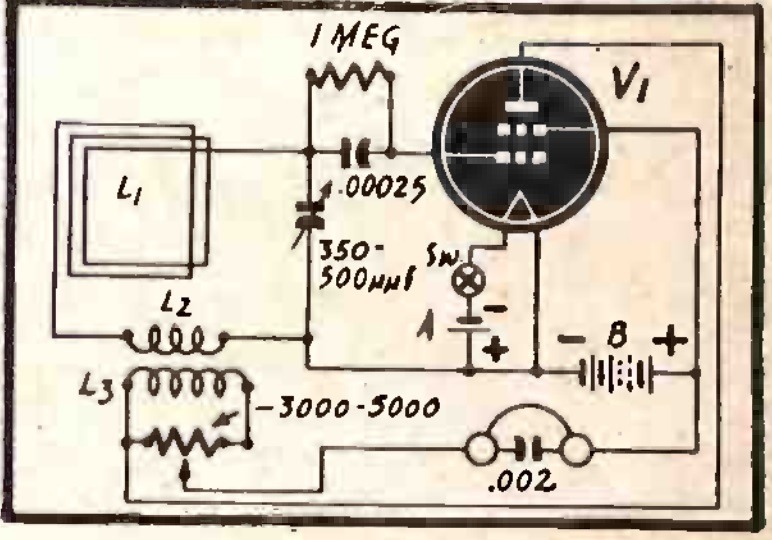
Eighty years ago, the October 1945 issue of Radio Craft showed this circuit for a simple one-tube portable receiver. Almost any tube could be used, including the 1S5, 1A5-G and 1N5-G. It had been sent in to the magazine by one Harold J. Shaffer of San Francisco, who noted that the regenerative circuit, while unconventional, proved to be unusually stable. For that reason, the set could be carried around and provided pleasant headphone reception for local stations.

L1 was a spiderweb loop, and Shaffer intentionally made the set large so that it could have a large loop. The other two coils were wound on a one-inch tube. The A battery was a flashlight cell, and while this circuit used 45 volts, the B battery could be as low as 15 volts.


Eveready 412 “Mini-Max” 22.5 Volt Battery

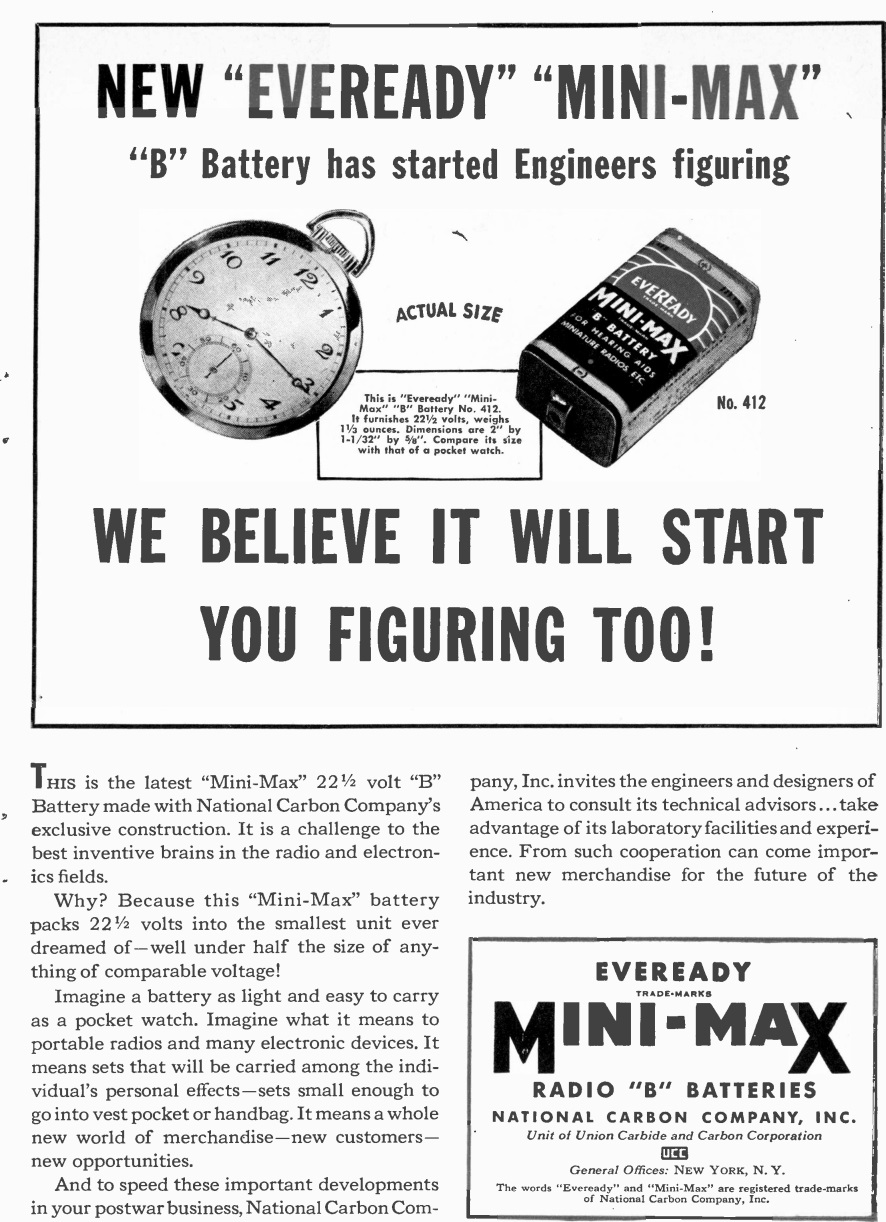
Eighty years ago, Eveready introduced the “Mini-Max” B battery, model number 412. The 22-1/2 volt battery measured only 2 x 1-1/32 x 5/8 inches, and weighed only 1-1/2 ounces. It was about the same size as the still-in-production 9 volt battery, although rather than having both terminals on one end, the 412 had positive on one end and negative on the other.

It was originally intended for use as the B battery in tube portable radios, but it was also used in instruments, and even in some early transistor radios, such as the Regency TR-1. The carbon-zinc battery remained in production through at least the 1980s.

If you’re looking for a modern replacement, a replacement using alkaline cells is available on Amazon.  The ad above appeared in the October 1945 issue of Radio Service Dealer.


1945 Postwar Radios

Eighty years ago, the war had been won, and a lot of people were happy about it. And that included these two on the cover of Radio Retailing, October 1945. The woman on the right was happy because she was able to buy a new radio, for the first time since 1942. And the gentleman on the left was even happier, because he was a radio dealer, and was able to once again make it a Radio Christmas.


1940 Three-Tube Loudspeaker Set

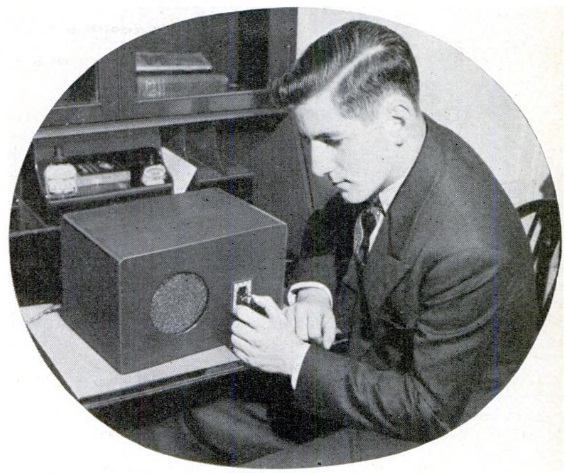
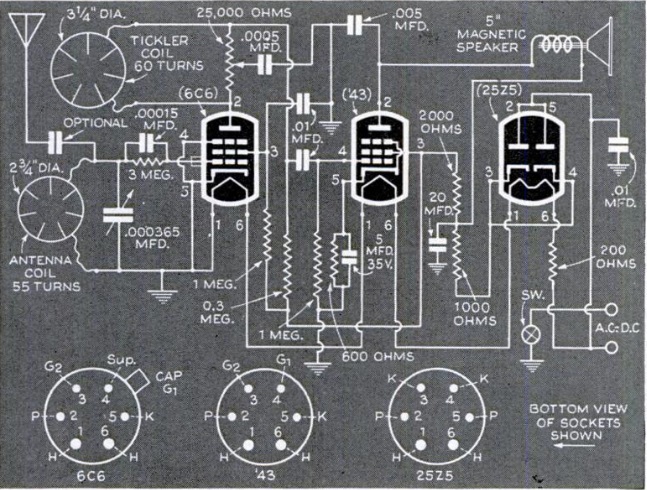
Eighty-five years ago, this gentleman is pulling in a program with a receiver he built for only $4.06, following the plans in the October 1940 issue of Popular Science.

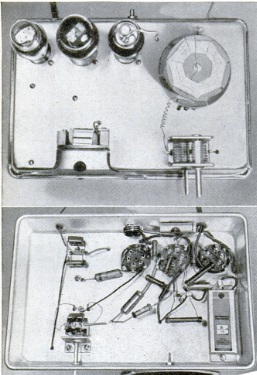
The three-tube circuit was simplicity itself. It was an AC-DC set that used a 25Z5 rectifier, 6C6 regenerative detector, and 43 AF amplifier. It could provide loudspeaker volume on the broadcast band.

The chassis was an aluminum cake pan, which had the added advantage of being easy to work with. If no drill or punch were available, it could be cut with an ordinary pair of scissors. It was housed in a metal cabinet found in the home scrap pile.  The coils were honeycomb-style and were easy to wind. A 25 foot antenna was called for.


Transatlantic Relay Stations, 1965

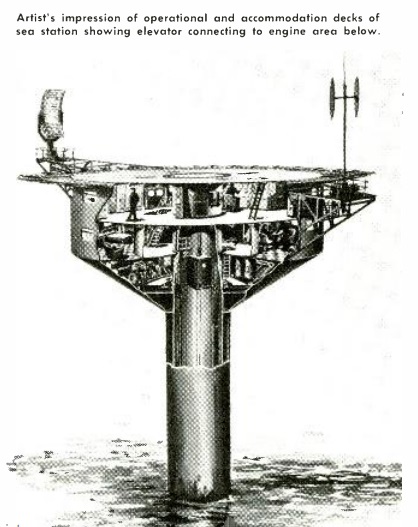
Shown here is an artist’s conception of a possible solution for communications with aircraft on transatlantic routes. Aircraft equipped with only VHF radio experienced significant gaps when they were incommunicado while crossing the ocean. There were some plans to extend their VHF range by use of directional antennas aboard the aircraft, but there were still gaps.

One proposed solution was two to four floating communications platforms mid-ocean. They would be linked by cable to shore. With these, aircraft could be continually in line-of-sight communication.

Of course, HF communication is also available on aircraft. But the article noted that this communication was not 100% reliable, due to occasional HF blackouts and the vagaries of HF propagation.

For those stationed on these platforms, it looks like a lonely assignment.

The illustration appeared in the October 1965 issue of Radio-Electronics.


1955 British Radio Kits

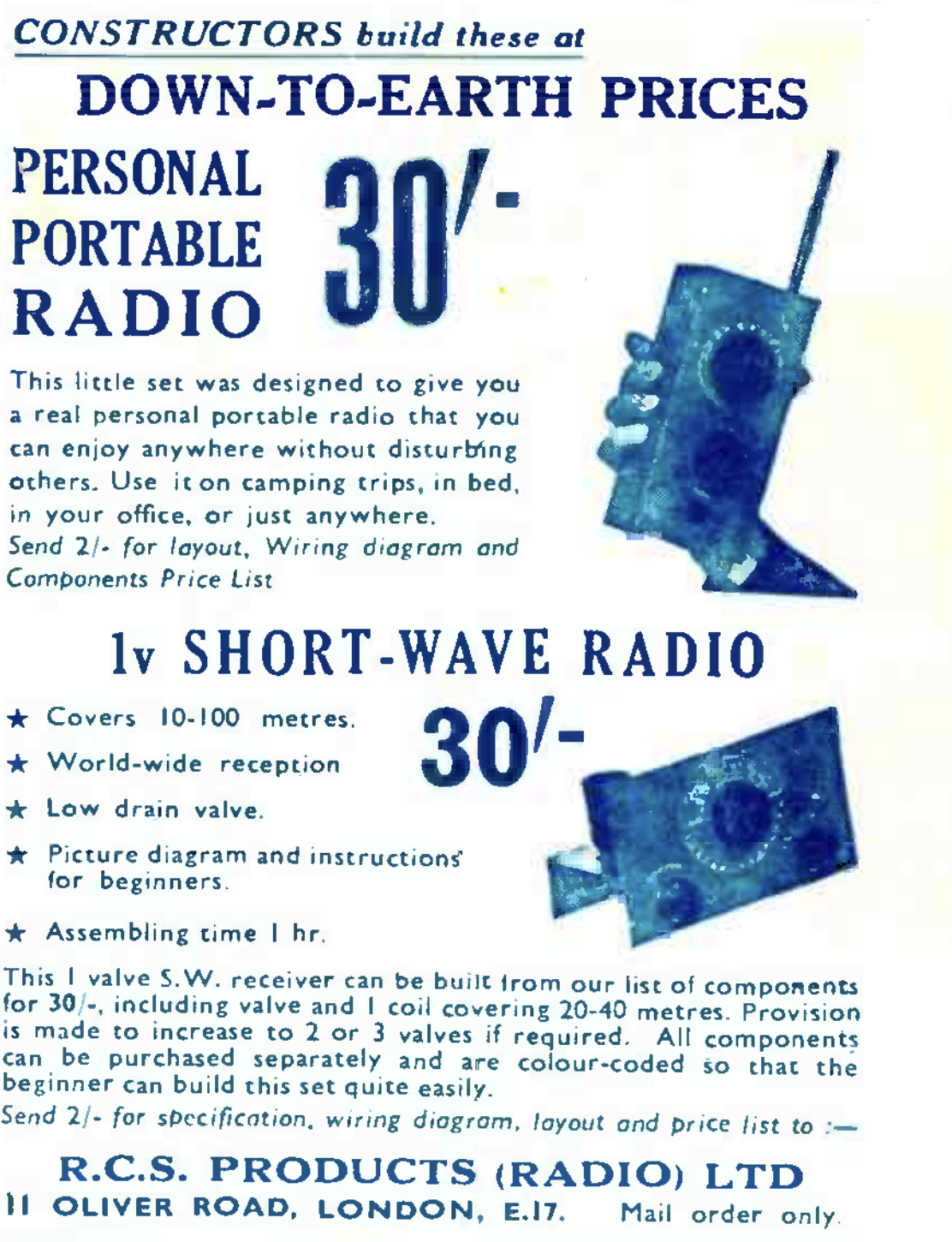
Seventy years ago, the British radio hobbyist with 30 shillings in his or her pocket might want one of these receiver kits. The broadcast portable would allow private listening nearly anywhere, and the other set would inexpensively introduce him or her to the short waves.

According to the Bank of England inflation calculator, that works out to about 30 pounds in 2025 money.

They appeared in the October 1955 issue of Practical Wireless


Automatically Timed Stove and Radio

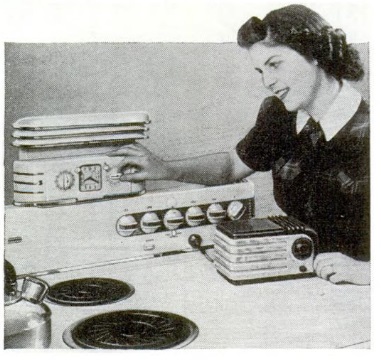
Eighty-five years ago, this thoroughly modern housewife made sure she didn’t miss her favorite program. The timer on the electric stove was primarily designed to control three cooking circuits on the stove. But she was also able to plug in a radio to make sure it came on at just the right time. The picture appeared in the October 1940 issue of Popular Mechanics.


Electronics Merit Badge, 1965

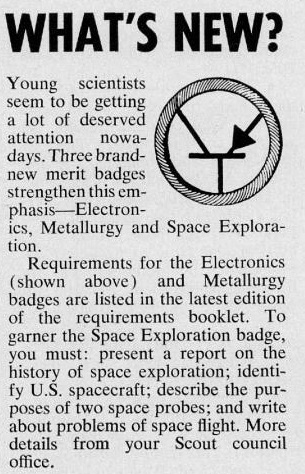
As shown in this announcement in the October 1965 issue of Boys’ Life magazine, the Electronics Merit Badge (along with Space Exploration) is sixty years old. Metallurgy was also new that year, but was renamed Metals Engineering in 1972 and then discontinued in 1995.

Radio Merit Badge (originally named Wireless) was one of the original merit badges.  It continues (we happen to be a counselor for that merit badge), but Electronics covers some distinct material.  The design of the badge (a PNP transistor) remains the same today.

For an interesting story about the Space Exploration Merit Badge, read this account of an Ohio scout who earned it,