Monthly Archives: August 2025

1940 Radio Controlled Airplane

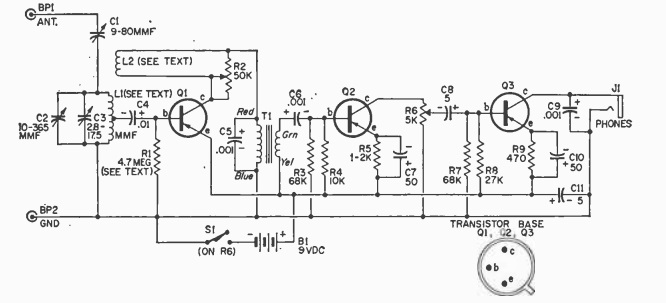
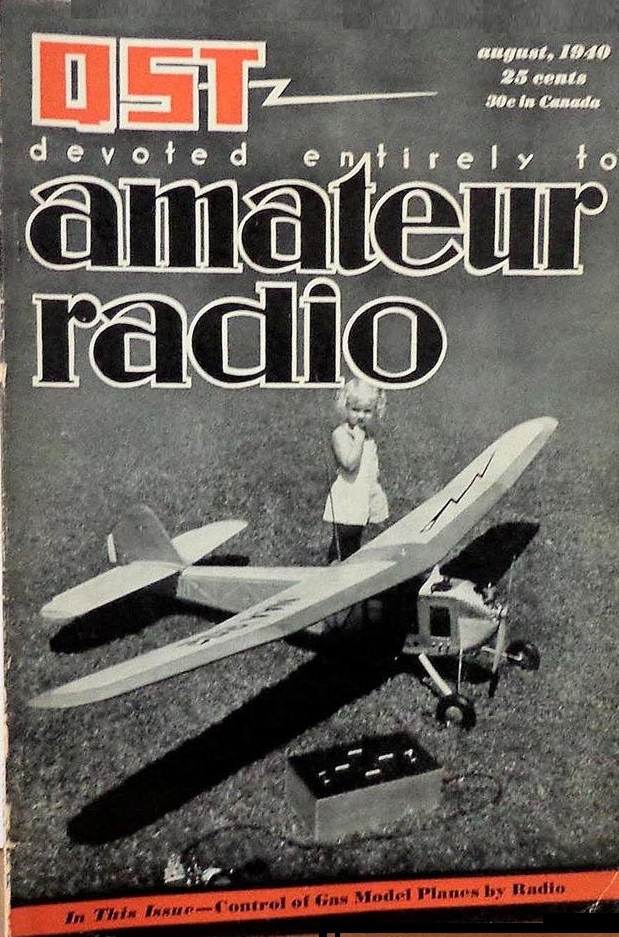
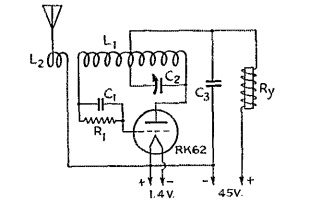
This young woman is now close to 90 years old, but she is shown here, on the cover of QST for August 1940, inspecting a radio controlled aircraft. The accompanying article by Clarence E. Bohnenblust, W9PEP, (probably her father) describes the radio controls. He was approached some time earlier by one C.H. Siegfried, who designed and constructed the gasoline-powered airplane, with a request to design radio control gear. For a transmitter, a 20-watt five meter unit was used. Onboard the aircraft, the superregenerative receiver shown here was used, and could reliably pick up the signal a mile away.
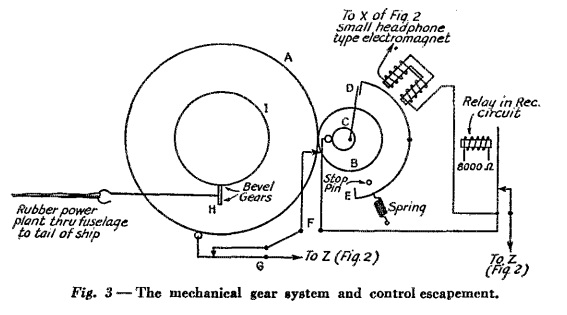
It was determined that four controls were necessary: rudder left and right, elevators up and down, motor speed high or low, and motor shut off. This was accomplished with an elaborate system of cams, operated by a pulsed signal from the transmitter. For pulses, an ordinary telephone dial was used. Each pulse moved the cams one notch, and they were held in place as long as the carrier was received. When the carrier was cut, it reset to a neutral position, ready fpr the next command.

The magazine notes that the airplane was successfully demonstrated at the ARRL Midwest Division Convention in Wichita in April, and was going to be seen again at the ARRL National Convention in Chicago later that year.

Silent TV for the Kids, 1955

These young men have been collecting Social Security for over a decade now, but 70 years ago, they were watching television while their mother and a friend chatted in the same room, undisturbed by the noisy program. You could do it yourself by following the instructions in the August 1955 issue of Popular Mechanics. You installed a remote listening device, similar to the one we recently highlighted, which allowed you to switch off the speaker and route the audio to headphones.

But according to the article, you could “make a big hit with the kids” by installing the headphones inside space helmets, available at toy stores.


Texas Girl Builds Radio: 1925

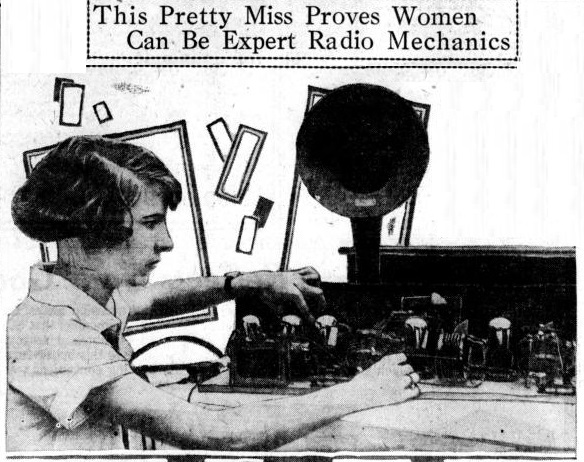
Shown here a hundred years ago today, in the August 9, 1925, issue of the San Antonio (TX) Light is Miss Annie Bommer of 312 Frasch Street, San Antonio.

Even though she was still in her teens, she thought nothing of building this five-tube TRF receiver with a regenerative detector.

She had three years experience in radio, starting with a crystal set, and had worked her way up to more complex sets. She was also skilled at automobile mechanics, the result of chumming around with her brothers. She had been put in charge of the radio department at Grant’s Department Store and the size of the department had greatly increased under her management.


Transatlantic Portable Contact, 1925

As most readers of this site already know, one of my interests in amateur radio is portable operating, through activities such as Field Day, Parks on the Air, and World Wide Flora and Fauna. It’s fun to go to just about any spot on earth, and know that within a short time, I can be sending signals around the world. While most of my contacts wind up being domestic, there is always still a bit of a thrill when my signal hops the Pond.

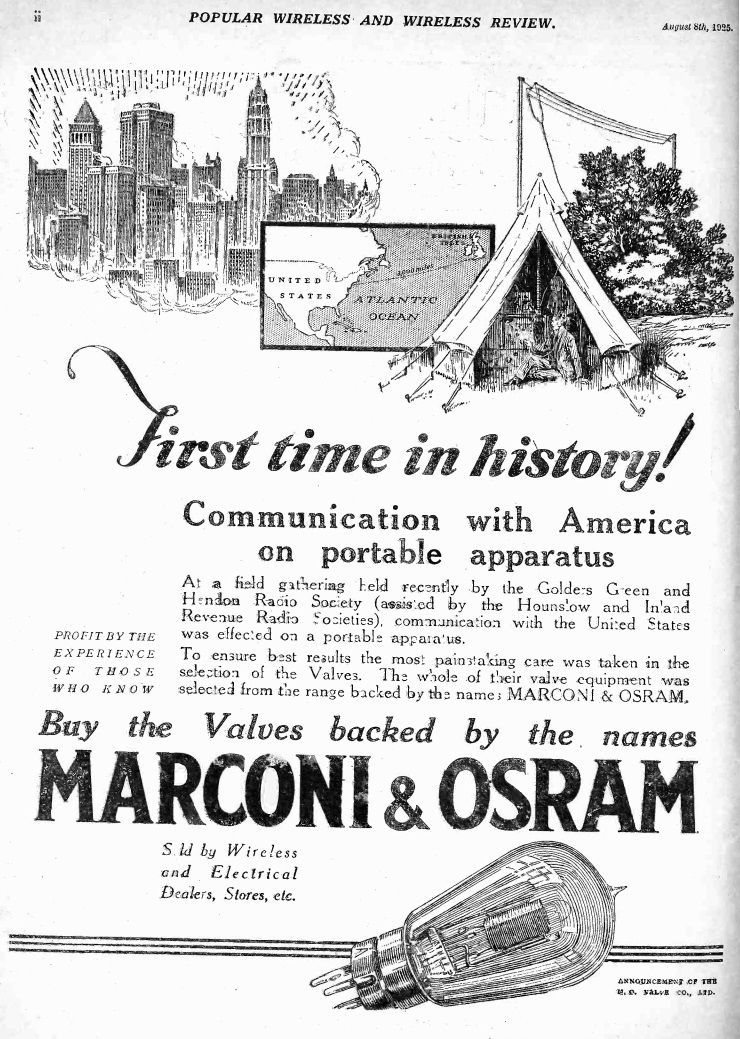
And that excitement is nothing new, as shown by this ad in Popular Wireless a hundred years ago today, August 8, 1925. It recounts the recent field gathering of the Golders Green and Hendon Radio Society (assisted by the Hounslow and Inland Revenue Radio Societes) at which communications with the United States was first effected using portable apparatus.

To make this happen, the valves (what Americans would call vacuum tubes) bore the Marconi and Osram brand.

You can read more about this historic contact in the New York Times for June 8, 1925.


1965 3 Transistor Regen

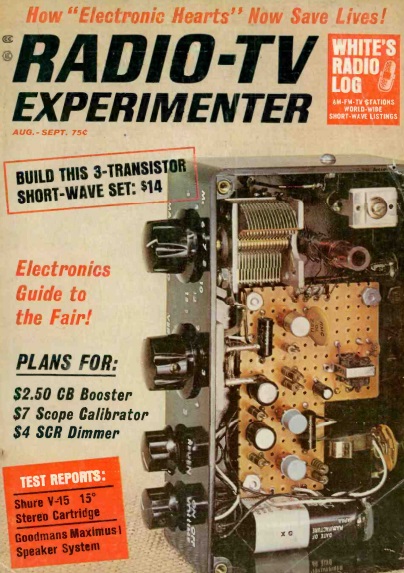
Sixty years ago this month, the August 1965 issue of Radio-TV Experimenter carried the plans for this three-transistor shortwave regenerative receiver. The parts would set you back only $14, and the completed set was said to be the size of a QSL card.  As shown here, it covered 4-15 MHz, although it could be modified to cover any range between 500 kHz and 30 MHz.  Even a beginner could have it together in about 8 hours.

The set called for a 50 foot antenna and high impedance headphones, although on strong signals, a speaker could be used, in conjunction with a matching transformer.


Swellest Tent in Camp: 1925

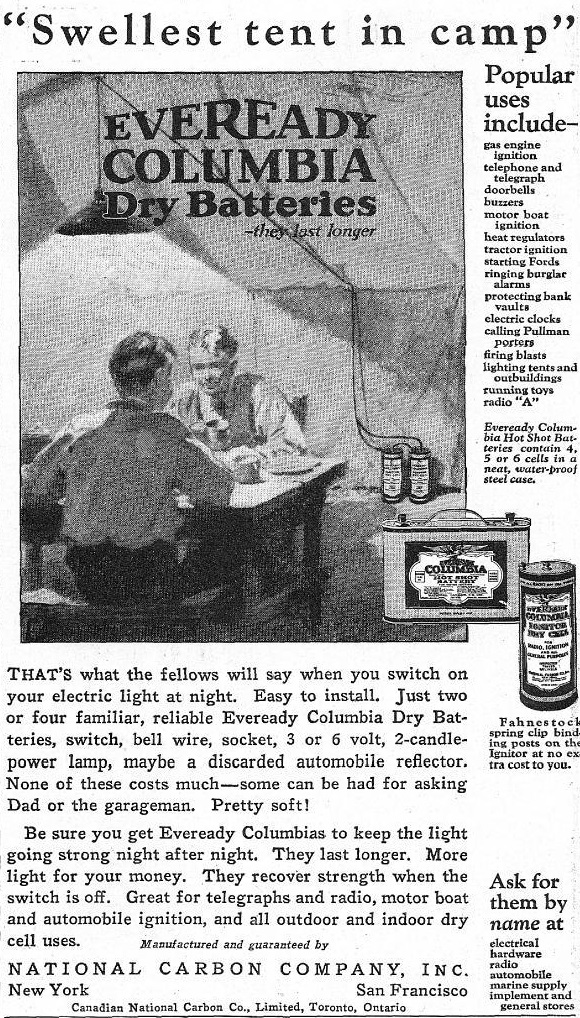
One hundred years ago, these young men had the swellest tent in camp, that’s to a little bit of ingenuity and some Eveready dry cells.  In addition to the batteries, they just needed a little bit of wire, a switch, a socket, a bulb, and maybe a discarded reflector from a car.

They kept giving reliable light, night after night, and that was swell.  The ad appeared in the August 1925 issue of Boys’ Life.


1940 “Tom Thumb” Portable

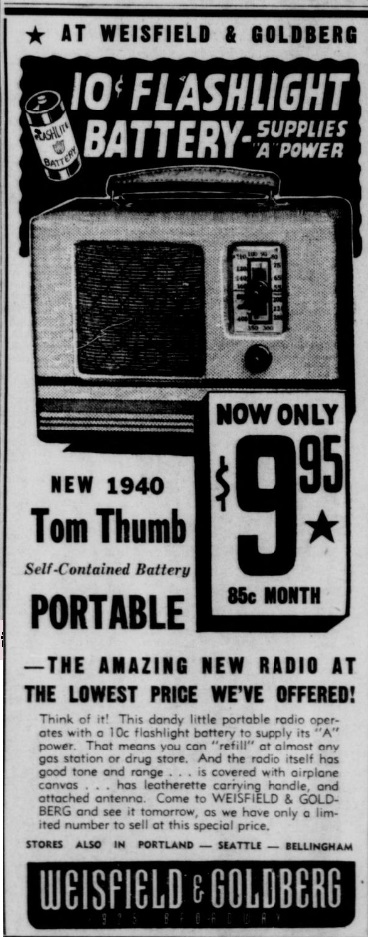
If you were looking for a portable radio 85 years ago, you could get this one for $9.95, as seen in this ad in the August 3, 1940, issue of the Tacoma (Washington) Times. The set was billed simply at the “Tom Thumb,” and I haven’t been able to track down the manufacturer.

But the main selling point was that the “A” battery was a normal flashlight battery, which could be replaced for a dime. Of course, there was also the B battery (of perhaps 45 or 90 volts) which would have been more expensive. But in fairness, the A battery would run down faster, and when it did, you could get one at any gas station or drug store.

You could get the radio at the Weisfield & Goldberg jewelry store, and if you credit was goo, it was only 85 cents a month.


Radio to the Rescue: 1955

Seventy years ago this month, the August 1955 issue of Popular Electronics didn’t contain any articles specifically related to this cover illustration. But the painting was just to good not to use. All we know for sure that the painter was Ed Valigursky. The gentleman with the radio was probably a ham, and probably using six meters. He undoubtedly saved the town by directing the other gentleman to add a few more sandbags at this critical spot.


1940 Radio Batteries

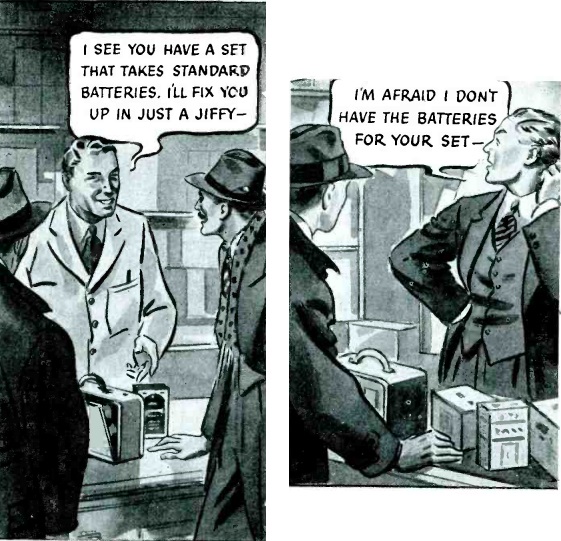
If you were a radio dealer 85 years ago, you wanted to be the one on the left, and not the one on the right. But it wasn’t quite that simple, as discussed in the August 1940 issue of Service magazine.

There was a wide variety of non-standard batteries for radios, and if a dealer stocked them all, there would be the problem of selling stale ones when the customer for one of the rare ones came in. So first of all, when selling new portables, you would keep your customers satisfied in the long run by selling only sets using standard batteries. In some cases, it was an underhanded trick by the manufacturer–they would design the set so that only their proprietary batteries would fit (not unlike printer manufacturers today, who make their profits from selling ink cartridges, a practice which can be beat by taking the advice on our website).

Customers were often reluctant to have you permanently change the wiring of their set to add a plug that would fit standard batteries. A good solution was often to sell them an adapter. Some were available off the shelf. In other cases, you could make an adapter by removing the socket from the old battery and connecting it to a standard plug.