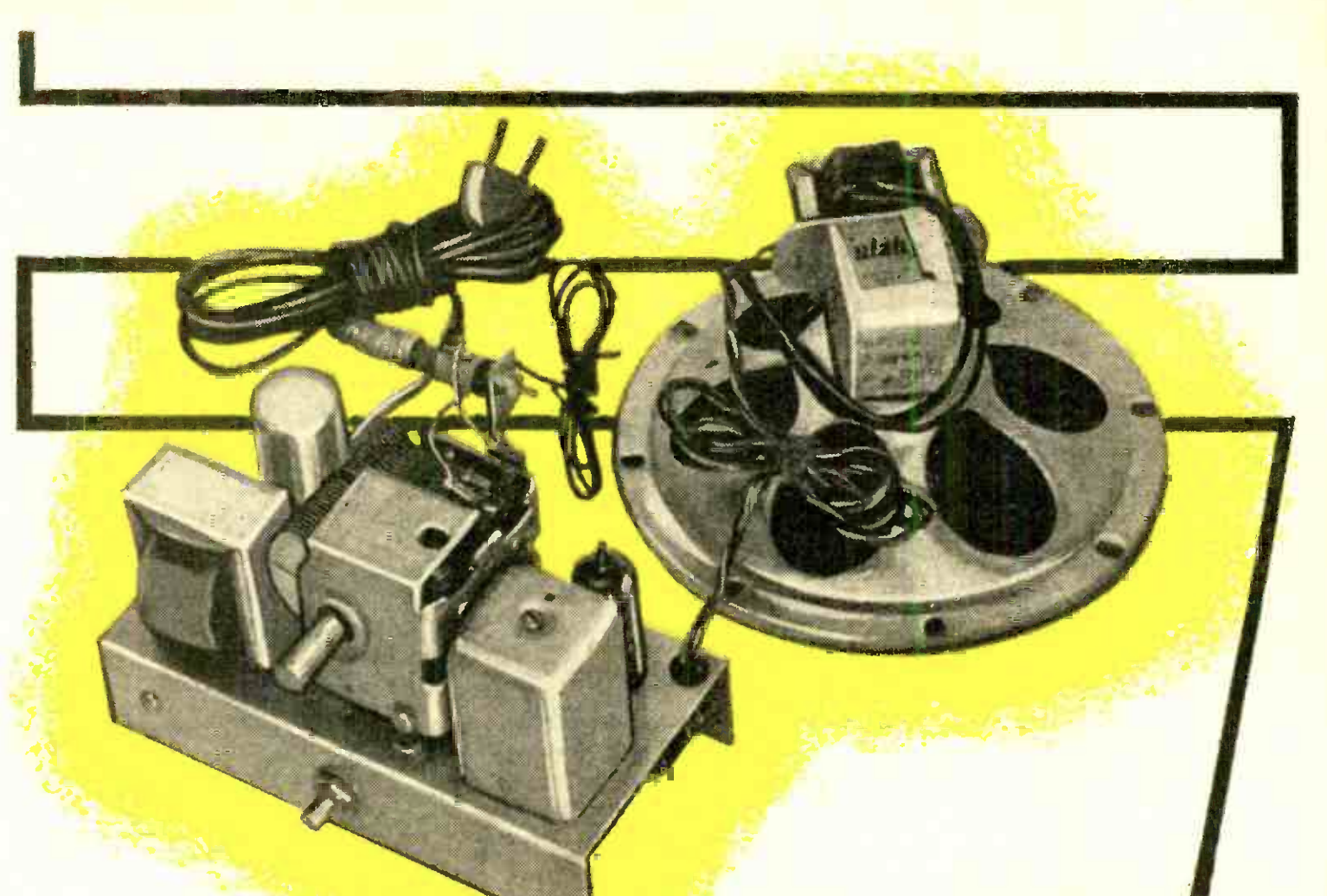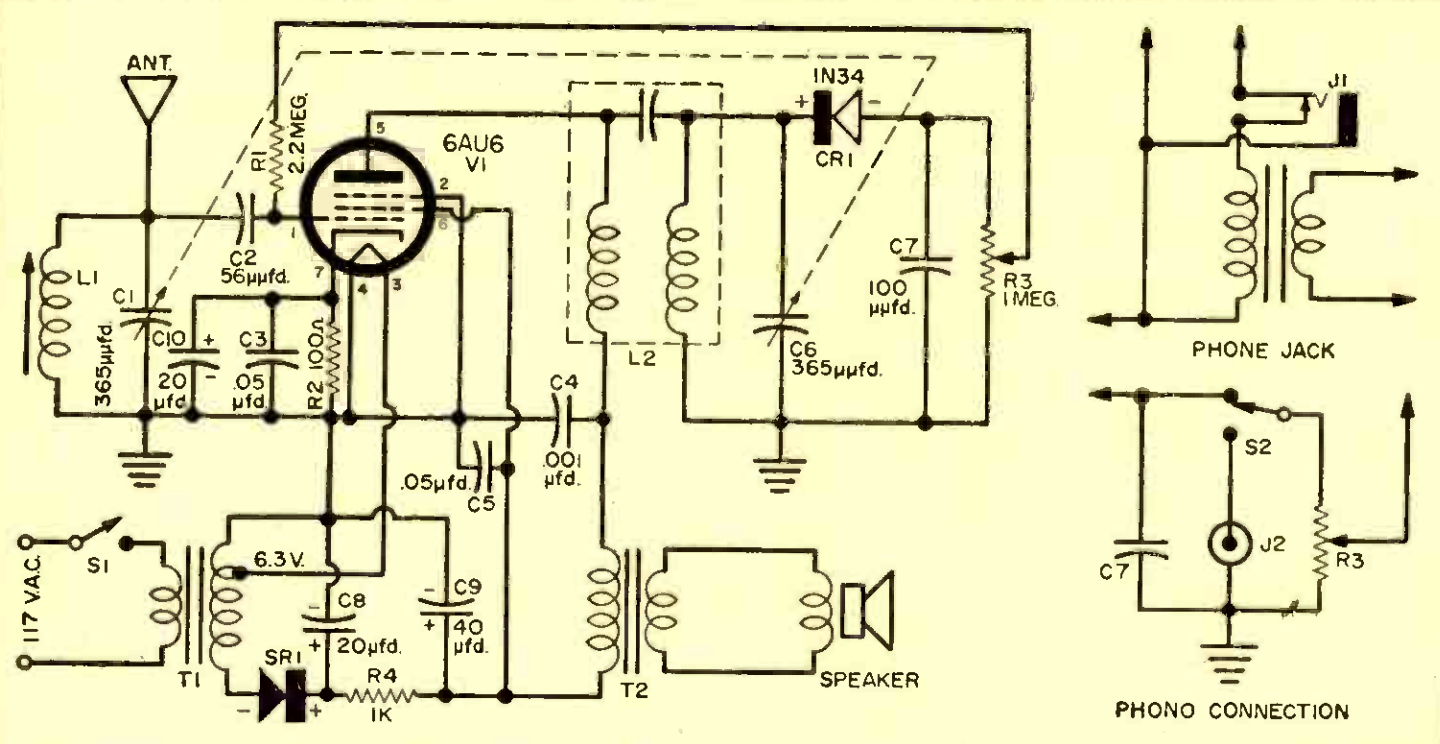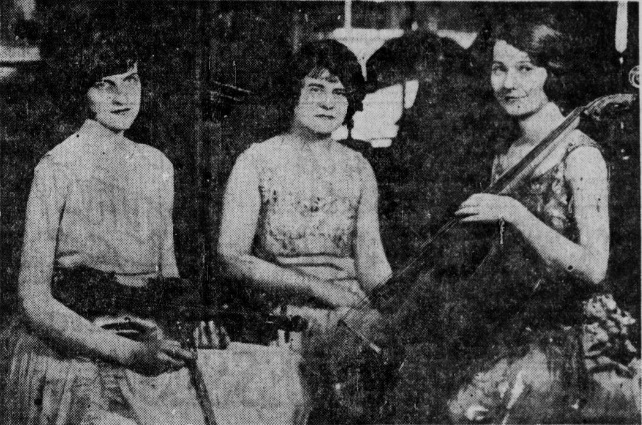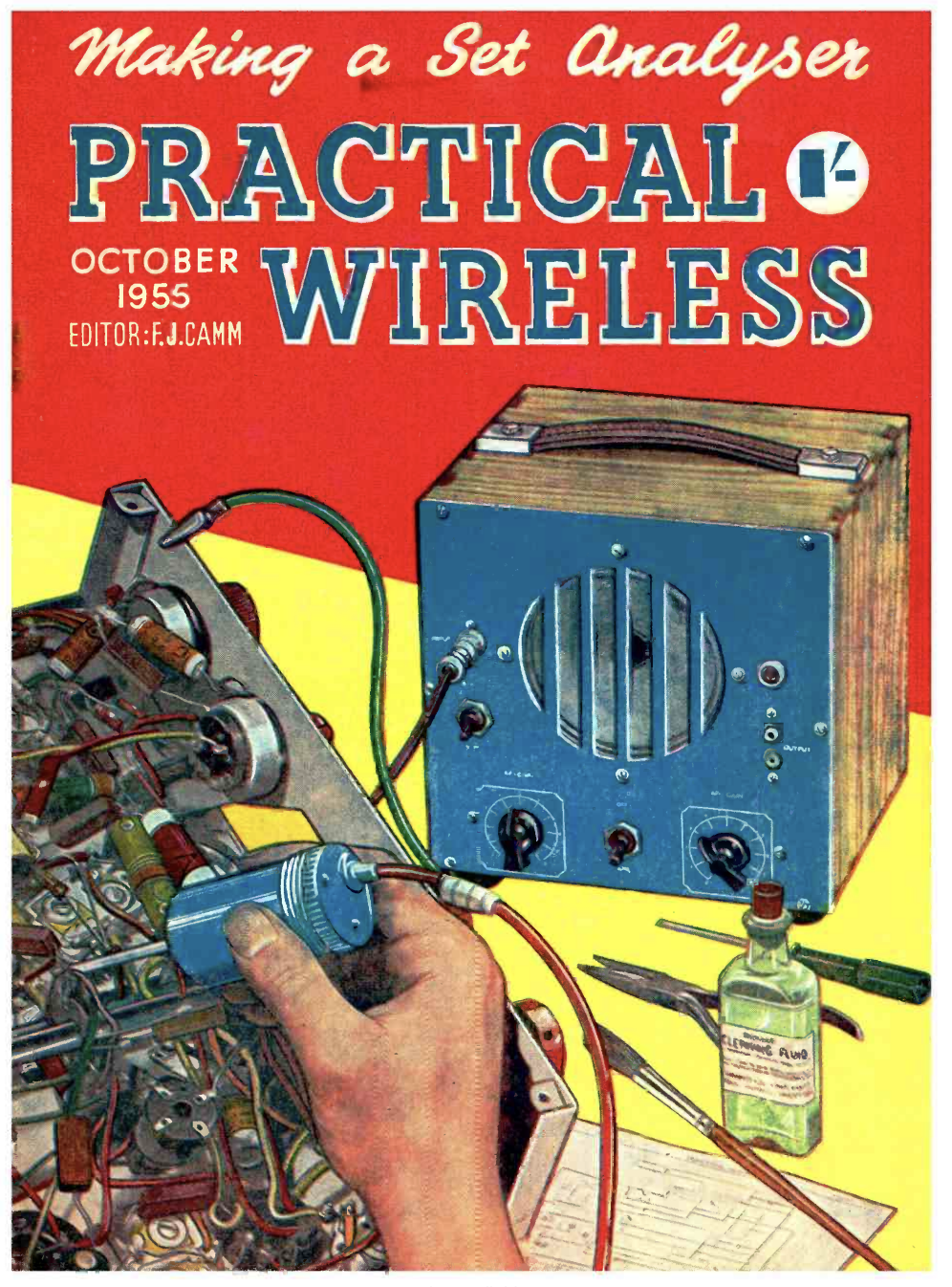
Category Archives: Radio history

Teleservice Hobby 3T 29 MHz Transceiver, Italy, 1965

Sixty years ago, this young Italian made made the cover of Radiorama magazine
https://www.worldradiohistory.com/INTERNATIONAL/Radiorama/Radiorama-1965-08.pdf
demonstrating this portable transceiver, Model Hobby 3T, from Teleservice, via B. Galliaria 4, Turin, Italy. The radios did not require a license, but operated on 29.5 MHz with an output power of 5 mW. They had a range of a few hundred meters.


Trailer Radio Shop, Elkhart, IN, 1940

Shown above is the radio service shop of Charles Hurt of Elkhart, Indiana, in 1940, shown here in the August 1940 issue of Service magazine.  He had been in business for a number of years without really making a living, and realized that he had to make some changes. He figured out that to be profitable, he had to make a profit on every single transaction, and he established a bookkeeping system to make sure that happened.

He also realized that there was fierce competition in his area, any one of which were able to press their advantages and force him out of business. The answer was to expand his service area and do it efficiently. Therefore, he purchased the trailer shown here, made it his shop, and adopted the slogan “service at your door.”

Hurt is also shown in this illustration in the December 1940 issue of National Radio News, which notes that the arrangement was also advantageous to the customer, as they avoided charges for pickup and delivery. This item also reveals that for AC power, the trailer was equipped with a dynamotor and storage battery.


1940 Portables

Eighty-five years ago, this couple is relaxing at the beach while they show off some of the latest personable portable radios available on the market. They include models from RCA Victor, Automatic, Emerson, Sonora, Majestic, and Philco. The picture appeared on the cover of Radio Retailing, August 1940.


1955 One Tube UHF Transceiver

Shown here, in the August 1955 issue of Radio News, is Robert Richardson, W4UCH, operating a 70 cm handheld radio. He noted that there was little activity above 2 meters, and set out to provide an economical way to get on the UHF band. The cost of each transceiver was only $13, meaning that two could be made for about $25. Range was about a mile over favorable terrain, with distances of up to five miles with an outside dipole antenna. The set was billed as ideal for short-range civil defense work.

On transmit, half of the 12AT7 tube was used as modulator, with the other half as oscillator. On receive, the oscillator functioned as a self-quenching superregenerative receiver.

Tuning was accomplished with a temporary Lecher wire made of two wires nailed to a board. A knife or razor blade was moved along the wires until the receiver quieted. The distance between two such points was half the wavelength.


1940 Battery Converter

The young man in this picture is now close to 100 years old, but in 1940, you can see the look of pride in his face that his dad figured out how to economize on the cost of B batteries for their portable radio. Generally, such radios required two batteries–one, often 1.5 volts, for the filaments, and another one, usually 45-90 volts for the B+.

But here, Dad purchased a converter which allowed him to run the radio from a single 6-volt battery. The power supply, apparently manufactured by Electro Products Co., 549 W. Randolph, Chicago, produced all of the necessary voltages. It could be used, as shown here, with a dry cell battery. Or, it could be used in the car, where an external antenna might also be required.

The picture appeared in the August 1940 issue of Popular Mechanics.


1945 One-Tube Regen

Eighty years ago this month, this schematic for a one-tube regenerative receiver appeared in the August 1945 issue of QST.  It used a 3A5 dual triode, half of which served as detector, with the other half being the AF amplifier.  The use of midget parts allowed the set to be built in a metal case measuring only 4 x 5 x 3 inches.

It appeared in Hints and Kinks, where it had been sent in by Charles Richardson, W8RXY. He reported that two plug-in coils were used to cover 16 through 70 meters. He used it to drive a small speaker, but it could also be used with headphones. He noted that when he was located in England, the set pulled in the States as well as the Orient.


1940 Radio Controlled Airplane

This young woman is now close to 90 years old, but she is shown here, on the cover of QST for August 1940, inspecting a radio controlled aircraft. The accompanying article by Clarence E. Bohnenblust, W9PEP, (probably her father) describes the radio controls. He was approached some time earlier by one C.H. Siegfried, who designed and constructed the gasoline-powered airplane, with a request to design radio control gear. For a transmitter, a 20-watt five meter unit was used. Onboard the aircraft, the superregenerative receiver shown here was used, and could reliably pick up the signal a mile away.

It was determined that four controls were necessary: rudder left and right, elevators up and down, motor speed high or low, and motor shut off. This was accomplished with an elaborate system of cams, operated by a pulsed signal from the transmitter. For pulses, an ordinary telephone dial was used. Each pulse moved the cams one notch, and they were held in place as long as the carrier was received. When the carrier was cut, it reset to a neutral position, ready fpr the next command.

The magazine notes that the airplane was successfully demonstrated at the ARRL Midwest Division Convention in Wichita in April, and was going to be seen again at the ARRL National Convention in Chicago later that year.


Texas Girl Builds Radio: 1925

Shown here a hundred years ago today, in the August 9, 1925, issue of the San Antonio (TX) Light is Miss Annie Bommer of 312 Frasch Street, San Antonio.

Even though she was still in her teens, she thought nothing of building this five-tube TRF receiver with a regenerative detector.

She had three years experience in radio, starting with a crystal set, and had worked her way up to more complex sets. She was also skilled at automobile mechanics, the result of chumming around with her brothers. She had been put in charge of the radio department at Grant’s Department Store and the size of the department had greatly increased under her management.


Transatlantic Portable Contact, 1925

As most readers of this site already know, one of my interests in amateur radio is portable operating, through activities such as Field Day, Parks on the Air, and World Wide Flora and Fauna. It’s fun to go to just about any spot on earth, and know that within a short time, I can be sending signals around the world. While most of my contacts wind up being domestic, there is always still a bit of a thrill when my signal hops the Pond.

And that excitement is nothing new, as shown by this ad in Popular Wireless a hundred years ago today, August 8, 1925. It recounts the recent field gathering of the Golders Green and Hendon Radio Society (assisted by the Hounslow and Inland Revenue Radio Societes) at which communications with the United States was first effected using portable apparatus.

To make this happen, the valves (what Americans would call vacuum tubes) bore the Marconi and Osram brand.

You can read more about this historic contact in the New York Times for June 8, 1925.


1965 3 Transistor Regen

Sixty years ago this month, the August 1965 issue of Radio-TV Experimenter carried the plans for this three-transistor shortwave regenerative receiver. The parts would set you back only $14, and the completed set was said to be the size of a QSL card.  As shown here, it covered 4-15 MHz, although it could be modified to cover any range between 500 kHz and 30 MHz.  Even a beginner could have it together in about 8 hours.

The set called for a 50 foot antenna and high impedance headphones, although on strong signals, a speaker could be used, in conjunction with a matching transformer.