Category Archives: Minnesota History

Retention Elections Will Make Judicial Selection More Political, Not Less. And Iowa Proves It.

A bill currently before the legislature seeks to amend the Minnesota Constitution to end constested elections for judges in the state.

Contrary to popular perception, judges in Minnesota are not appointed. They are elected. This comes as a surprise to most Minnesotans. When asked, they will typically opine that judges are initially appointed by the governor, but then must run for re-election. But that’s not exactly right. Article 6, Section 7 of the Constitution states:

The term of office of all judges shall be six years and until their successors are qualified. They shall be elected by the voters from the area which they are to serve in the manner provided by law.

Section 8 does, indeed, give the Governor the power of appointment, but only in the case of a vacancy:

Whenever there is a vacancy in the office of judge the governor shall appoint in the manner provided by law a qualified person to fill the vacancy until a successor is elected and qualified. The successor shall be elected for a six year term at the next general election occurring more than one year after the appointment.

While there are some differences (the length of the initial term) this system is essentially identical to how U.S. Senators are chosen. U.S. Senators are elected by the voters, but mid-term vacancies are filled by the governor. Yet nobody ever says that senators are initially appointed by the governor, but then must run for re-election, as they invariably say about judges.


The confusion comes largely because most judges retire prior to the expiration of their term. Section 9 gives the Legislature the power to provide for retirement, and Minnesota Statute 490.125 sets a mandatory retirement age of 70. Upon a judge’s retirement, a vacancy is created, and the vacancy is filled by the Governor.

As a practical matter, most Judges retire in the middle of their terms, either by choice, or because they are faced with mandatory retirement. Therefore, the Governor initially appoints most judges.  Senators rarely retire mid term, and there is no mandatory retirement age for senators. This is why people rarely explain the senatorial election process the same way they explain the judicial election process. But the two processes are essentially the same: Both senators and judges are elected officials.

Interestingly, in the reports of the Minnesota Supreme Court and the Minnesota Court of Appeals, newly-appointed judges have a footnote next to their name which indicates that they are acting as judges pursuant to appointment. So even the Courts themselves seem to recognize that judges appointed by the governor are somehow not quite fully tenured judges.

The proposed amendment seeks to change the status of judges as elected officials. Under the amendment, they would really become what most people think they are already: They would be appointed by the governor. The amendment would make two changes. First of all, the governor would be limited to nominees presented by a judicial selection commission. The governor would not be able to nominate persons unless they received the un-elected commission’s approval.

The other big change would be in how judicial elections are carried out. Currently, any lawyer in the state can run for judge. If I want to, I can go pay the filing fee and run against any sitting judge. Or, in the rare cases where there’s a vacancy, I can seek employment for the next six years by running for the open seat. Most frequently, however, there is no challenger, and there is no open seat. On the back of the ballot, there’s a dizzying long list of incumbent judges. Each one has a bubble next to his or her name. And below the name, there’s another bubble next to a blank line for write-in candidates. If people look at the back of the ballot at all, they fill in the bubbles next to the names of the incumbents, even though those names are rarely familiar. On rare occasions, there’s another name, that of some brave lawyer who decided to pay the filing fee to get his or her name on the ballot. And that lawyer undoubtedly realizes that if he or she loses, it probably won’t be a good idea to appear before that judge for the rest of his or her legal career.

In the last few years, the U.S. Supreme Court has held that these brave challengers (as well as the incumbents) are, indeed, covered by the First Amendment. In other words, they are, indeed, allowed to say, “please vote for me.” They are even allowed to state their beliefs on matters of public concern.

The fact that the First Amendment still applies has caused a great deal of consternation in some quarters, and there are those who believe that the judicial election process will become “politicized.” There is undoubtedly some truth to this belief. As I have shown, judges are indeed elected officials. And an election is, by definition, a politicized process.

The amendment seeks to end this “politicization” by switching to retention elections. Instead of the back of the ballot having the names of judges and blank lines for write-ins, it will have the judge’s name and a question. The question will ask: “Shall Judge ____ be retained?” The voter will have the choice of two bubbles to fill in: Yes or No.

I think this is a bad system for a number of reasons. A good example of the most commonly cited reasons in opposition are stated by the Republican Liberty Caucus Minnesota statement. In general, I subscribe to the arguments made on that page.

But there’s another argument that is largely overlooked. Moving to retention elections would not do anything to de-politicize the process. If anything, retention elections will make the problem worse! And for proof, we need look no further than the Hawkeye State. Iowa’s experience proves that retention elections do not insulate judges from the whims of the voters. Instead, the retention election process makes judges more vulnerable to voters acting for weak and transient causes. Like Minnesota, the Iowa Constitution originally called for the election of judges. This was amended in 1962 to a retention system similar to what is now being proposed for Minnesota.

In 2009, the Iowa Supreme Court decided Varnum v. Brien. In that case, the court unanimously held that Iowa’s ban on gay marriage was unconstitutional. This decision was unpopular in some quarters.  Three of the judges of the supreme court were up for retention in 2010: Chief Justice Marsha Ternus, Justice David Baker, and Justice Michael Streit. All three of them were defeated. In other words, it’s safe to say that Iowa’s 1962 retention amendment didn’t do much to insulate them from the whims of an electorate responding to what many would consider a weak and transient cause.  In 2012, Justice David Wiggins, who also participated in the Varnum decision, was retained.  This was partly because the Iowa bar was more successful in rallying behind him, but also because three years had passed.  That’s the nature of weak and transient causes.  They’re easily forgotten.

For those who believe that judges should be insulated from the whims of the voters, did the retention system work? I would say that it did not. And it is obvious to me why it didn’t work. A mob of angry Iowa voters doesn’t have to invest very much effort in voting the perceived bums out of office. The work has been done by the people who printed the ballot. All the angry voter has to do is fill in the box marked “no”. If enough people fill in the bubble, then the judge is removed from office.

In Minnesota and other states with contested judicial elections, it’s not so easy to remove a sitting judge. The action being protested must be sufficiently egregious for two things to happen. First of all, as in Iowa, a majority of the electorate has to agree that the judge must go. But before this can happen, some lawyer must place his or her name on the ballot. I have no intention of running against some judge before whom I might appear someday. And most other lawyers in the state would have similar trepidation.

In short, yes, there is the distinct possibility that in our imperfect system, judicial elections might become “politicized.” But the Iowa experience proves that our current system is the least worst. The framers of the state constitution (both parties, since Minnesota really has two constitutions, as I explain on page 3 of this paper) picked our current system for a reason, and I believe that we should keep it the way it is.

In a future post, I’ll explain another unintended consequence of retention elections, as explained to me by an Iowa attorney.

Are you an attorney looking for a free CLE credit?  If so, please attend my free conference call CLE on March 24.


Minnesota Supreme Court Rejects Common-Law “Year And A Day” Rule

In an opinion released on Wednesday, February 5, 2014, the Minnesota Supreme Court rejected the common-law “year and a day” rule in homicide cases.  Under that rule, it was a prerequisite for a murder conviction that the victim die within a year and a day.

Interestingly, even though this rule dates back to the 13th Century, the court pointed out that no Minnesota case “has adopted, applied, or even acknowledged the existence” of the rule in the state.

The Supreme Court held that even assuming that such a rule existed, it was repealed by the adoption of the state’s criminal code in 1963. The language of the modern statute is unambiguously at odds with the rule.

The ruling was made in upholding the conviction of Thomas Lee Fairbanks for the 2009 murder of Mahnomen County Deputy Sheriff Christopher Lee Dewey. A more complete summary of the case, and links to other materials regarding the common-law rule, are available on my website.


Mayhem Erupts at Minneapolis DFL Caucus, But It’s a Tradition


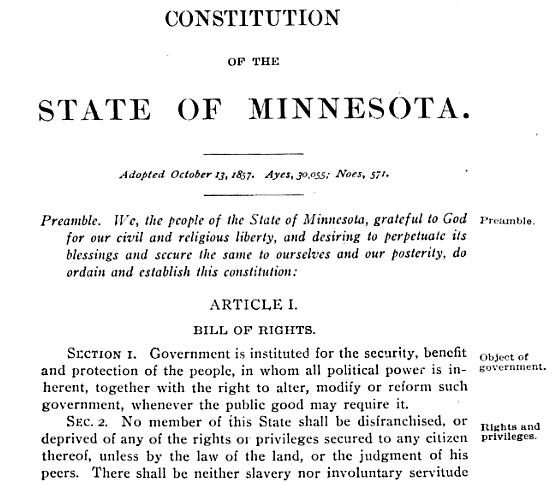
MinnConst

The drafters of this document also had problems deciding who got to run the meeting. But even the Democrats of 1857 agreed that no member of the state shall be disfranchised unless by the law of the land or the judgment of his peers.

According to the Star Tribune, mayhem broke out tonight at a DFL precinct caucus in the Cedar-Riverside neighborhood of Minneapolis. 300 people were present, most of them Somali Americans. An altercation took place about who would chair the meeting. Cops were called, and both the fight and the caucus were broken up less than an hour after they started. No business was transacted, police escorted attendees out of the building, but no arrests were made.

Republicans probably would have resorted to the simple expedient of having a vote, and letting a majority of those present decide who should chair the meeting. (Although Republicans also sometimes resort to calling the cops, seizing microphones, and other similar measures when a majority gets in the way of someone’s carefully made plans, as evidenced by the 2012 state Republican conventions in
LouisianaOklahoma, and other states.)

But having two people trying to chair the same meeting is nothing new to Minnesota politics. Indeed, Minnesota is unique in the Union in that it has two constitutions, based upon an incident not unlike that which occurred Tuesday night in Minneapolis.

When the Minnesota Constitutional Convention convened in 1857, there were two men on the platform purporting to chair the meeting. The Democratic chairman took a motion to adjourn until the next day. Meanwhile, the Republican chairman continued to preside, and the Republicans got down to work. The Democrats then left the chamber for the day.

Upon their return the next day, the Democrats found the chamber occupied. Undaunted, they simply moved down the hall to the other chamber, and held their own convention. Each convention published its own journal of the proceedings.

Somehow, a small conference committee was able to produce a single document to which both sides could agree. However, the two conventions never met together, and two copies of the document were ratified, one subscribed by the republican delegates, and the other subscribed by the democratic delegates. One of these copies was officially transmitted to Congress. However, the other copy found its way to Washington as well, and it was this second copy that was attached to the bill admitting Minnesota to the Union. Therefore, both versions, with their minor differences, stand on equal footing. When the placement of a comma is critical to the interpretation, lawyers still need to look at the two original handwritten documents and see whether the comma is really there in both copies.

So two people trying to run the same meeting is nothing new.  But the Republicans generally do a better job of sorting out such messes, and even the Democrats of 1857 performed admirably at solving this little problem.

If you happen to find yourself disfranchised by your party, especially if you find yourself disfranchised because you’re a new American, perhaps you should think of finding a party that doesn’t have such a history of disfranchising people.


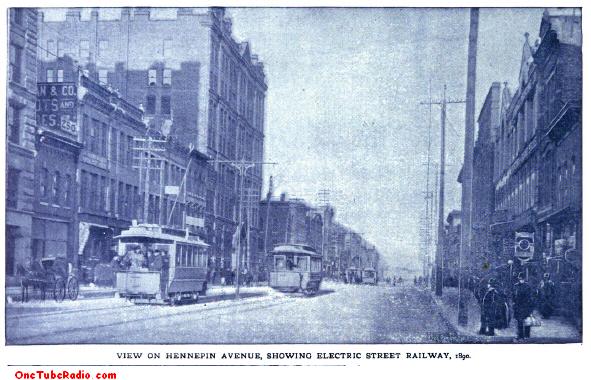
Hennepin Avenue, Minneapolis, 1890

Hennepin Avenue, Minneapolis, 1890

Hennepin Avenue, Minneapolis, 1890

This interesting old public domain picture shows Hennepin Avenue in Minneapolis as of 1890.  I don’t know the exact location, but I get the idea that it’s looking south.

It can be found in a pamphlet entitled Minneapolis: An Art Study of the City and Its Surroundings published by the Minneapolis Realty Company in 1891.  The little book extols the virtues of the city and explains “good, honest, business-like reasons why parties having surplus capital for investment will find it for their advantage to make such investment” there.

The book is available for free download at Google Books.


A Golden Age of Journalism and Politics?

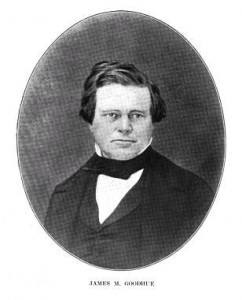
It is often supposed that there was a “Golden Age” in which journalism, politics, and the law were marked with civility. The problem with this theory, however, is identifying exactly when this supposed Golden Age exited. We can safely rule out 1851, as evidenced by an incident involving James Goodhue, the editor of the Minnesota Pioneer, Minnesota’s first newspaper, which still exists in the form of the
Pioneer Press.

James Goodhue

James Goodhue

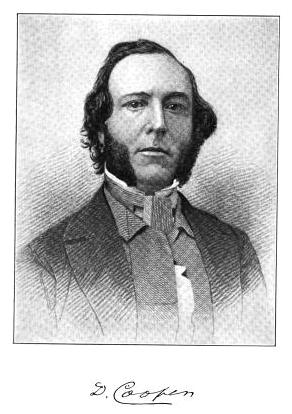
This incident began with the publication of an editorial in the January 16, 1851, of the Pioneer. In that editorial, editor James Goodhue was highly critical of U.S. Marshal Alexander Mitchell, and Supreme Court Justice David Cooper.  Of Cooper, the editorial stated:

He is not only a miserable drunkard, who habitually gets so drunk as to feel upward for the ground, but he also spends days and nights and Sunday, playing cards in groceries. He is lost to all sense of decency and self respect. Off the Bench he is a beast, and on the Bench he is an ass, stuffed with arrogance, self conceit and a ridiculous affectation of dignity. . . .  On his passage up the Minnesota river last summer, paying such attentions to a certain California widow on board, as a sot well could pay, he not only kept drunk, but when the boat returned to Fort Snelling, and the news there met him, of the death of his wife in Pennsylvania, he was so shamefully inebriated, that the awful intelligence scarely aroused him.

Justice David Cooper

Supreme Court Justice David Cooper

An advance copy of the paper found its way to on January 15 to Joseph Cooper, the younger brother of the judge. He confronted Goodhue on the street with his fists, and both men drew guns. The Sheriff of Ramsey County, along with some bystanders, managed to initially break up the fight. The younger Cooper, however, managed to charge Goodhue with a knife and stab him in the stomach. Goodhue also managed to break free and shot Cooper in the groin.

No charges were pursued by either man, and Goodhue recovered from his wounds after being confined to his bed for several weeks. Joseph Cooper, on the other hand, was said to have died some two or three months later, “his death being hastened by the pistol wound he had received”.

Justice Cooper’s term expired in 1853. He remained in Minnesota practicing law until 1864, when he moved to Nevada Territory. He is said to have died “in darkness” in an inebriate asylum in Salt Lake City.


References:

Holcombe, et al, Minnesota in Three Centuries, Vol. 2, pp. 449-50 (1908).

Memoir of Judge David Cooper

Hage, Newspapers on the Minnesota Frontier, pp. 35-38 (1967).

Marray, Recollections of Early Territorial Days and Legislation, Collections of the Minnesota Historical Society Vol. 12, p. 103, 113 (1908)

Elliott, The Supreme Court of Minnesota, The Green Bag, Vol. 4, pp. 113, 118 (1892).

The Bomb Shell of Fort Ripley, Minnesota

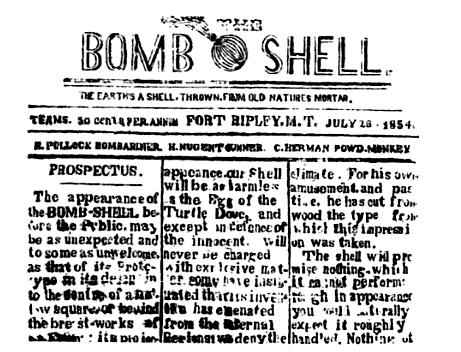
Bomb Shell Newspaper, 1854

The Bomb Shell, an almost forgotten piece of journalism history.

If you’ve looked at my hectograph page, you might have guessed that I’ve always been intrigued by primitive printing methods.  As that page shows, you can whip up a little printing press in the kitchen.  According to Wikipedia (unfortunately, no sources are cited for the assertion), a hectograph was used by allied prisoners of war in World War 2 to make documents for a planned escape attempt.

A more laborious method was employed by three soldiers at Fort Ripley, Minnesota Territory, in the summer of 1854, when they published their newspaper the Bomb Shell.  According to its masthead, the Bomb Shell is the handiwork of R. Pollock, the “Bombardier”, H. Nugent, the “Gunner”, and C. Herman, the “Powder Monkey”.  It bears the motto, “the Earth’s a shell, thrown from old nature’s mortar.”  The prospectus issue indicates a subscription rate of 50 cents per year, but there’s no indication that any issues other than the first, dated July 28, 1854, were ever dispatched from that mortar.

This newspaper is unique in that it was produced with hand-carved type.  These early proto-bloggers didn’t let the lack of technology stand in their way.  With a pocket knife, they carved out the type, set it by hand, and printed their own newspaper.  According to its first issue, “the appearance of the BOMB-SHELL before the public may be as unexpected and to some as unwelcome as its prototype.”  It goes on to say, however, that the new paper “shall be as harmless as the egg of the turtle dove and except in defense of the innocent, will never be charged with explosive matter.”

The editor of another Minnesota newspaper described it thus:

Its contents are lively, and entertaining but it is not on that account only, we desire to see “Bomb Shell” succeed. To the eyes, it is an uncouth, ill-printed, muddy-looking sheet, and every letter in it is larger than those in a child’s Primer–but all these drawbacks are more than compensated for, by the knowledge that all the letters and furniture used in setting up the paper, were made by one of the soldiers in the Fort, his principal tool to work with, being a small pocket knife. Those who know how necessary it is to accurately square and level types, to make them serviceable at all, will readily agree with us that this is a wonderful exercise of skill, patience, and ingenuity.

Minnesota Democrat, August 23, 1854, reprinted in Douglas C. McMurtrie, “The Printing Press Moves Westward,” Minnesota History, Vol. 15, No. 1, p. 24 (Mar. 1934) (available online).

I know there is one copy of the Bomb Shell in the collections of the Minnesota Historical Society, but it’s unfortunately not available online. In addition to the article cited above, the Bomb Shell is also referenced in Newspapers on the Minnesota Frontier by George Hage.