Monthly Archives: November 2025

Grote-Rankin Co., Seattle, 1925

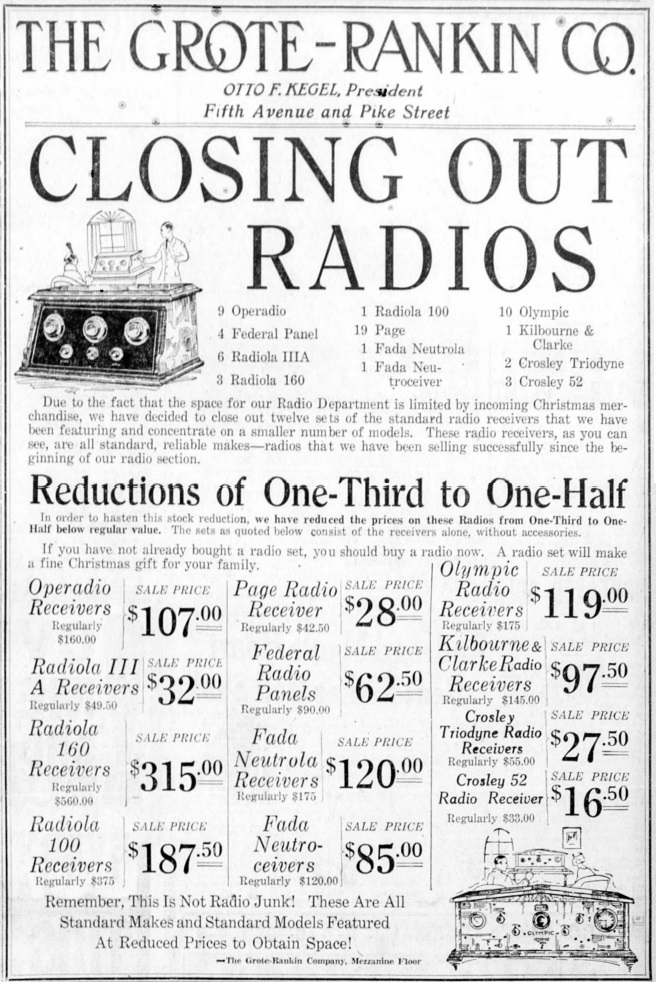
If you were in the market for a radio in Seattle a hundred years ago today, your timing was perfect.

The radio department of the Grote-Rankin Company, Fifth Avenue and Pike Street was getting ready for the Christmas season, and the decision was to concentrate on a small number of models.  That meant that they had to make space for them, and they were offering these attractive closeout prices on many of the models they had in stock.

The lowest priced option was the Crosley Model 52, for $16.50.  It was a three-tube TRF featuring a regenerative detectors.  While it had no speaker and required headphones, that set would have been sensitive enough to pull in just about any signal.  The high-end buyer might be interested in the Radiola 160, originally $560, now on sale for only $315.  That was a top-of-the-line set featured a six-tube superheterodyne receiver, and an acoustic phonograph.  The set shared the horn between the radio and phonograph, and undoubtedly had room-filling audio.

The ad appeared in the Seattle Star, November 6, 1925.
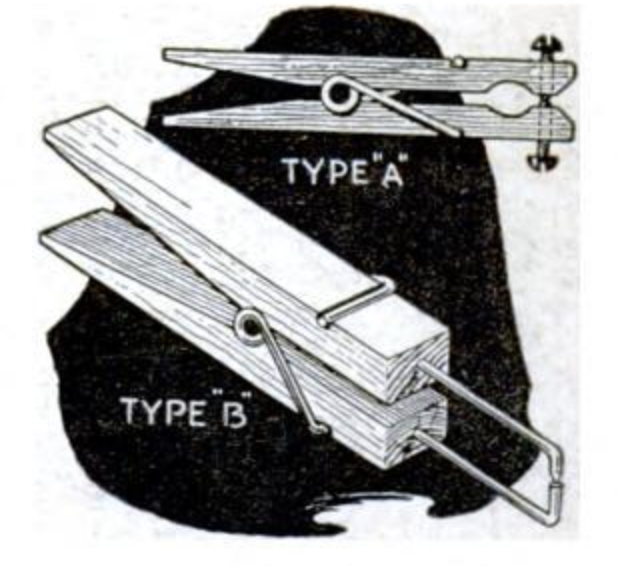


1940 Soldering Clamps

Eighty-five years ago this month, the November 1940 issue of Popular Science showed these ideas for homemade clamps for soldering small pieces. Both use a clothespin, one with two wood screws, filed flat, and the other uses two bent nails. Either one will hold the work in place while being soldered.


Radio Sound Effects 1940

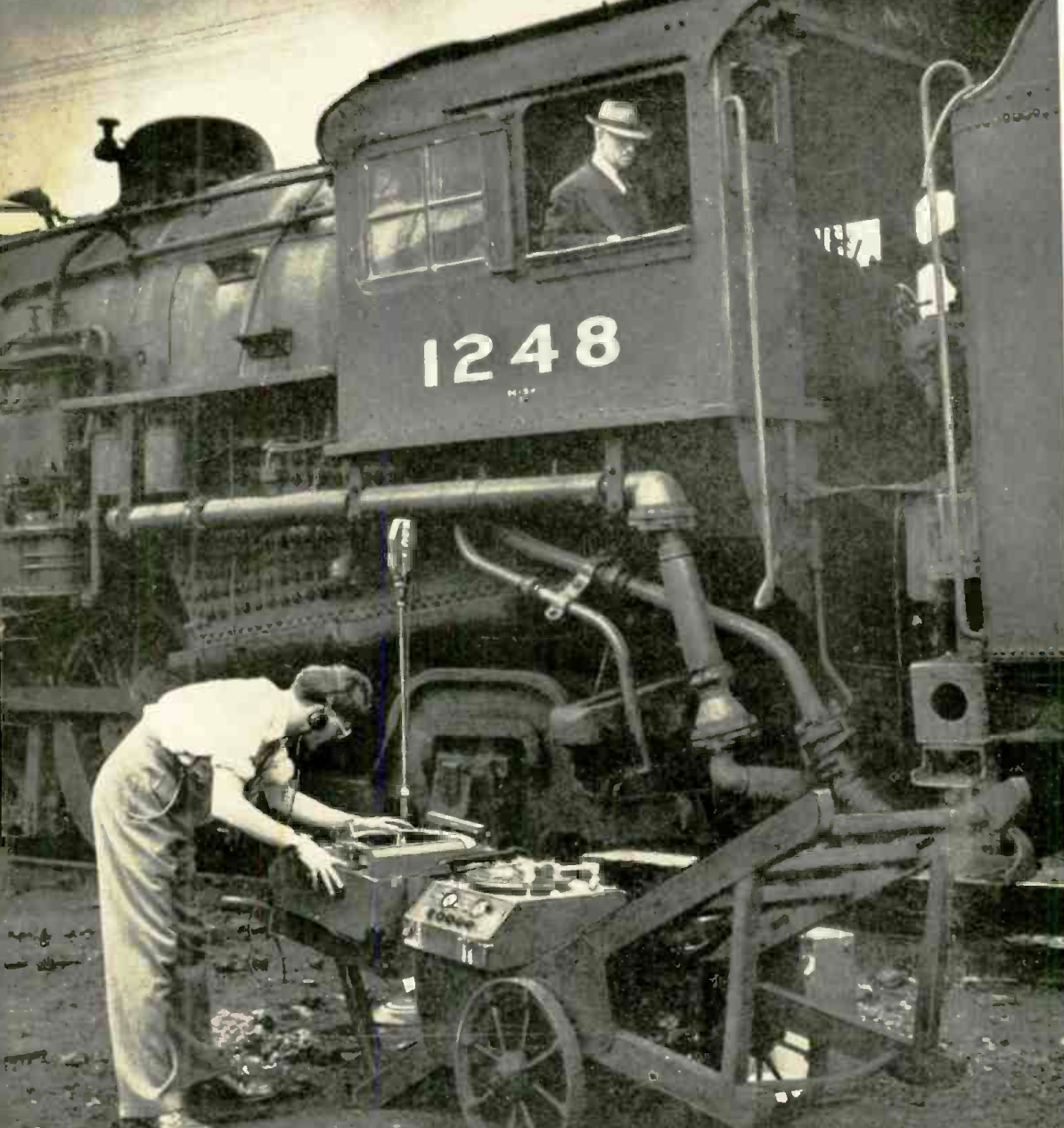
Shown here is Robert Monroe, the author of the NBC drama “Rocky Gordon.” He is at the New York Central Yards at Weehawken NJ, recording the sound of locomotives and railroad yards for the sound effects to be aired.

The photo appeared 85 years ago this month on the cover of the November 1940 issue of Radio Craft.  Interestingly, one of the few references to the radio program is on the CIA website,  undoubtedly in relation to Monroe’s involvement with the  the U.S. Army Intelligence and Security command.


1955 One-Tube Reflex Radio

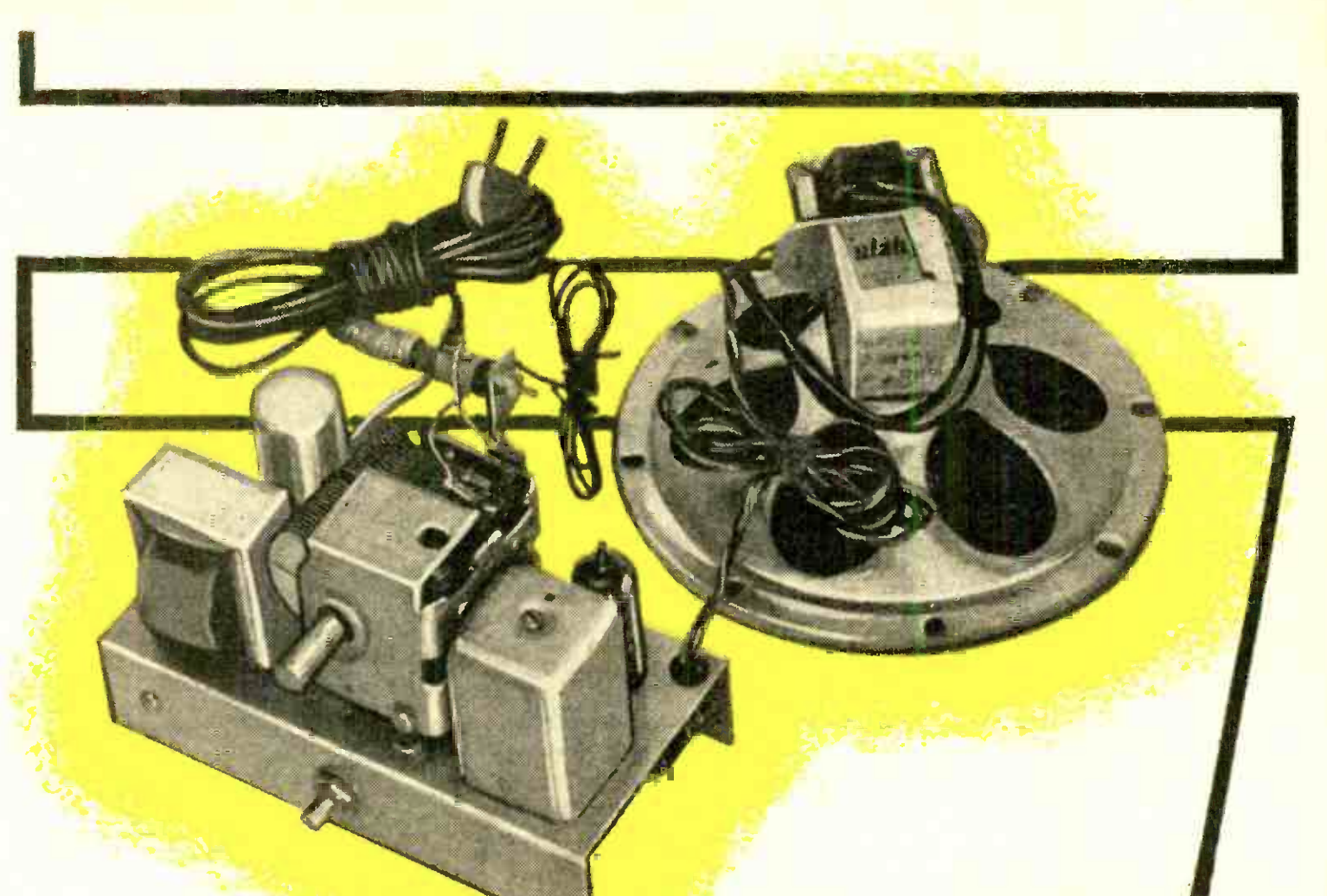
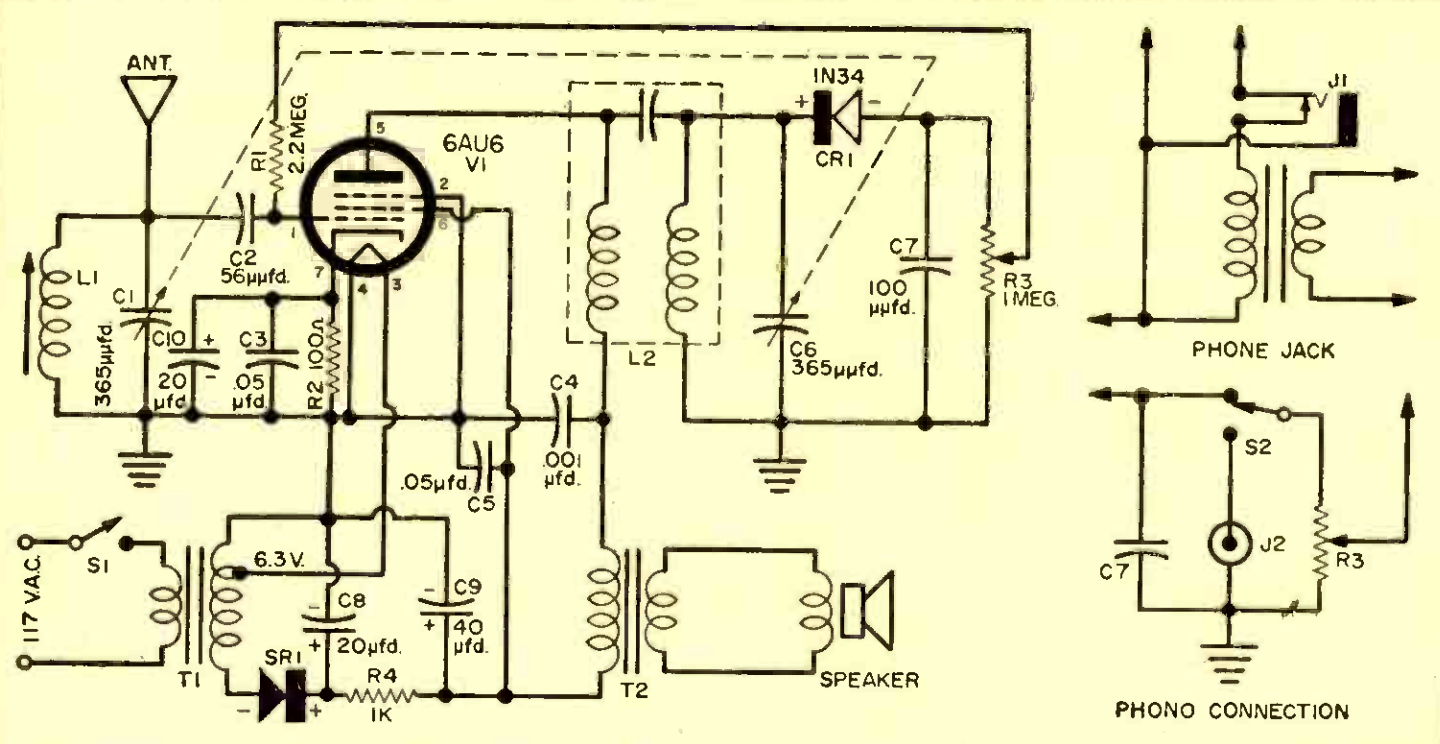
Despite its nondescript looks, this one-tube broadcast receiver from 70 years ago was a good performer. It was designed to be small and efficient. It consumed about the same amount of power as an electric clock, meaning that it could be run constantly. And because of the low power consumption, it put out little heat and could be mounted in a wall or a piece of furniture, without having to worry about ventilation. It was said to put out enough volume to fill the room, but not enough to bother the neighbors.

When tested 100 miles from Chicago, it pulled in all of the major Chicago stations during the day with just a 12 inch antenna. This was accomplished by reflexing the 6AU6 to serve as both RF and AF amplifier. A diode was used as detector, and the rectifier was selenium.  It appeared in the November 1955 issue of Popular Electronics.