Monthly Archives: November 2025

1955 One Transistor Regen

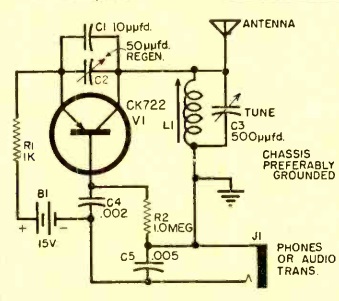
Shown here is a simple one-transistor regenerative receiver for the broadcast band, from the November 1955 issue of Popular Electronics. It had been sent in to the magazine by one Mr. R. Zarr of Brooklyn, NY, who pointed out the simple regeneration mechanism, consisting of two capacitors across the emitter and collector of the CK722 transistor.

The set was said to be selective, being able to separate the many stations booming in in the New York area.


1955 Status Symbol: An Antenna

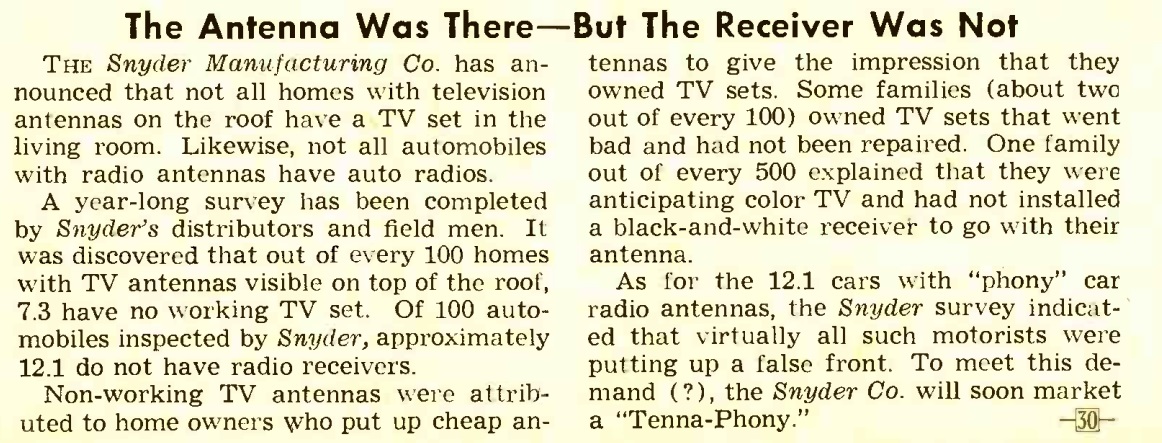
A television, or even a radio in your car, was a status symbol 70 years ago, as evidenced by this item from the November 1955 issue of Popular Electronics:

The Snyder Manufacturing Co. has announced that not all homes with television antennas on the roof have a TV set in the living room. Likewise, not all automobiles with radio antennas have auto radios.

A year-long survey has been completed by Snyder’s distributors and field men. It was discovered that out of every 100 homes with TV antennas visible on top of the roof, 7.3 have no working TV set. Of 100 automobiles inspected by Snyder, approximately 12.1 do not have radio receivers.

Non -working TV antennas were attributed to home owners who put up cheap an- tennas to give the impression that they owned TV sets. Some families (about two out of every 100) owned TV sets that went bad and had not been repaired. One family out of every 500 explained that they were anticipating color TV and had not installed a black-and-white receiver to go with their antenna.

As for the 12.1 cars with “phony” car radio antennas, the Snyder survey indicated that virtually all such motorists were putting up a false front. To meet this demand ( ?), the Snyder Co. will soon market a “Tenna-Phony.”

Apparently, the good folks at Snyder were true to their word, and the Tenna-Phony did hit the market. You can see a New Old Stock example at this auction link.


It’s The Ham In Them, 1955

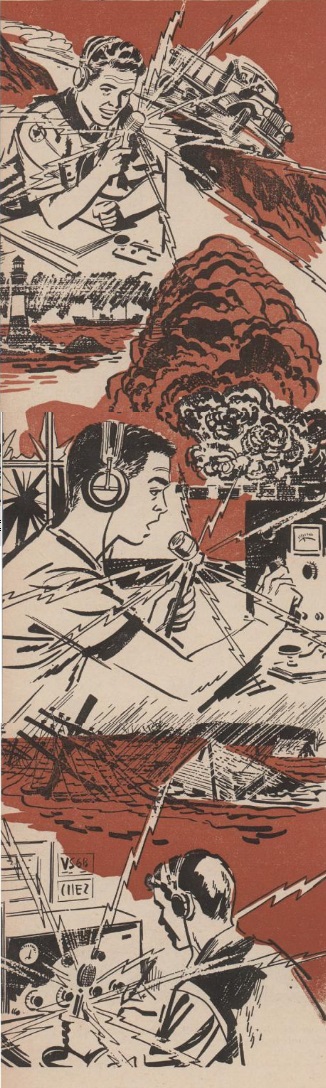
Seventy years ago this month, the November 1955 issue of Boys’ Life carried this feature, “It’s The Ham in Them,” giving an overview of Amateur Radio. It noted that there were 120,000 hams in the U.S., with another 50,000 around the world, and that Uncle Sam had gone out of his way to make the hobby enticing to youth.

Among other topics, the article detailed the potential for hams in an emergency, some of which are depicted here. For example, when Hurricane Diane hit the Northeast, three hundred trembling youngsters were stranded in ankle-deep water on an island of the Delaware River. Little attention was given to a car stopped on the far bank. Even had it been noticed, it wouldn’t have been capable of rescue, or so it appeared. But a squadron of helicopters soon appeared. The driver of the car had been a ham, and had put in the call to Civil Defense officials. (The incident appears to be detailed at this link.

In another case, a truck had plunged off a mountain in Arizona, a a rancher brought them to Camp Geronimo, a scout camp. The camp director was a ham (Ed Burkhart, W7SUI) who put in an emergency call to Phoenix, resulting in the dispatch of an ambulance plane.

As in 1955, Amateur Radio is primarily a hobby.  But it can be a source of information and connection with the outside world in case of an emergency.  An excellent example is when Hurricane Helene hit North Carolina in 2024.  Hams, and their neighbors, were in a position to provide vital information, because an ad-hoc network quickly formed, mostly using a repeater just outside the disaster area.  There might have been a few people “rescued” as a result of this communication.  But more importantly, residents had access to current information, such as whether certain roads were open, where stores and gas stations were operating, etc.  Radio also provided the ability to notify friends and family members that someone was safe.  An excellent recounting of these events can be found at this article by K4SWL, who provided this vital communication for his neighbors.


1945 One-Tube Broadcast Receiver

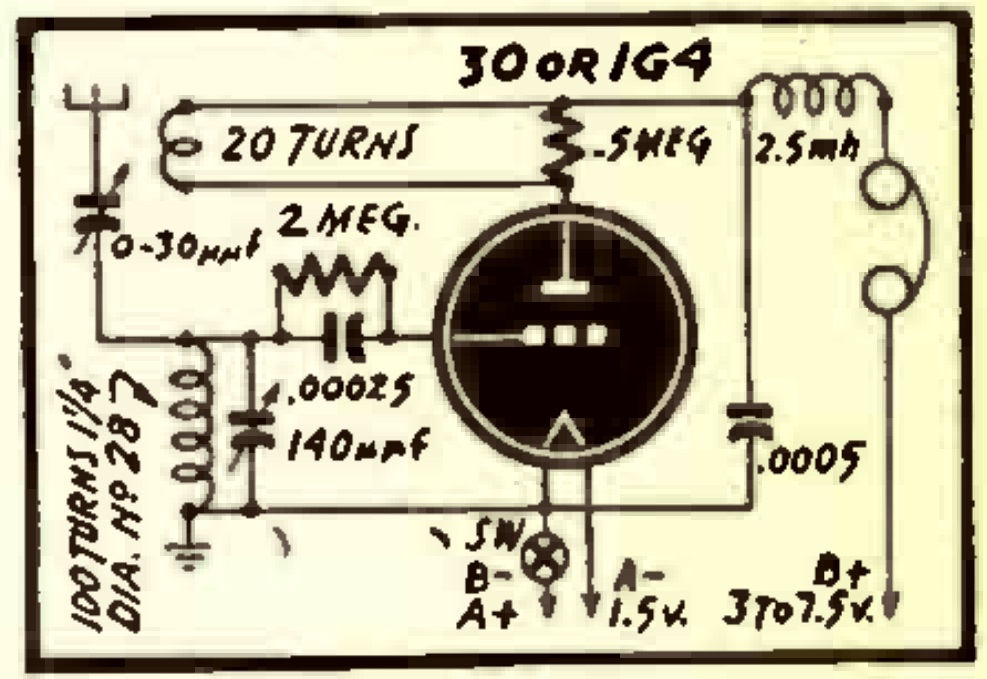
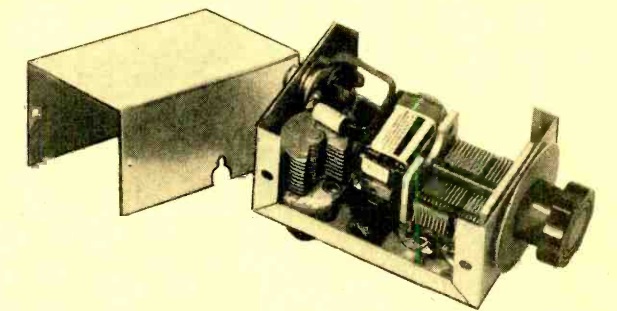
As one-tube radios go, this one is about as simple as they get. It appeared in the November 1945 issue of Radio Craft, and had been sent to the magazine by one Bill Buehrle, Jr., of Ferguson, MO. With just 3 volts on the plate, he pulled in several stations 25 miles away, even without resorting to regeneration from the tickler coil. The editors noted that with the variable capacitor shown, two coils might be necessary to cover the entire broadcast band.

According to his 2018 obituary, Buehrle was born in 1927 and was an Eagle Scout prior to serving in the U.S. Army in World War II. He was an amateur radio operator and electrical engineer with at least one patent.


Clyde Darr, 8ZZ, Illustration

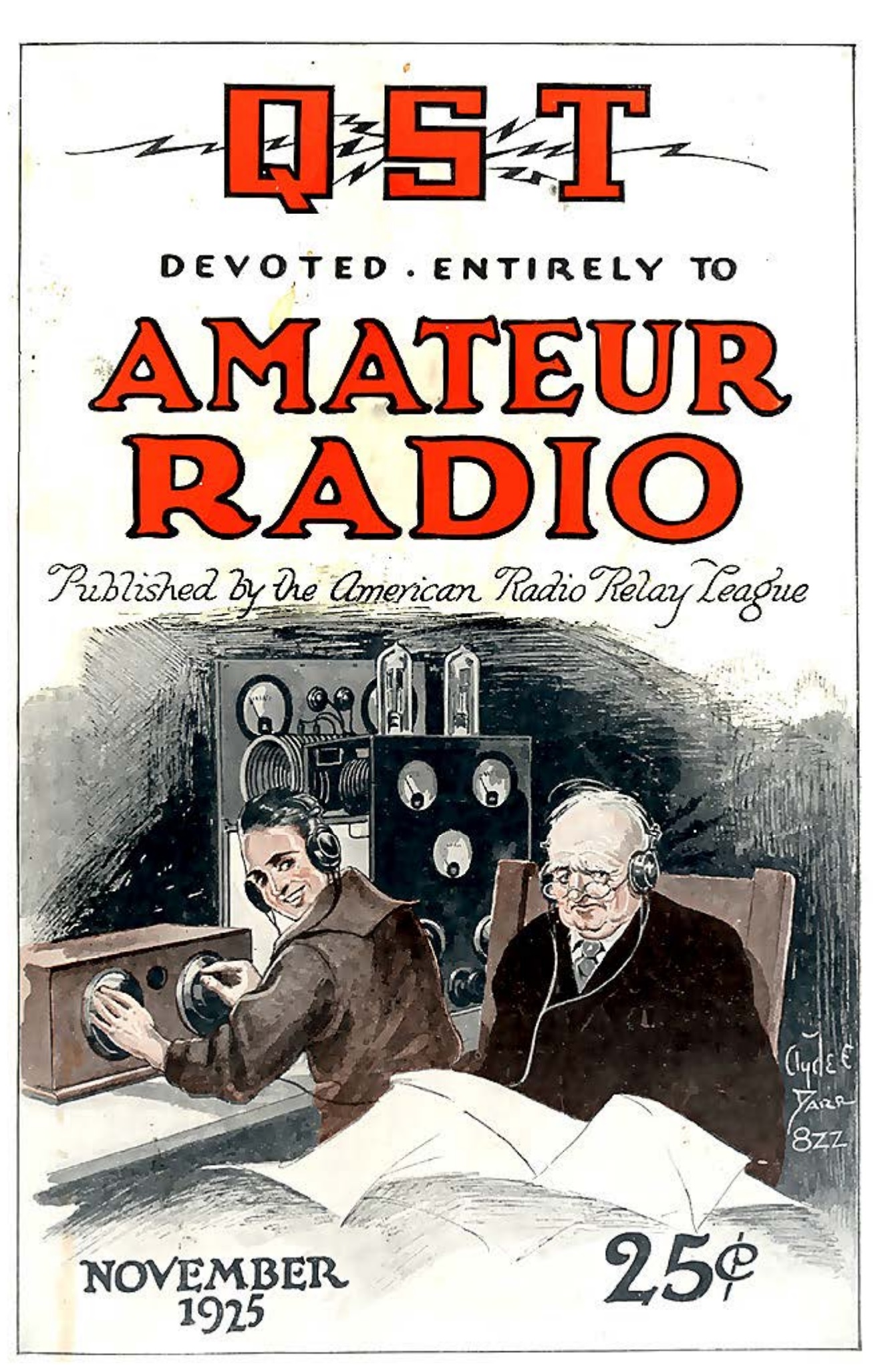
I’m not sure exactly what’s going on here, but this duo appeared on the cover of QST 100 years ago, November 1925. The elder op looks like Lionel Barrymore, but he wasn’t that old at the time.

The artist is Clyde Darr, 8ZZ, later W8ZZ.  He was a prolific QST illustrator, and also served as ARRL division director.  He died in 1929 at the age of 50.


1945 Three Tube All Band Regen

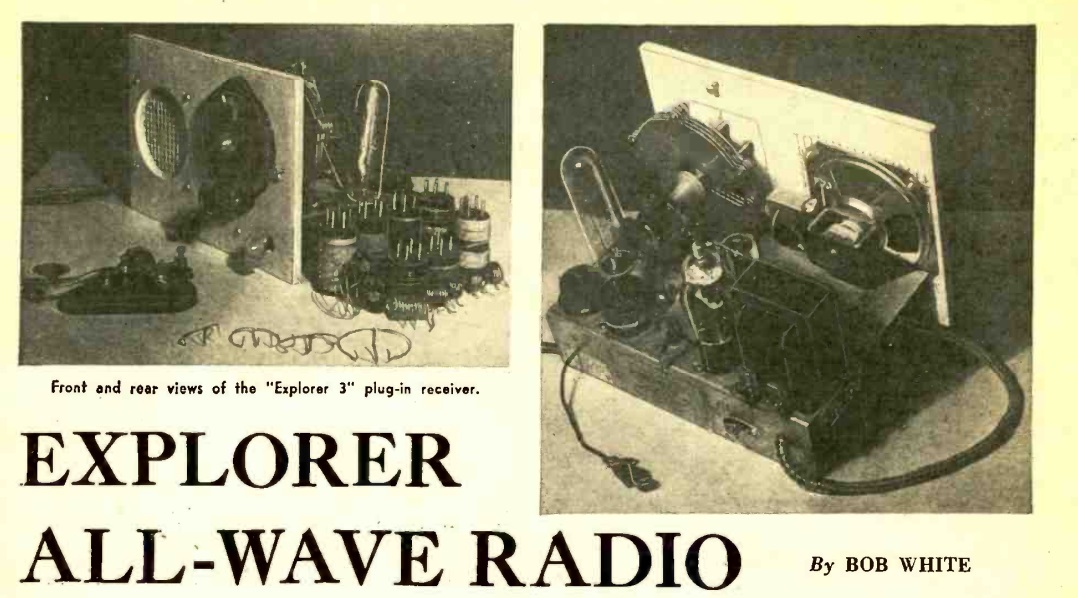
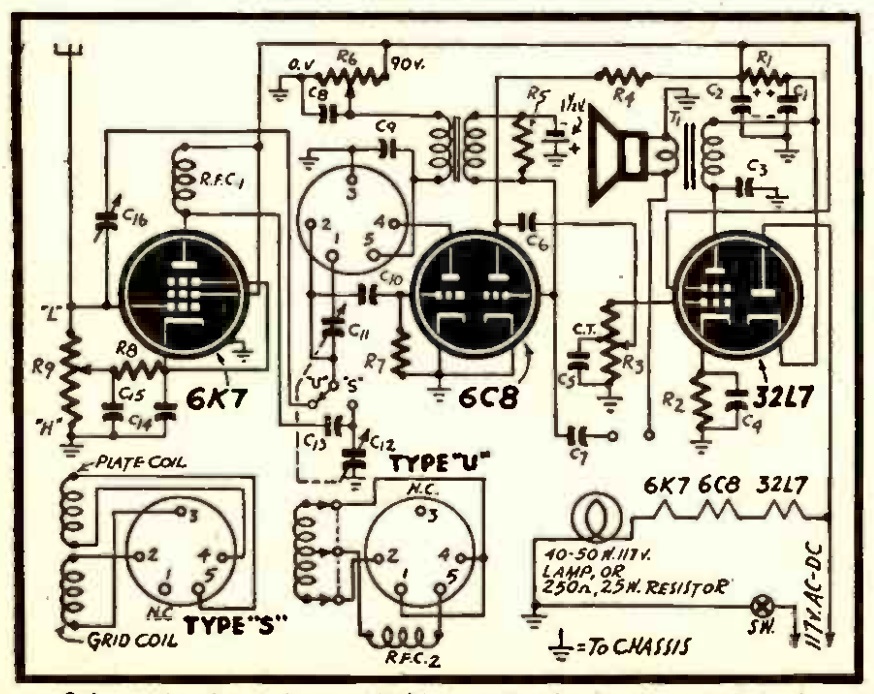
Eighty years ago this month, the November 1945 issue of Radio Craft carried the plans for this 3-tube all-wave receiver, which covered 4-1/2 through 665 meters (450 kHz through 67 MHz) with the use of plug-in coils.

The three-tube set had one stage of untuned RF amplification, courtesy of a 6K7 tube. One half of the 6C8 served as regenerative detector, with the other half as the first AF stage. The loudspeaker was driven by a 32L7, with the other half of that tube serving as rectifier. The line voltage to the filaments was dropped through a 40-50 watt lightbulb. A cylindrical bulb was recommended to save space, or a 250 ohm 25 watt resistor could be used.  Bias for the final amp was a flashlight battery, which would last almost indefinitely.

According to the author, the set had tuned in Africa, Australia, China, England, and Japan. Since it also tunes “UHF”, (as high as 67 MHz), local reception of FM (on the prewar band), TV sound, and police was possible.


June Marlowe, 1925

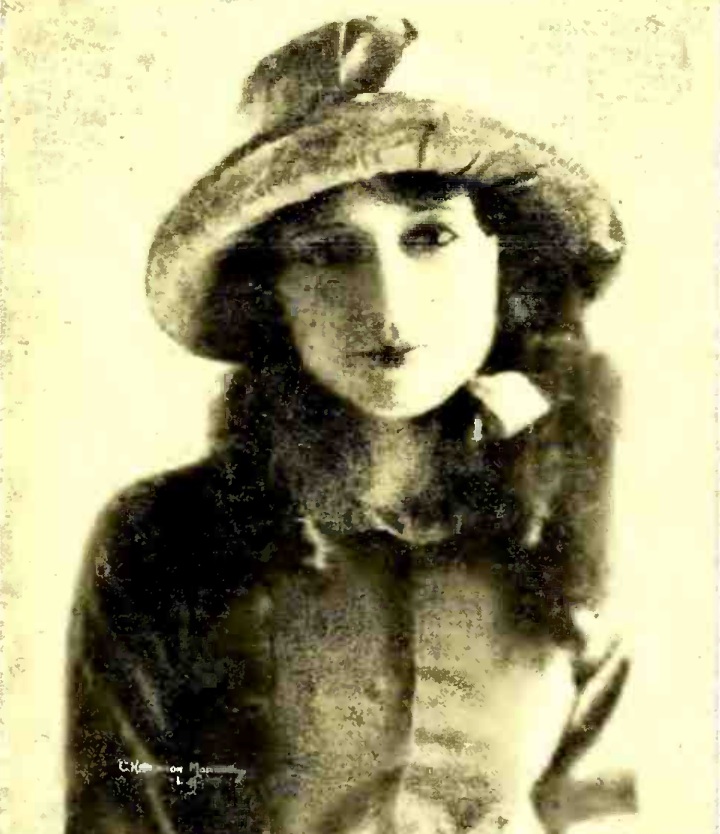
Shown here, from the November 1925 issue of Radio Age, is actress June Marlowe.  She is probably best remembered for her role as teacher Miss Crabtree in the Our Gang/Little Rascalsshort features of the 1930s. She had also acted in silent films, but the magazine billed her as Radio’s Prettiest Announcer. It appears, however, that she had little professional involvement in radio.

The magazine notes that she had been won over by radio, and quoted her as saying, “it is so vast and awe-inspiring.” It reported that she put such a feeling of interest into her radio presentations that her listeners acclaimed her from the start. She had acted as anouncer “for an entire evening” on KFWB, which had signed on to the Los Angeles airwaves earlier that year.

Marlowe died in 1984 at the age of 82.


Adding a Bulb to a Crystal Set: 1925

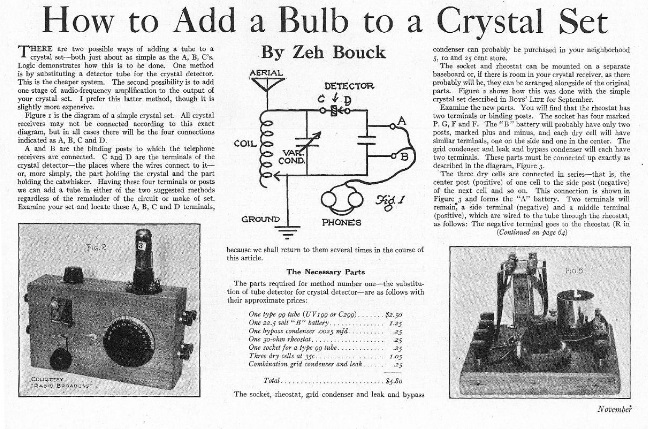
One hundred years ago, in the November 1925 issue of Boys’ Life, radio editor Zeh Bouck apparently realized that many scouts already owned a crystal set, and were thinking of upgrading by adding a “bulb”. His column details two methods of doing exactly that. First, he discusses how to replace the crystal detector with a tube, and notes that this option is somewhat less expensive. However, his preference is the second method, namely, keeping the crystal detector as-is and adding one tube as an audio amplifier.  Parts lists are included, and the first method, replacing the detector, would set the scout back $5.80. Adding an audio amplifier would require a transformer, which could cost an additional $1.50 to $5.

He assures that both methods are just about as easy as the A, B, C’s, and he gives detailed instructions.


A Look Ahead at World War III: 1945

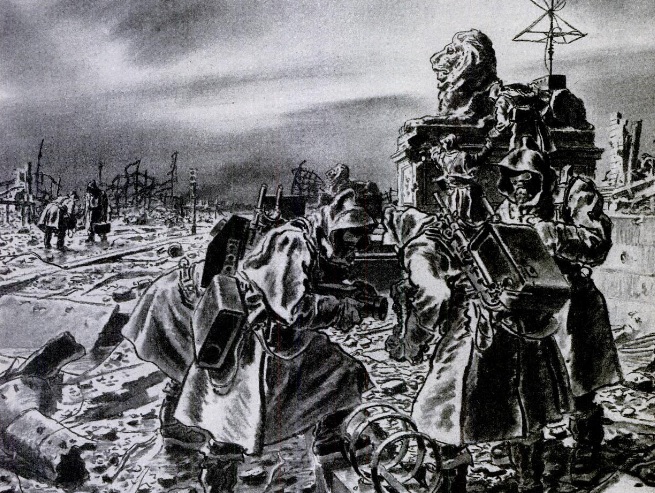
Eighty years ago the Second World War was barely over, but the November 19, 1945, issue of Life Magazine was making predictions of what the next war might look like. The scene above shows the ruins of the New York Public Library, as technicians measure radioactivity levels.

Specifically, the magazine reviewed the findings of Army Air Forces General Henry H. Arnold in his report to the Secretary of War. It called it the “36-hour war,” and speculated that it would begin with atomic blasts in places like London, Paris, Moscow, or Washington. The speculated attack began with rocket-launching sites built secretly by some enemy in the jungle of equatorial Africa. In an hour, they would be on American soil, but American radar could give about 30 minutes of warning.

The defense would come in the form of a a counterattack, from firing tubes of American bases deep underground. This would deliver “an immensely devastating air-atomic attack” on the enemy.

Arnold speculated that the last phase of the attack on the U.S. would be in the form of airborne troops, armed with rockets to attack far distant points. But before they arrived, the U.S. could see 40 million fatalities.

“But as it is destroyed the U.S. is fighting back. The enemy airborne troops are wiped out. U.S. rockets lay waste the enemy’s cities. U.S. airborne troops successfully occupy his country. The U.S. wins the atomic war.”


Liberty Music House Radio Club, Seattle, 1925

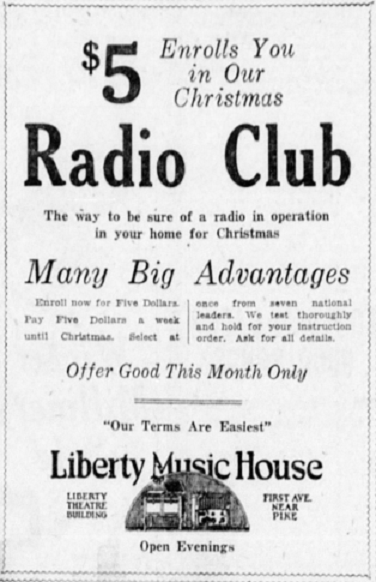
If you were in Seattle a hundred years ago, and you were looking for the perfect Christmas present for your family, you couldn’t go wrong signing up for the Liberty Music House Radio Club. You would simply pay five dollars per week until Christmas, at which a fully tested radio would be delivered. It was the way to be sure that a radio would be in operation in the home by Christmas.

The store was located in the Liberty Theatre Building, First Avenue near Pike.  The ad appeared a hundred years ago today in the November 19, 1925, issue of the Seattle Star.