Monthly Archives: September 2025

1925 One Meter Transmitter

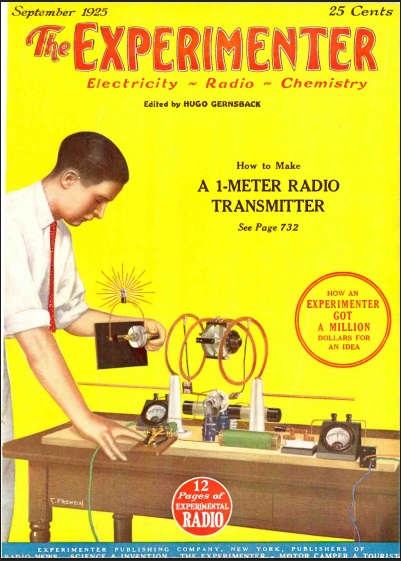
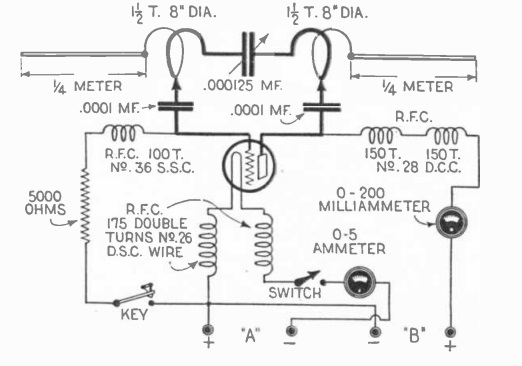
One hundred years ago, the amateur who really wanted to push the frontiers of radio communication might want to experiment with this one-meter (300 MHz) transmitter. It doesn’t appear that the set would be capable of much communication, since there’s no reference to a receiver. Reception is possible locally only with a wavemeter, and this cover photo from the September 1925 issue of The Experimenter shows the set lighting a lamp powered by a nearby resonant circuit.

According to the magazine, transmission with a vacuum tube had been accomplished at wavelengths down to a quarter meter (1200 MHz).

1925 Boys’ Life Crystal Set

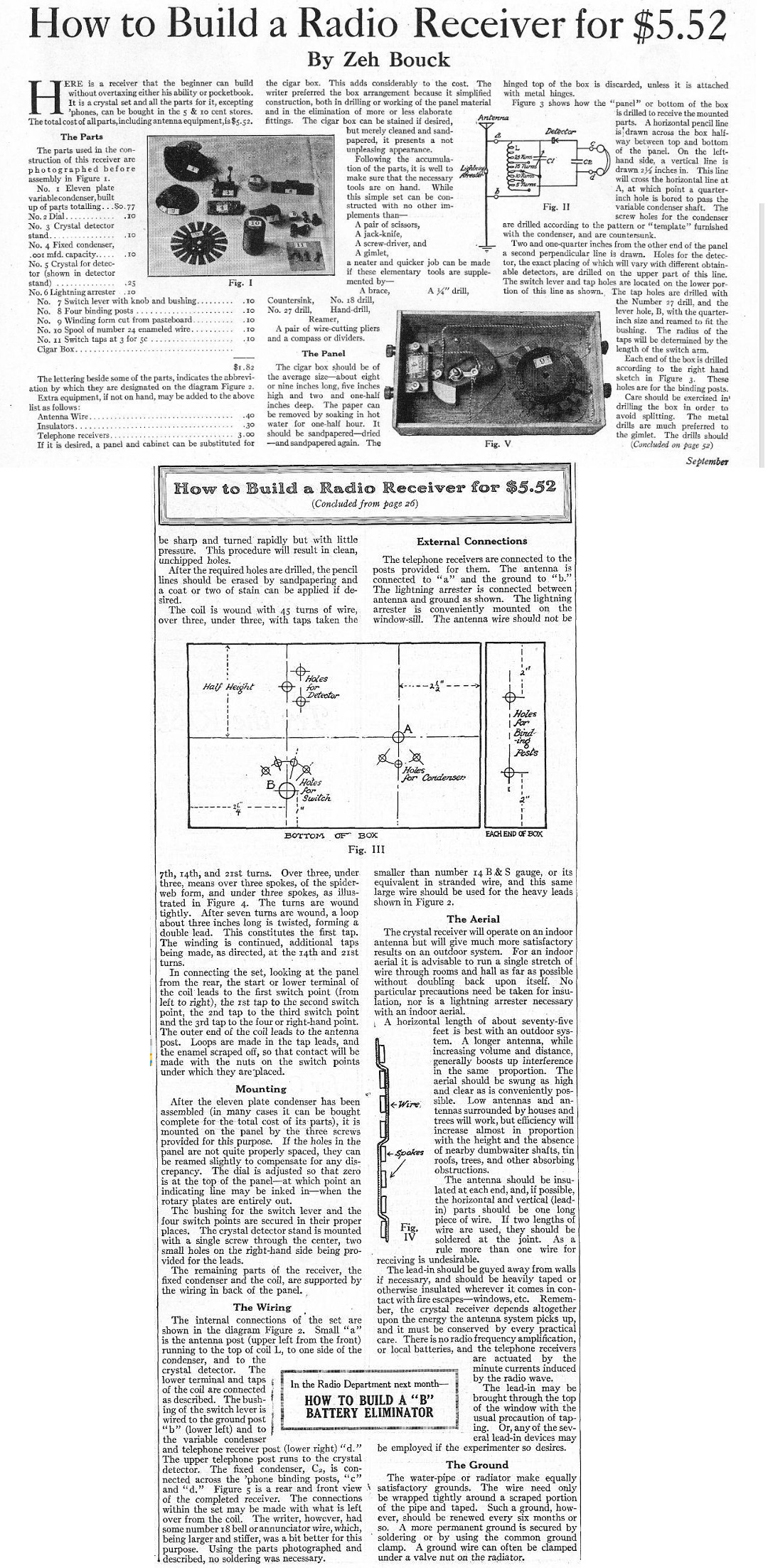
One hundred years ago this month, the September 1925 issue of Boys’ Life showed Scouts how to build this radio receiver for a total outlay of $5.52, including headphone and antenna wire. Of course, that works out to over $100 in 2025 dollars, so the Scout would have to be thrifty and save up his money.

While an indoor antenna might work, for best results, an outdoor antenna of 75 feet was called for. The article was penned by Zeh Bouck, who regularly wrote radio articles for the magazine.

The full plans appear here.  You can click on the image below for the full-size version.


1925 Nine Tube Superhet

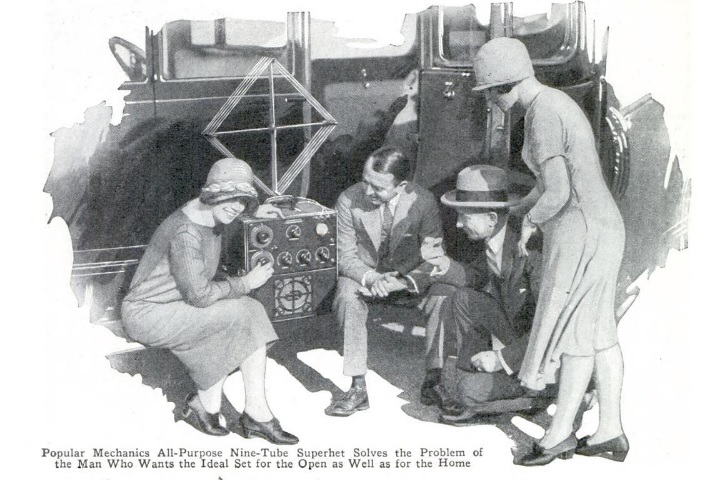
One hundred years ago, if you wanted a radio that would do it all, you could hardly go wrong with this nine-tube superheterodyne shown in the September 1925 issue of Popular Mechanics. It was equally suited for use at home or as a portable. It weighed in at “only” 50 pounds. The cost was billed as “only” $176.35, but that works out to $3255 in 2025 dollars.

The set, which used nine UV-199 or C-299 tubes, was said to be capable of coast to coast reception, and boasted a built-in speaker.


1980 Grocery Prices

If you were shopping for dinner 45 years ago, these are the prices you could expect to pay. While some might appear low, remember that there’s been a lot of inflation since 1980. According to this online inflation calculator, one dollar in 1980 was the equivalent of $3.92 in 2025 dollars.  So for round numbers, you can multiply these prices by 4.  This ad appeared in the September 10, 1980, issue of the Pittsburgh Post Gazette.

If you were shopping for groceries in 1980, what would you plan for dinner?


1965 QRP Transmitter

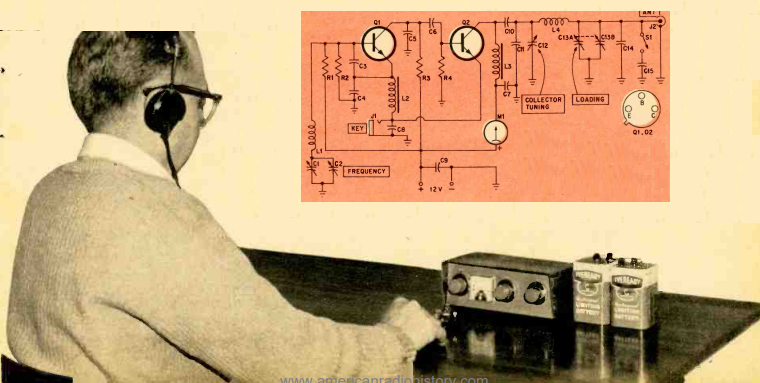
This ham sixty years ago, probably the article author, Clare Green, W3IKI, at the key of a QRP rig described in the September 1965 issue of Electronics Illustrated.

He notes that anyone can turn on a couple hundred watts and make some contacts. But you could also use the telephone or the U.S. Mail. He discovered the challenge of QRP (low-power operation), and came up with this 1/2 watt transmitter for 80 meters. It was notable for having a stable VFO, meaning that you weren’t stuck on a single frequency.

He notes that the contacts have to be clean on your key, because the low voltages wouldn’t be forgiving of the added resistance.


1965 Wireless Headphones

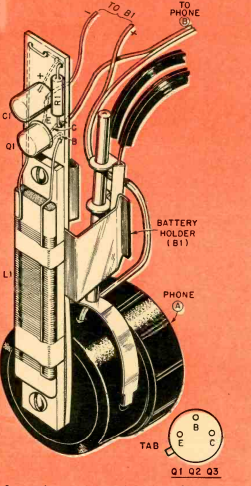
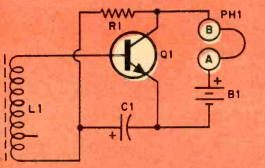
Sixty years ago this month, the September 1965 issue of Electronics Illustrated showed how to make these wireless headphones, for silent listening without any cord. The audio source you wanted to listen to was fed to a loop of wire going around the room, forming the primary of an audio transformer. The secondary was mounted on the headphones themselves, in the form of a coil wound on a ferrite core.

The one-transistor circuit here could be used with high impedance headphones. For low impedance headphones, a slightly different circuit, with two transistors was shown. As a kid, I experimented with a similar setup, using a telephone pickup coil for the receiver. Some assistive listening systems, such as for hearing aids, or for providing commentary in museums, use a similar system.


Some links on this site are affiliate links, meaning that this site earns a small commission if you make a purchase after using the link.

1955 Hi-Fi System

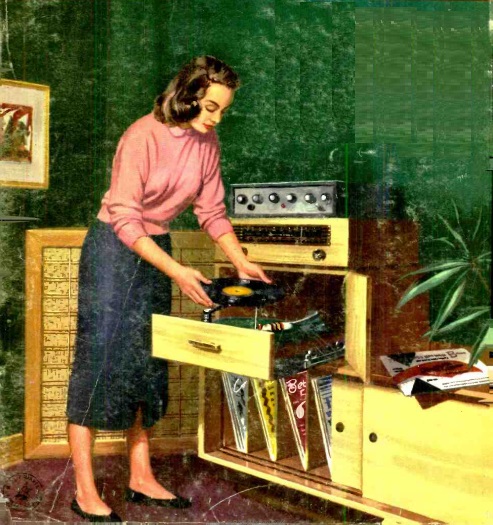
Seventy years ago, the cover of Popular Electronics, September 1955, depicted this hi-fi enthusiast and her setup. The magazine included a special audio and hi-fi section with a wealth of information on the subject.

The artist was Ed Valigursky, whose work we’ve previously seen.