Monthly Archives: September 2025

1955 Hybrid Tube-Transistor Radio

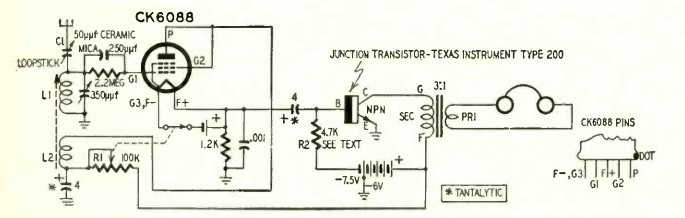
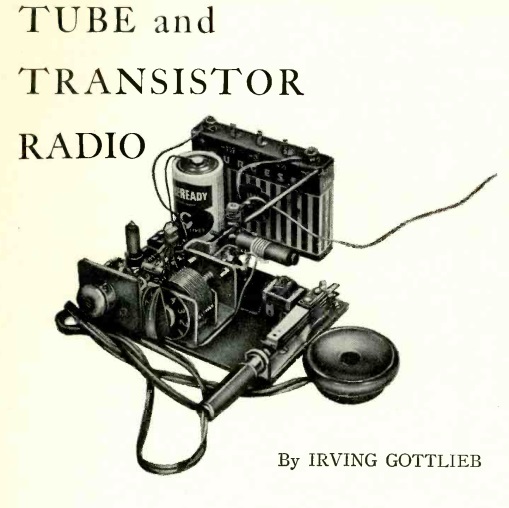
Seventy years ago, the transistor was still the new kid on the block, and designers had to work around its limitations. It was hard to get it to work as a radio detector stage, so this design, from the September 1955 issue of Radio-Electronics dealt with the problem by using a hybrid circuit. A subminiature CK7088 pentode was used for the regenerative detector, and a transistor was used to amplify the audio. The circuit called for a Texas Instruments type 200, but the venerable  CK722 could be used with some modifications to the circuit.


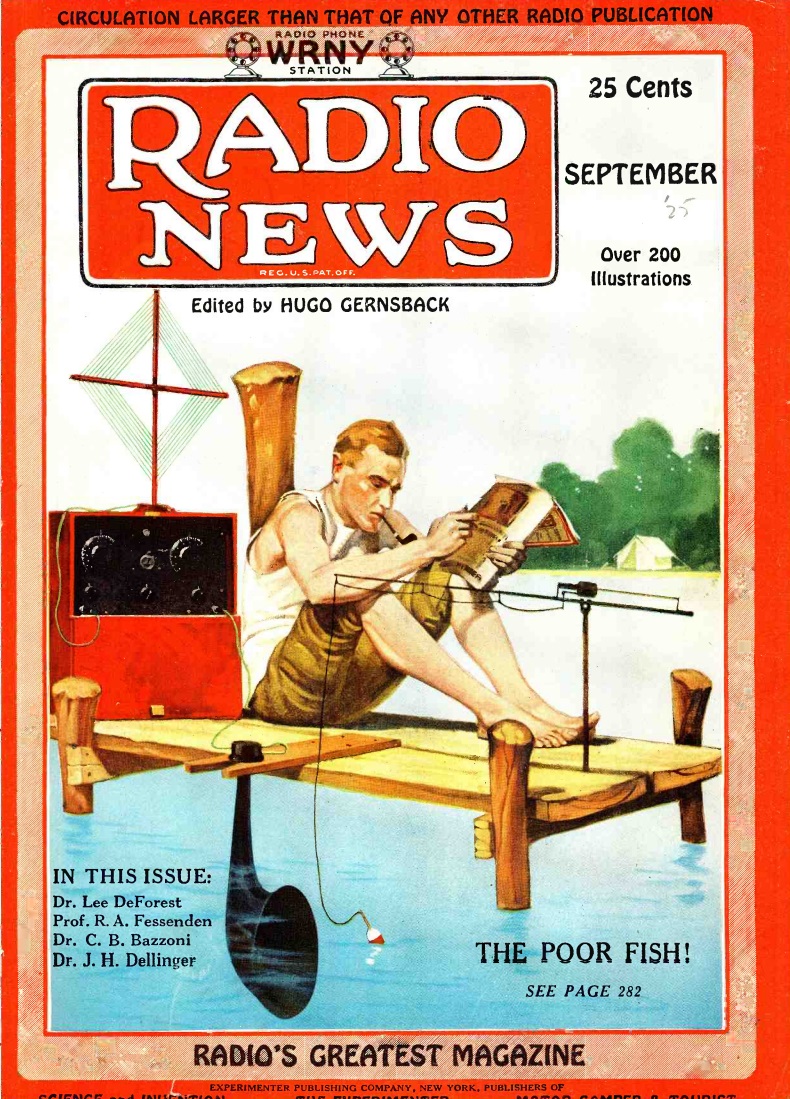
Radio Assisted Fishing, 1925

A hundred years ago this month, the September 1925 issue of Radio News showed this method of attracting fish. The accompanying article claims that the fish liked the music, came in flocks, and the fisherman could hardly keep up with pulling them in. But we suspect the article was facetious, and the cover photo is more likely what would happen.


Simple Ranch Dressing Biscuits

x

My wife and daughter came home from Girl Scout camp with a bunch of leftover Ranch dressing, so I Googled to find recipes to use it. One site suggested biscuits, so that was all the inspiration I needed. I figured I could do it with just three ingredients, the ranch dressing, flour, and baking powder. And if I do say so myself, they turned out well.

The batch shown here used about a cup of flour, and about a tablespoon of baking powder. (You could also use self-rising flour or Bisquick, and not bother with the baking powder.) Then, start adding Ranch dressing. Start with too little, mix it together (with a spoon works just fine), and keep adding until it’s the right dough-like consistency.

Preheat the oven to 350 degrees Fahrenheit (175 Celsius).  Put lumps of dough on a baking sheet as shown at left(it doesn’t need to be greased) and bake for about 15 minutes.  The taste is actually somewhat reminiscent of the biscuits served at Red Lobster, so I hope I didn’t spill any trade secrets.

I don’t know what brand of Ranch dressing this is, but I’m sure other brands would work just fine. It might not be economical to buy Ranch dressing just to make biscuits (although, if you get a cheap enough brand, it just might be). But if you have a bunch of leftover Ranch, it’s a delicious way to use it up. And in the event of an emergency, and that’s what you have in your fridge, it would be a good option.

Bon apetit!


Some links on this site are affiliate links, meaning that this site earns a small commission if you make a purchase after using the link.

1925 Radio at the Beach

As demonstrated by these young women a century ago, a popular activity in 1925 was listening to the radio on the beach. The illustration appeared on the cover of the September 1925 issue of Radio Age.


1950 (and 2025) Five-Tube Backpacking QRP Transceiver

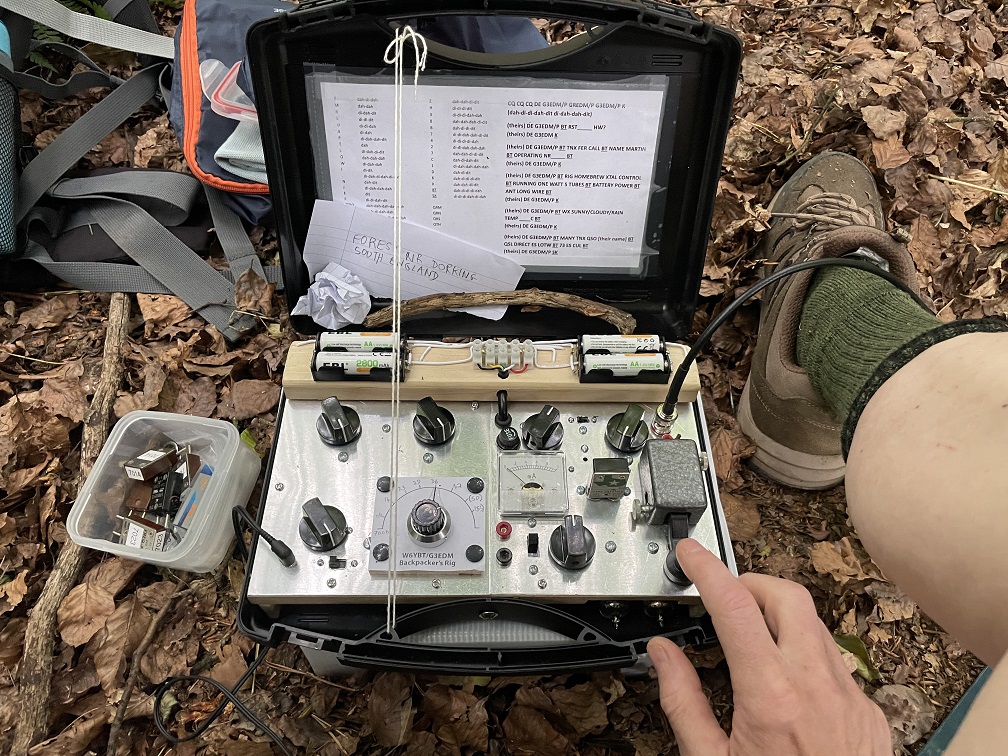
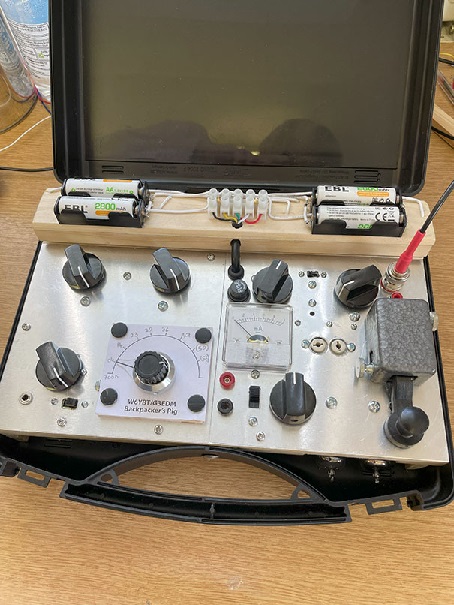
2025 G3EDM version. G3EDM photo.
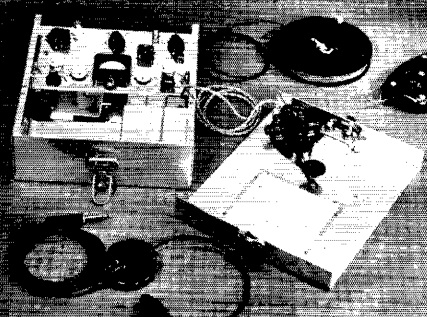
1950 W6YBT version.

Seventy-five years ago this month, the September 1950 issue of QST carried a construction article by Robert Vreeland, W6YBT, for the “Mountaineer”, a QRP transceiver designed by Vreeland for hiking treks in the California Sierras. He notes that while most hikers would argue against the added weight of even the smallest radio unit, hams were a different breed. Few hams would contemplate a vacation trek without bringing along some kind of radio gear, and the Mountaineer was his answer to the problem of how to explore nature while still staying on the air.

His design was for a single band, and he settled on 80 meters, although he recognized that 40 might be better for use during the day. When finished, his rig was useful for contacts of up to 20 miles during the day and 250 miles at night. The final design was a two-tube crystal controlled transmitter, with a 1U4 serving as oscillator and 3A4 amplifying with 2 watts input power.

The superheterodyne receiver consisted of three tubes, a 1R5 converter, 1U4 regenerative detector, and another 1U4 audio amplifier to drive the headphones. It shared the transmitter’s tank circuit as the input of the receiver and used a crystal-controlled local oscillator. Tuning was done in the detector, with each crystal covering about 120 kHz.

The rig’s enclosure provided space for extra tubes, fuses, and dial light. The author noted that since nights could be chilly, the set was usually operated from a sleeping bag, with an antenna of up to half wavelength.

The set measured 3x8x9 inches, and weighed in at 9 pounds, complete with batteries.

Unfortunately, we don’t have any photos of W6YBT operating his rig from a sleeping bag in the mountains, but we have even better! This year, 75 years after W6YBT first used the rig, Martin, G3EDM, was looking for a rig to take with him on a two-week 140 mile hike across England. And like W6YBT before him, going on vacation meant bringing along some kind of radio. According to an October 1993 article in 73 Magazine, W6YBT still just couldn’t leave ham radio at home, and eventually went solid state and got an MFJ-9020 QRP rig.

But G3EDM is our kind of person, and wanted to go “hollow state.” He eventually settled on the W6YBT design, with some modifications, and you can read his design notes at this thread on QRZ.com.
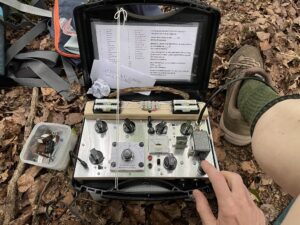
G3EDM at his operating position. G3EDM photo.

The color photo at the top of this page is not the 1950 version (for that we have only the grainy picture). It is actually the 2025 G3EDM version. There are some modifications. For example, the 2025 version is on 40 meters. Since most of the operating was to be done during the daylight hours, this was a better choice than 80. It also uses modern lithium batteries, which G3EDM was able to charge at night while lodging in hotels along his path.

He then outdid W6YBT (probably because we now have this internet thingie that makes it easy) by posting a detailed travelogue detailing his contacts at this thread.

He managed multiple contacts almost every day, usually set up outdoors, but sometimes from a hotel room. Most were to other stations in England, but he was spotted numerous times on the Reverse Beacon Network by stations in continental Europe. In fact, he copied a few stations in America who were trying to work him, and on a couple of occasions, his signal was heard across the Pond, although not strong enough for a complete QSO. The longest complete QSO was 430 miles to Scotland.

Martin’s complete travelogue thread is worth a read. Among other things, it does go to show that some of the old designs we feature here are not mere novelties–they really did work.  75 years ago, most people were unable to stay in touch with civilization while camped in the wilderness, but hams were able to.  It’s just as amazing that the same feat can be replicated today, not just with the ubiquitous cell phone, but with that same 75-year-old technology.


1988 Grocery Prices

For a snapshot of the cost of living in 1988, this ad for Amarraca Supermarket. While the prices might look low, there has been inflation in the intervening years. According to this online inflation calculator, one dollar in 1980 was the equivalent of $2.74 in 2025 dollars.  So for the modern equivalent, you need to multiply the prices here by 2.74..  This ad appeared in the September 22, 1988, issue of the Pittsburgh Post Gazette.

What would you make for dinner in 1988?


1966 One-FET Radio

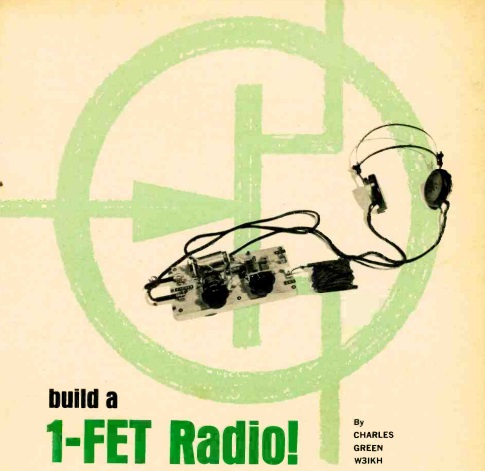
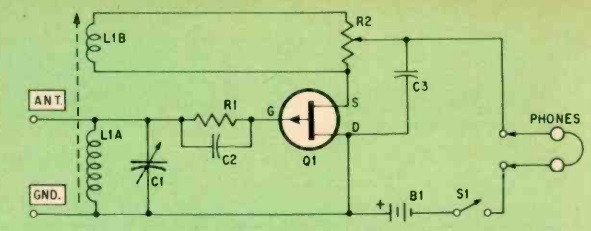
It’s not a one tube radio, but this article from the September 1966 issue of Electronics Illustrated points out that the then-new Field Effect Transistor (FET) was, in many respects, the same as a vacuum tube. So this construction article by Charles Green, W3IKH, deserves a spot in our pantheon.

After explaining the workings of the new device, he provides construction details for the one-FET regenerative receiver. For strong local stations, an indoor 25-foot antenna would prove adequate. For more remote areas, he recommended a good outdoor antenna and ground.

The transistor is a 2N3820, which back in the day sold for $3.75. They’re still available, at a much lower price, on Amazon.


Some links on this site are affiliate links, meaning that this site earns a small commission if you make a purchase after using the link.

1945 One Tube Regen

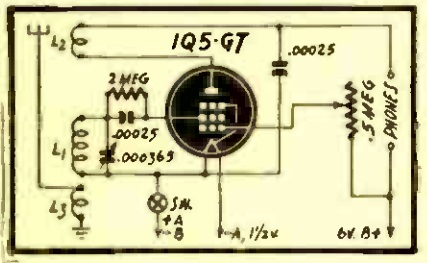
Eighty years ago this month, the September 1945 issue of Radio Craft showed this circuit for a simple one-tube regenerative receiver. It had been sent in to the magazine by one Jim Gary of Kenedy, Texas, who reported highly satisfactory results, including pulling in both coasts from South Texas.

Batteries were hard to get, but this one ran on five flashlight batteries. A single cell lit the filament of the 1Q5-GT tube, and the B+ of just six volts was supplied by four more. For portability, the set could be constructed in an average size cigar box.


Annexation of Rockall, 1955

Rockall. Wikipedia image.

Today marks the 70th anniversary of what was probably the last time that the British Empire grew. On September 18, 1955, Rockall was annexed by the British Crown. It consists of a piece of granite sticking up 56 feet (17 meters) from the ocean.  I assume it’s named because, well, it’s all rock and nothing else.  You can find it on Google Maps at this link.  If you look at the satellite image, there is a little smudge close to (but not directly at) the pin where Google has it located.

Four sailors were hoisted onto the tiny islet by a helicopter and hoisted the Union Jack. In 1972, the tiny island was made part of Scotland, which is the closest land at about 187 miles (301 km) distant.

The annexation was prompted by a test of Britain’s first guided nuclear missile, which was to take place over the North Atlantic. Since it was supposed that the tiny island might serve as a vantage point for the Soviets to monitor the test, it was important to assert sovereignty.

A fairly large percentage of the visitors to Rockall have been amateur radio operators. While the Island does not have DXCC status, it does constitute an Islands On The Air (IOTA) island. One DXpedition is documented at this link, where it is noted that this was only the sixth time in history that humans had stayed overnight on the island.  Another DXpedition ran into trouble, and it was determined that the best course of action was to make a Mayday call and be rescued by the Royal Coast Guard.


1940 Three Tube Superhet

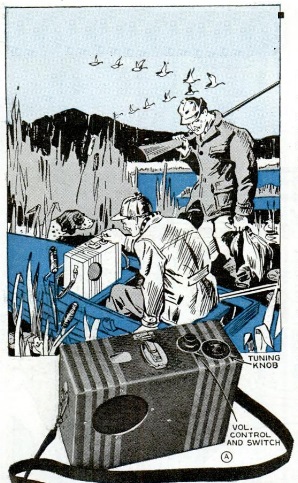
Eighty five years ago, these hunters are enjoying a radio program while out in the wilderness, thanks to a three-tube superhet shown in the September 1940 issue of Popular Mechanics.

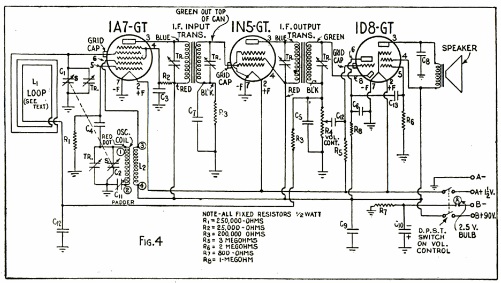
The set was built into a 49 cent overnight bag, and was powered by four flashlight batteries in parallel for the filaments, and two 45 volt batteries for the B+. The B batteries were said to last for nine or ten months.

The tube lineup consisted of a 1A7-GT mixer, followed by a 1A5-GT IF amp, and then a 1D8-GT detector and audio amplifier. A loop antenna was built-in and the efficient circuit supplied satisfactory loudspeaker volume.